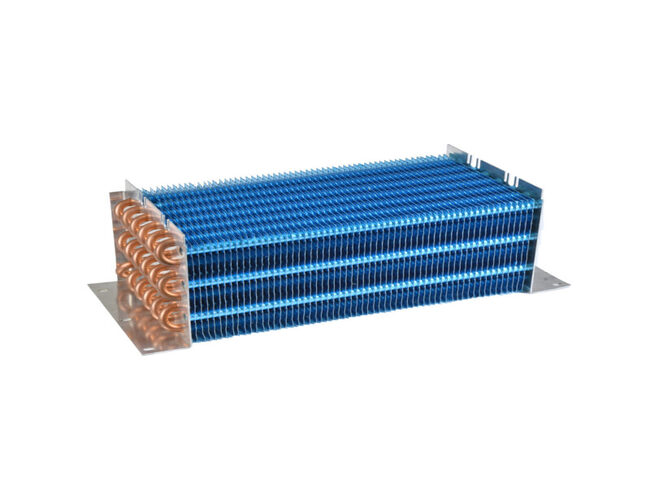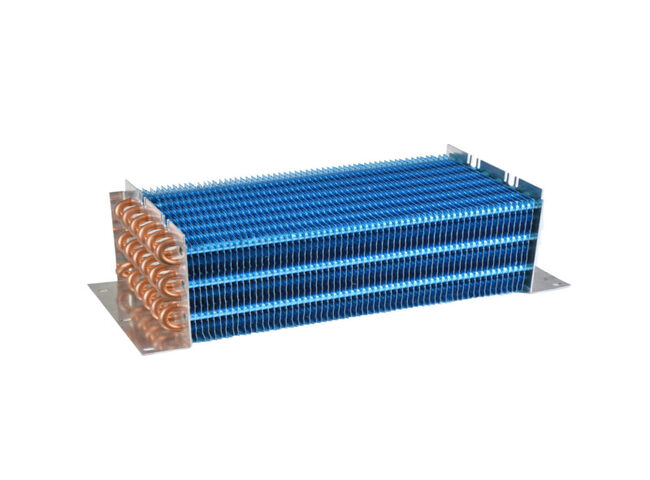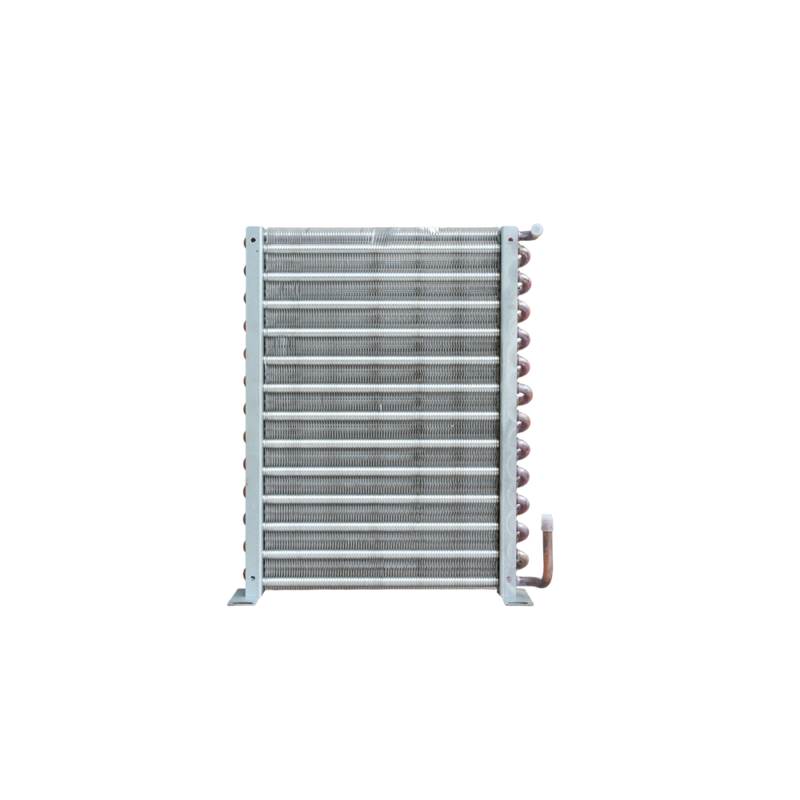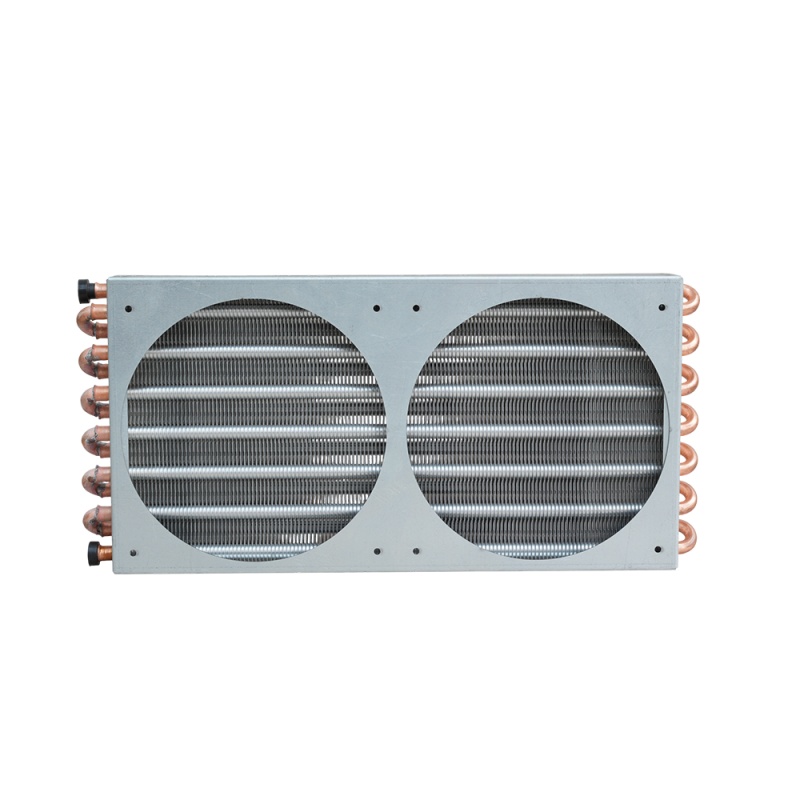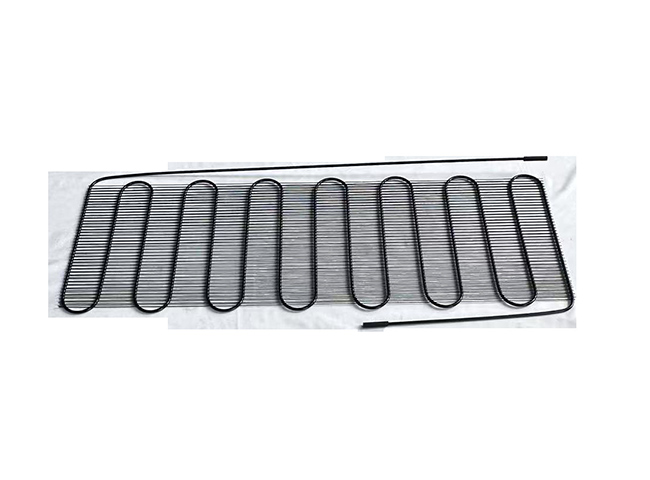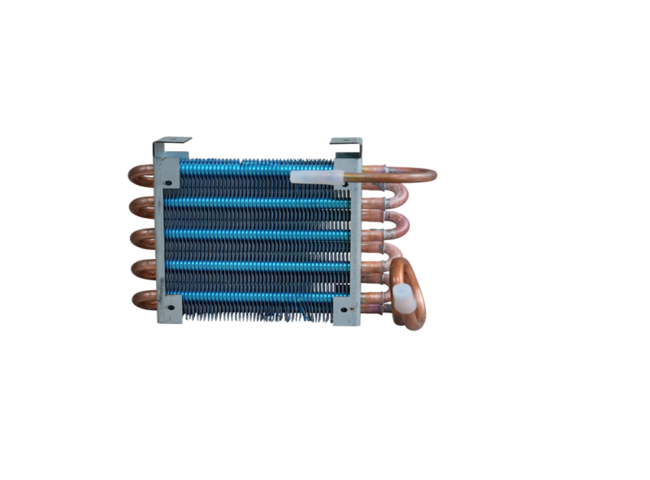
Apabila memilih komponen penyejukan, pembeli sering membandingkan kondensor dengan penyejat seolah-olah kedua-duanya boleh ditukar sebagai penukar haba. Mereka tidak boleh.
Kondensor dan penyejuk wap menjalankan fungsi pemindahan haba yang bertentangan dalam kitaran penyejukan. Penyejuk wap menyerap haba daripada ruang atau proses yang disejukkan, manakala kondensor membuang haba tersebut ke udara, air, atau medium penyejukan lain di sekeliling.
Bagi OEM, pengeluar peralatan penyejukan, kontraktor HVAC, pengedar, dan syarikat kejuruteraan, memilih kondensor atau penyejat yang tepat bukanlah sekadar memadankan dimensi. Kapasiti pemindahan haba, jenis refrigeran, suhu operasi, aliran udara atau aliran air, penurunan tekanan, bahan, ketahanan kakisan, keadaan pemasangan, dan superheat atau subcooling yang diperlukan semuanya mempengaruhi prestasi sebenar sistem.
Dalam istilah mudah:
Penguap menyerap haba. Pemampat menghantar haba keluar.
Kedua-dua komponen juga mesti dipadankan dengan betul dengan pemampat dan peranti pengembangan. Penukar haba yang terlalu besar atau terlalu kecil boleh menjejaskan kapasiti penyejukan, penggunaan tenaga, tekanan operasi, kebolehpercayaan pemampat, dan jangka hayat keseluruhan sistem penyejukan.
Panduan ini menerangkan perbezaan antara kondensor dan penyejat peti sejuk dari sudut kejuruteraan dan pembelian, termasuk prinsip kerja, parameter teknikal, kriteria pemilihan, aplikasi biasa, dan pertimbangan praktikal dalam pembelian.
Jawapan Pantas: Penyejuk vs Penguap
Sebelum memasuki perincian kejuruteraan, inilah perbezaan yang paling penting.
| Item | Penyejuk Pemampat | Penguap Penyejukan |
| Fungsi utama | Menolak haba | Menyerap haba |
| Refrigeran masuk | Wap tekanan tinggi | Campuran cecair/wap tekanan rendah |
| Penyaman keluar | Cecair bertekanan tinggi | wap tekanan rendah |
| Sisi tekanan | Bahagian atas | Bahagian bawah |
| Proses utama | Kondensasi | Penguapan |
| Arah pemindahan haba | Refrigeran → alam sekitar | Persekitaran → agen penyejuk |
| Lokasi tipikal | Bahagian luar atau bahagian penolakan haba | Di dalam ruang/proses sejuk beku |
| Kebimbangan utama reka bentuk | Kapasiti penolakan haba | Kapasiti penyejukan/penyerapan haba |
| Jenis-jenis biasa | Penyejukan udara, penyejukan air, penyejukan evaporatif | Pusaran bersirip, plat, shell-and-tube, tiub terdedah |
| Gunaan tipikal | Unit penyejukan, unit pemampatan, penyejuk | Bilik sejuk, peti sejuk beku, kabinet pameran, penyejuk |
| Parameter operasi penting | Suhu kondensasi/subpendinginan | Suhu pengewapan/superhaba |
Sistem penyejukan pemampatan wap piawai mengandungi empat proses asas:
Pemampatan → Pengondensaan → Pemeluan → Penyejatan
Refrigeran beredar secara berterusan antara kondensor dan penyejuk wap, membawa haba dari sisi suhu rendah ke sisi suhu tinggi. Sistem penyaman udara mempunyai sisi penyejukan bertekanan rendah dan sisi kondensasi bertekanan tinggi, dengan refrigeran bertindak sebagai medium yang memindahkan haba dari penyejuk wap ke kondensor.
Untuk penjelasan yang lebih terperinci mengenai pembinaan kondensor, saiz, aplikasi, dan pemilihan, lihat kami Panduan Pemampat Penyejuk Beku. Untuk reka bentuk penyejat, pemindahan haba, pengukuran saiz dan pemilihan, lihat kami Panduan Penyejuk Evaporator.
Asas Kitaran Penyejukan
Untuk memahami perbezaan antara kondensor dan penyejuk, adalah berguna untuk terlebih dahulu memahami kitaran penyejukan asas.
Kitaran penyejukan pemampatan wap yang dipermudahkan terdiri daripada empat komponen utama:
- Pemampat
- Penyejuk
- Peranti pengembangan
- Penguap
Refrigeran bergerak melalui komponen-komponen ini dalam gelung berterusan.
Langkah 1: Pemampatan
Wap penyejuk bertekanan rendah meninggalkan penyejat dan memasuki pemampat.
Pemampat meningkatkan tekanan dan suhu refrigeran.
Refrigeran menjadi wap bertekanan tinggi dan bersuhu tinggi.
Langkah 2: Kondensasi
Wap penyejuk yang panas memasuki kondensor.
Kondensor membuang haba daripada agen penyejuk dan memindahkannya ke udara atau air di sekeliling.
Apabila haba dikeluarkan, agen penyejuk berubah daripada wap kepada cecair.
Langkah 3: Pemerluasan
Cecair bertekanan tinggi melalui injap pengembangan, injap pengembangan elektronik, tiub kapilari, atau peranti metring lain.
Tekanan menurun dengan cepat.
Sebahagian daripada agen penyejuk terhambur menjadi wap, menghasilkan campuran bertekanan rendah dan ber suhu rendah.
Langkah 4: Penguapan
Refrigeran sejuk memasuki penyejat.
Habà daripada ruang sejuk beku, produk, udara atau cecair proses mengalir ke dalam agen penyejuk.
Refrigeran mendidih dan berubah daripada cecair menjadi wap.
Wap itu kemudian kembali ke pemampat, dan kitaran itu berulang.
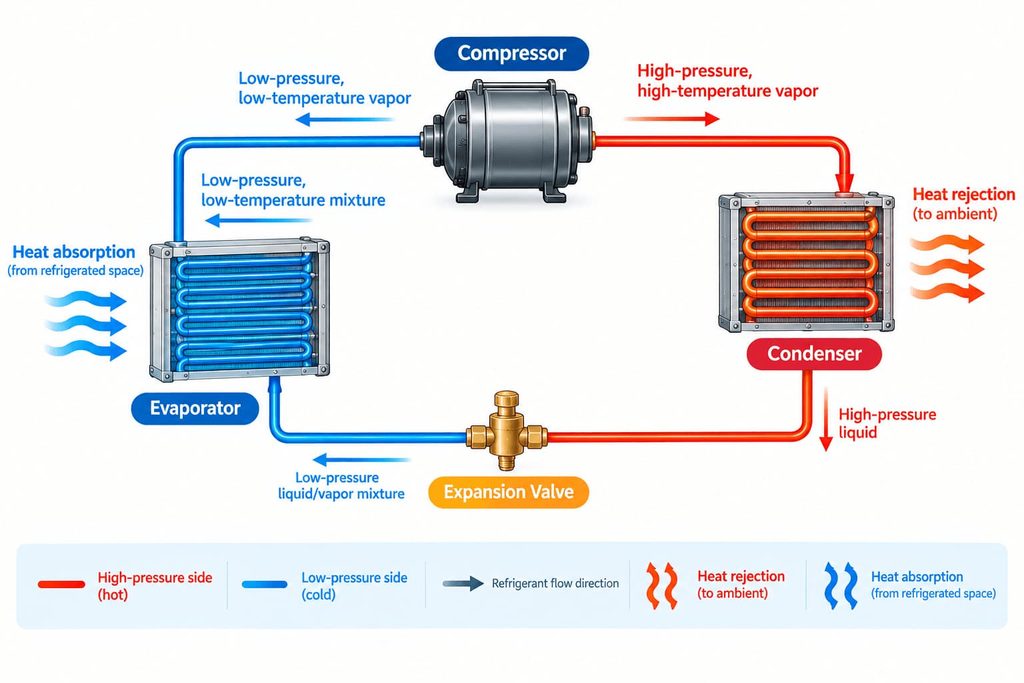
Kitar Penyejukan Ringkas
Pemampat
↓
Wap tekanan tinggi / suhu tinggi
Penyejuk
↓
Cecair bertekanan tinggi
Klep pengembangan
↓
Campuran tekanan rendah / suhu rendah
Penguap
↓
wap tekanan rendah
Pemampat
Inilah sebabnya pemilihan kondensor dan penyejuk tidak boleh dianggap secara berasingan.
Kondensor menentukan sejauh mana sistem dapat menolak haba dengan berkesan, manakala penyejat menentukan sejauh mana sistem dapat menyerap haba dengan berkesan.
Apakah penyejuk pemampat?
Kondensor penyejukan ialah penukar haba yang membuang haba daripada wap penyejuk bertekanan tinggi dan menukarnya menjadi cecair penyejuk bertekanan tinggi.
Dalam istilah mudah:
Kondensor ialah komponen sistem penyaman udara yang menolak haba.
Refrigeran yang memasuki kondensor telah menyerap haba di dalam penyejat dan memperoleh tenaga tambahan semasa pemampatan.
Oleh itu, kondensor mesti menyingkirkan beberapa jenis haba:
- Panas yang diserap oleh pengewap
- Panas yang ditambah semasa pemampatan
- Superpanas daripada gas pelepasan
- Panas yang berkaitan dengan pengondensaan refrigeran
- Panas tambahan yang berpotensi daripada sistem bergantung pada konfigurasi
Kondensor mesti menyingkirkan bukan sahaja beban penyejukan tetapi juga haba yang dihasilkan oleh pemampat dan superpanas refrigeran.
Ini bermakna kondensor umumnya memerlukan kapasiti penolakan haba yang lebih tinggi daripada kapasiti penyejukan nominal sistem. Sebagai contoh, sistem penyaman udara sejuk air dengan beban penyaman sejuk 300 kW. Di bawah keadaan operasi yang ditetapkan, faktor penolakan haba adalah kira-kira 1.19, menghasilkan penolakan haba kondensor sebanyak kira-kira 357 kW.
Mengapa penyejuk penting?
Kondensor yang terlalu kecil mungkin menyebabkan:
- Tekanan kondensasi tinggi
- Peningkatan penggunaan kuasa pemampat
- Suhu pelepasan yang lebih tinggi
- Pengurangan kapasiti penyejukan
- Kecekapan tenaga yang rendah
- Pemampat terlalu panas
- Umur pemampat yang lebih pendek
Pengondensat yang kotor atau kurang pengudaraan boleh menyebabkan masalah yang serupa.
Ini amat penting bagi peralatan penyejukan yang disejukkan oleh udara yang beroperasi pada suhu persekitaran yang tinggi.
Apakah pengewap penyaman udara?
Dalam istilah mudah:
Penguap ialah komponen penyerap haba dalam sistem penyejukan.
Refrigeran memasuki penyejat sebagai campuran cecair dan wap pada tekanan rendah dan suhu rendah.
Habá daripada persekitaran sekitar mengalir ke dalam agen penyejuk.
Refrigeran menyerap haba ini dan mendidih.
Menjelang ia sampai ke saluran keluar, kebanyakan atau kesemua sejat cecair telah menguap dan sejat itu menjadi wap.
Vapour itu kemudian bergerak melalui saluran sedutan kembali ke pemampat.
Di manakah penguap digunakan?
Penguap boleh didapati dalam:
- Bilik sejuk
- Petiais beku walk-in
- Petiais komersial
- Petiais paparan
- Sistem penyejukan pasar raya
- Mesin ais
- Pembeku letupan
- Sistem penyejukan perindustrian
- Peralatan penyejukan proses
- Sistem penyaman udara
- Penyejuk
- Peralatan pemprosesan makanan
- Sistem penyejukan minuman
- Sistem pam haba untuk penyimpanan sejuk farmaseutikal
Sebagai contoh, dalam aplikasi bilik sejuk, gegelung penyejat dipasang di dalam bilik sejuk beku. Kipas menggerakkan udara bilik merentasi gegelung, membolehkan haba daripada udara dan produk yang disimpan dipindahkan ke dalam penyejat sejuk.
Bagaimana kondensor penyejukan berfungsi?
Kondensor biasanya menjalankan tiga peringkat pemindahan haba.
1. Penyejukan superpanas
Gas pelepasan panas pertama kali memasuki kondensor.
Suhu refrigeran adalah lebih tinggi daripada suhu jenuhannya.
Bahagian pertama kondensor membuang haba nyata daripada wap yang dipanaskan berlebihan.
2. Kondensasi
Setelah bahan penyejuk mencapai keadaan jenuh, sebahagian besar pemindahan haba berlaku semasa perubahan fasa.
Refrigeran berubah daripada wap kepada cecair sambil kekal pada tekanan kondensasi yang lebih kurang sama.
Dalam kondensor penyejuk air biasa, peringkat pengembunan adalah proses pemindahan haba dominan dan menyumbang kira-kira 83% daripada jumlah penolakan haba di bawah keadaan penyejukan biasa.
3. Pencesaran
Selepas kebanyakan penyejuk telah menjadi cecair, haba tambahan boleh disingkirkan.
Suhu cecair turun di bawah suhunya yang tepu.
Ini dipanggil penyejukan bawah.
Penyejukan berlebihan adalah penting kerana ia membantu memastikan bahawa refrigeran cecair sampai ke peranti pengembangan dan bukannya sebahagiannya menguap dalam saluran cecair.
Penyejukan berlebihan boleh meningkatkan kecekapan sistem dan membantu mengelakkan penyaman cecair bertukar menjadi gas sebelum sampai ke penyejat.
Bagaimana penyejat penyaman udara berfungsi?
Penguap berfungsi dalam arah yang bertentangan.
Tujuan utama ialah menyerap haba daripada persekitaran sejuk beku.
Proses ini juga boleh dibahagikan kepada beberapa peringkat.
1. Pemasukan Refrigeran
After pressure reduction through the expansion device, the refrigerant enters the evaporator as a low-pressure mixture of liquid and vapor.
Its temperature is low enough to absorb heat from the surrounding environment.
2. Boiling / Evaporation
Heat flows from the warmer environment into the colder refrigerant.
The liquid refrigerant absorbs heat and boils.
This phase change allows the refrigerant to absorb a relatively large amount of heat without a major increase in temperature.
3. Superheating
Toward the outlet of the evaporator, most of the liquid refrigerant has evaporated.
Additional heat may then increase the temperature of the refrigerant vapor above its saturation temperature.
This is known as superheat.
Superheat is an important control parameter.
Evaporator superheat is measured at the evaporator outlet and provides an indication of whether the refrigerant flow into the evaporator is appropriate for the load.
The basic formula is:
Superheat = Actual vapor temperature − Saturation temperature
For example:
Saturation temperature = -10°C
Actual outlet temperature = -4°C
Oleh itu:
Superheat = -4 − (-10) = 6 K
The correct target depends on refrigerant, expansion device, system design, compressor requirements, and operating conditions. It should not be treated as a universal fixed number.
Condenser vs Evaporator: Core Differences
The easiest way to understand the difference is to compare their position in the cycle.
| Parameter | Penyejuk | Penguap |
| Heat function | Menolak haba | Menyerap haba |
| Refrigerant state at inlet | Wap tekanan tinggi | Low-pressure liquid/vapor |
| Refrigerant state at outlet | Cecair bertekanan tinggi | wap tekanan rendah |
| Main phase change | Vapor → liquid | Liquid → vapor |
| Pressure | High | Low |
| Temperature | Generally higher | Generally lower |
| Proses utama | Heat rejection | Heat absorption |
| Typical design objective | Maximize heat rejection | Maximize cooling capacity |
| Key control value | Subcooling | Superheat |
| Common airflow | Heat removal to ambient | Heat pickup from refrigerated space concern |
| Common failure symptom | High head pressure | Poor cooling / low suction pressure |
| Lokasi tipikal | Outside/heat rejection area | Inside cooled space or process |
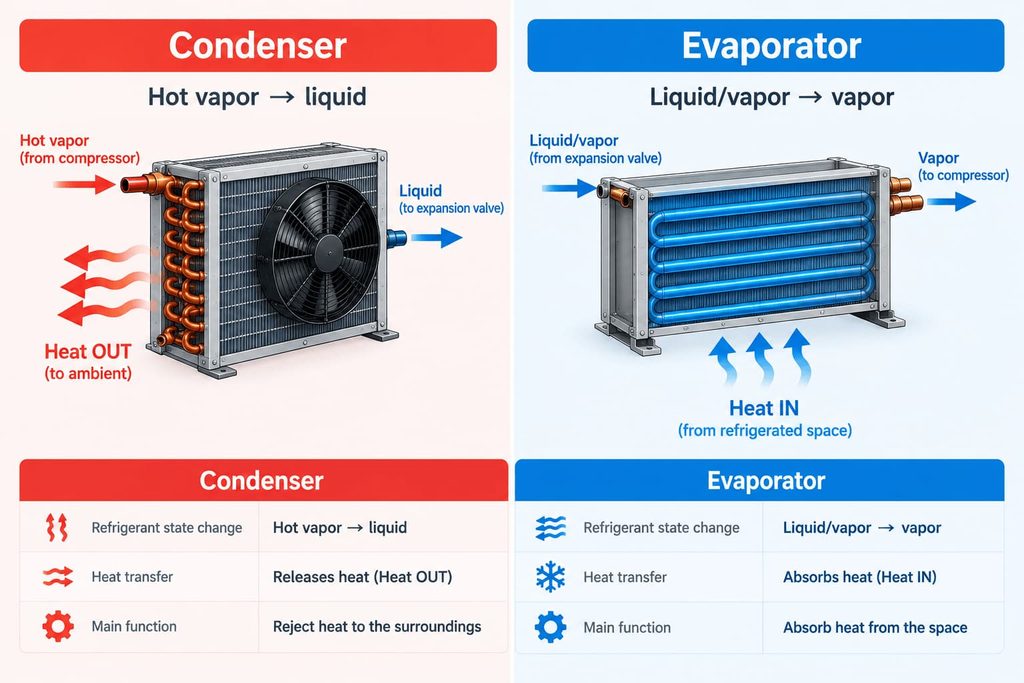
Condenser vs Evaporator: The Engineering Difference
The difference becomes even clearer when we look at heat-transfer requirements.
1. Temperature Difference
Heat transfer requires a temperature difference between the refrigerant and the secondary medium.
For a condenser:
Hot refrigerant → air/water
For an evaporator:
Air/water/product → cold refrigerant
If the temperature difference is too small, the heat exchanger may require a larger heat-transfer surface.
This is one reason why heat exchanger size cannot be determined from physical dimensions alone.
2. Heat-Transfer Surface
Heat exchanger capacity depends on multiple factors, including:
- Heat-transfer area
- Overall heat-transfer coefficient
- Temperature difference
- Refrigerant properties
- Aliran udara atau aliran air
- Tube diameter
- Fin design
- Refrigerant distribution
- Circuit arrangement
- Pressure drop
Hubungan pemindahan haba yang disederhanakan adalah:
Q = U × A × ΔT
Di mana:
- Q = heat-transfer rate
- U = overall heat-transfer coefficient
- A = effective heat-transfer area
- ΔT = effective temperature difference
This explains why simply increasing the physical size of a condenser or evaporator does not automatically guarantee better system performance.
Air-Cooled vs Water-Cooled Condensers
For condenser purchasing, one of the first decisions is the cooling medium.
Air-Cooled Condenser
An air-cooled condenser uses ambient air to remove heat.Typical construction includes:
- Copper tubes
- Sirip aluminium
- Steel frame
- Axial fansFan motor
Kelebihan
- Simple installation
- No cooling-water system
- Relatively low maintenance
- Suitable for many commercial refrigeration systems
- Easy modular installation
Typical Applications
- Refrigeration condensing units
- Bilik sejuk
- Commercial freezers
- Supermarket systems
- HVAC equipmentSmall and medium industrial refrigeration
Water-Cooled Condenser
A water-cooled condenser transfers heat to water.
Konfigurasi biasa termasuk:
- Shell-and-tube
- Tube-in-tube
- Brazed plate
- Plate-and-frame
Kelebihan
- High heat-transfer performance
- Compact size
- Suitable for larger systems
- Less dependent on ambient air temperature
Purchasing Considerations
The buyer must consider:
- Water quality
- Fouling
- Corrosion
- Water flow rate
- Water temperature
- Pressure drop
- Cleaning requirements
For industrial systems, these factors can be as important as nominal cooling capacity.
Common Refrigeration Evaporator Types
Different applications require different evaporator constructions.
Finned-Tube Evaporator
Finned coils are widely used in air-cooling applications.
Typical applications include:
- Bilik sejuk
- Freezers
- Refrigerated cabinets
- Display casesAir coolers
Fins increase the surface area available for heat transfer between the refrigerant and air.
Plate Heat Exchanger Evaporator
Plate heat exchangers offer high heat-transfer efficiency in a compact structure.
They are commonly used for:
- Penyejuk
- Penyejukan proses
- Water coolingIndustrial refrigeration
They are especially attractive when space is limited.
Shell-and-Tube Evaporator
Shell-and-tube designs are commonly used in industrial systems where durability and larger capacity are important.
Applications include:
- Industrial chillers
- Penyejukan proses
- Large refrigeration systemsWater/brine cooling
How Condenser and Evaporator Work Together in the Refrigeration Cycle
The condenser and evaporator are not independent components.
They are connected through the compressor and expansion device.
The relationship can be simplified as follows:
Penguap
Absorbs heat from the cooled space
↓
Pemampat
Raises refrigerant pressure and temperature
↓
Penyejuk
Rejects heat to the environment
↓
Expansion Device
Reduces pressure and temperature
↓
Penguap
Absorbs heat again
The refrigerant therefore acts as a heat-transfer medium.
It does not simply “create cold.”
Instead, it transports heat from a low-temperature location to a higher-temperature environment.
This is the key concept that buyers should understand when evaluating refrigeration components.
Why Condenser and Evaporator Capacity Must Be Matched
One of the most common purchasing mistakes is selecting a condenser or evaporator based only on nominal dimensions.
For example, a buyer may compare two coils based on:
- Tube diameter
- Number of rows
- Coil length
- Coil widthNumber of fins
These specifications are useful, but they do not tell the complete story.
Two coils with identical external dimensions can have significantly different thermal performance because of differences in:
- Tube arrangement
- Fin pitch
- Circuit design
- Refrigerant distribution
- Material
- Air velocity
- Refrigerant type
- Evaporating temperatureCondensing temperature
Therefore, buyers should request performance data under defined operating conditions.
Key Technical Parameters to Check Before Buying
For B2B buyers, the following parameters should be included in a condenser or evaporator specification sheet.
Refrigeration Capacity
Usually expressed in:
- kW
- BTU/h
- kcal/hTR
Conversion example:
1 tan penyejukan ≈ 3.517 kW
Oleh itu:
10 TR ≈ 35.17 kW
However, the rated capacity must always be evaluated at specified operating conditions.
Refrigeran
The heat exchanger should be compatible with the refrigerant used by the system.
Examples may include:
- R134a
- R404A
- R507A
- R407C
- R410A
- R448A
- R449A
- R290
- R32
- CO₂/R744
- Other application-specific refrigerants
Refrigerant selection affects:
- Operating pressure
- Heat-transfer performance
- Component compatibility
- Required wall thickness
- System capacityRefrigerant charge
Therefore, do not select a heat exchanger solely by matching physical dimensions.
Operating Temperature
For evaporators, buyers should provide:
- Evaporating temperature
- Entering air temperature
- Leaving air temperature
- Required cooling capacity
For condensers:
- Suhu pemadatan
- Ambient temperature or entering water temperature
- Kapasiti penyejukan
- Required heat rejection
Without these conditions, a supplier cannot reliably evaluate actual thermal performance.
Superheat and Subcooling: Two Numbers Buyers Should Understand
Two terms frequently appear in refrigeration specifications:
Superheat
and
Subcooling
They are closely related to evaporator and condenser performance.
Evaporator → Superheat
Superheat is associated primarily with the vapor leaving the evaporator.
Superheat = Actual vapor temperature − Saturation temperature
It helps determine whether sufficient refrigerant has evaporated before reaching the compressor.
Copeland recommends measuring evaporator superheat close to the end of the evaporator, preferably near the expansion valve sensing location.
Condenser → Subcooling
Subcooling describes liquid refrigerant cooled below its saturation temperature.
Subcooling = Saturation temperature − Actual liquid temperature
It helps ensure that liquid reaches the expansion device without unwanted flash gas.
Subcooling can improve efficiency and prevent premature vaporization before the refrigerant reaches the evaporator.
Why Superheat Matters for Compressor Protection
An evaporator that is poorly selected, improperly fed, or incorrectly controlled can contribute to excessive or insufficient superheat.
Too little superheat can increase the risk of liquid refrigerant returning to the compressor.
Too much superheat may indicate insufficient refrigerant feed, excessive pressure drop, inadequate evaporator loading, or other system problems.
As one example, a minimum compressor suction superheat of approximately 20°F (11°C) for certain R-404A/R-507 hermetic compressor applications to help prevent liquid floodback. This is an application-specific manufacturer recommendation, not a universal target for every refrigeration system.
This is an important distinction for engineering buyers:
Never treat a single superheat value as a universal standard. Always check the refrigerant, compressor, expansion device and system design.
How to Select the Right Refrigeration Condenser
When requesting a condenser quotation, provide the supplier with as much of the following information as possible:
1. Refrigeration Capacity
Example:
100 kW refrigeration capacity
2. Refrigerant
Example:
R404A / R448A / R134a
3. Condensing Temperature
Example:
45°C
4. Ambient Temperature
Example:
35°C
5. Cooling Method
- Air cooled
- Water cooled
- Evaporative
6. Installation Environment
Consider:
- Indoor/outdoor
- Dust
- Salt air
- High humidity
- Corrosive atmosphere
- Limited ventilation
7. Space Restrictions
Provide:
- Maximum length
- Maximum width
- Maximum height
- Connection location
8. Material Requirements
For example:
- Copper tube
- Aluminum fin
- Stainless steel
- Copper fin
- Protective coating
A professional supplier should be able to evaluate the design against the actual operating conditions rather than simply selling a standard-size coil.
How to Select the Right Refrigeration Evaporator
For evaporators, buyers should pay particular attention to the cooling load and operating temperature.
Provide:
Cooling Capacity
For example:
50 kW
Evaporating Temperature
For example:
-10°C
Refrigeran
For example:
R448A
Entering Air Temperature
For example:
+2°C
Leaving Air Temperature
For example:
-5°C
Airflow
For forced-air evaporators:
m³/h or CFM
Permohonan
For example:
- Penyimpanan sejuk
- Freezer
- Food processing
- Display cabinet
- Chiller
- Penyejukan proses
Defrost Method
Possible options include:
- Off-cycle defrost
- Electric defrost
- Hot-gas defrost
- Water defrost
Defrost requirements can significantly influence evaporator design.
Common Problems Caused by Poor Condenser Selection
Problem 1: Condenser Too Small
Possible consequences:
- Tekanan kondensasi tinggi
- High compressor power
- Reduced cooling capacity
- High discharge temperature
- Increased operating cost
Problem 2: Insufficient Airflow
Even a correctly designed coil cannot perform properly without sufficient airflow.
Possible causes include:
- Incorrect fan selection
- Blocked coil
- Dirty fins
- Poor installation
- Recirculation of hot discharge air
Problem 3: Poor Liquid Subcooling
Insufficient subcooling can allow flash gas to form in the liquid line.
Flash gas can increase pressure drop, reduce expansion-device capacity, cause noise, and create unstable liquid feeding.
Common Problems Caused by Poor Evaporator Selection
Problem 1: Evaporator Too Small
The system may fail to achieve the required temperature.
Problem 2: Excessive Pressure Drop
High pressure drop can reduce effective evaporating pressure and negatively affect system performance.
Problem 3: Incorrect Refrigerant Distribution
Poor distribution can cause some circuits to be starved while others are overfed.
Problem 4: Excessive Frost
For low-temperature applications, frost accumulation can reduce airflow and heat-transfer performance.
Problem 5: Incorrect Superheat
Incorrect superheat may indicate:
- Expansion valve problems
- Incorrect refrigerant charge
- Poor evaporator selection
- Insufficient airflow
- Incorrect load conditions
Condenser vs Evaporator: Which One Is More Important?
This is actually the wrong question.
A properly designed refrigeration system needs both.
An efficient evaporator cannot compensate for an undersized condenser.
Likewise, a high-performance condenser cannot compensate for an improperly selected evaporator.
The system performance is determined by the interaction between:
Compressor + Condenser + Expansion Device + Evaporator
For this reason, professional component selection should start with the complete operating envelope rather than selecting individual components independently.
Condenser and Evaporator Selection Checklist for B2B Buyers
Before placing an order, buyers should confirm the following:
| Selection Item | Penyejuk | Penguap |
| Refrigeran | ✓ | ✓ |
| Required capacity | ✓ | ✓ |
| Operating pressure | ✓ | ✓ |
| Temperature conditions | ✓ | ✓ |
| Pembawa pemindahan haba | ✓ | ✓ |
| Airflow/water flow | ✓ | ✓ |
| Pressure drop | ✓ | ✓ |
| Material | ✓ | ✓ |
| Connection size | ✓ | ✓ |
| Installation dimensions | ✓ | ✓ |
| Corrosion environment | ✓ | ✓ |
| Superheat | — | ✓ |
| Subcooling | ✓ | — |
| Defrost requirement | — | ✓ |
| Fan specification | ✓ | ✓ where applicable |
| Customization | ✓ | ✓ |
This checklist can significantly reduce the risk of ordering a component that physically fits but does not perform correctly.
How to Compare Two Refrigeration Heat Exchangers
If you are comparing suppliers, do not compare only the unit price.
A better approach is to compare performance per operating condition.
Ask both suppliers to provide:
- Rated refrigeration capacity
- Refrigeran
- Evaporating/condensing temperature
- Entering and leaving air/water temperature
- Aliran udara atau aliran air
- Refrigerant pressure drop
- Air-side pressure drop
- Heat-transfer area
- Material specification
- Tube diameter and wall thickness
- Fin material and thickness
- Fin pitch
- Circuit configuration
- Maximum working pressure
- Leak-test pressure
- Design temperature range
- Applicable standards
- Performance test conditions
Only after these parameters are aligned does a price comparison become meaningful.
What Makes a Good Refrigeration Condenser or Evaporator Supplier?
For OEM and wholesale buyers, the supplier’s engineering capability can be as important as the component itself.
A reliable supplier should be able to provide:
Engineering Support
The supplier should understand:
- Refrigerant selection
- Heat-transfer calculations
- Kapasiti penyejukan
- Pressure drop
- Airflow
- Refrigerant distribution
- Superheat/subcooling
- System operating conditions
Customization
Common customization requirements include:
- Coil dimensions
- Tube diameter
- Fin spacing
- Number of rows
- Circuit arrangement
- Connection position
- Header design
- Material
- Surface coating
- Mounting brackets
Quality Control
A professional manufacturer should have appropriate quality-control procedures covering:
- Raw material inspection
- Tube inspection
- Brazing/welding quality
- Dimensional inspection
- Pressure testing
- Leak testing
- Performance testing where applicable
- Final inspection
For international B2B buyers, documentation and traceability should also be considered.
Frequently Asked Question
Is a condenser the same as an evaporator?
No.
A condenser rejects heat and changes refrigerant from vapor to liquid.
An evaporator absorbs heat and changes refrigerant from liquid to vapor.
Which is colder, the condenser or evaporator?
The evaporator operates at the low-pressure, low-temperature side of the refrigeration system.
The condenser operates at the high-pressure, high-temperature side.
Can an evaporator be used as a condenser?
Not automatically.
Although both are heat exchangers, their design, refrigerant distribution, pressure conditions, heat-transfer requirements, oil return, flow direction, and operating temperatures may be different.
A heat exchanger should be evaluated for the specific application before being used in reverse.
Does a larger condenser always improve refrigeration performance?
No.
Increasing condenser size can improve heat rejection under some conditions, but the complete system must still be balanced.
Fan selection, refrigerant flow, pressure drop, compressor capacity, ambient temperature, and system control all matter.
Does a larger evaporator always mean better cooling?
No.
A larger evaporator can provide additional heat-transfer area, but actual system performance also depends on refrigerant distribution, airflow, evaporating temperature, compressor capacity, expansion-device control, and system load.
Conclusion: Condenser vs Evaporator—The Key Takeaway
The difference between a condenser and evaporator can be summarized in one sentence:
The evaporator absorbs heat from the cooled space, while the condenser rejects that heat to the surrounding environment.
But for professional refrigeration equipment selection, the difference goes much deeper.
The evaporator operates on the low-pressure side and is responsible for absorbing the required cooling load. Its performance is strongly related to evaporating temperature, refrigerant distribution, airflow, heat-transfer area, pressure drop, and superheat.
The condenser operates on the high-pressure side and must reject the heat absorbed by the evaporator plus the heat added by the compressor. Its performance depends on condensing temperature, ambient or water temperature, airflow/water flow, heat-transfer area, pressure drop, and subcooling.
For B2B buyers, the most important lesson is:
Do not purchase a condenser or evaporator based on dimensions or price alone.
Instead, compare the component under the same engineering conditions:
Refrigerant + Capacity + Operating Temperature + Flow Rate + Pressure Drop + Material + Installation Conditions
This approach gives OEMs, distributors, refrigeration contractors, and equipment manufacturers a much more reliable basis for purchasing decisions.
If you are sourcing refrigeration components for an OEM project, providing the operating conditions to the manufacturer is usually the fastest way to determine whether a standard coil is suitable or whether a customized condenser or evaporator is required.
Need Help Selecting a Refrigeration Condenser or Evaporator?
Before requesting a quotation, prepare the following information:
Refrigerant | Cooling Capacity | Evaporating Temperature | Condensing Temperature | Air/Water Temperature | Flow Rate | Installation Dimensions | Application
With these parameters, a refrigeration component manufacturer can evaluate the required heat-transfer capacity and recommend a suitable configuration.
Explore our Refrigeration Condenser and Refrigeration Evaporator product ranges to find a configuration suitable for your application.
For OEM and wholesale projects, contact our engineering team for technical specifications, customized dimensions, heat-transfer requirements, and application-based recommendations.