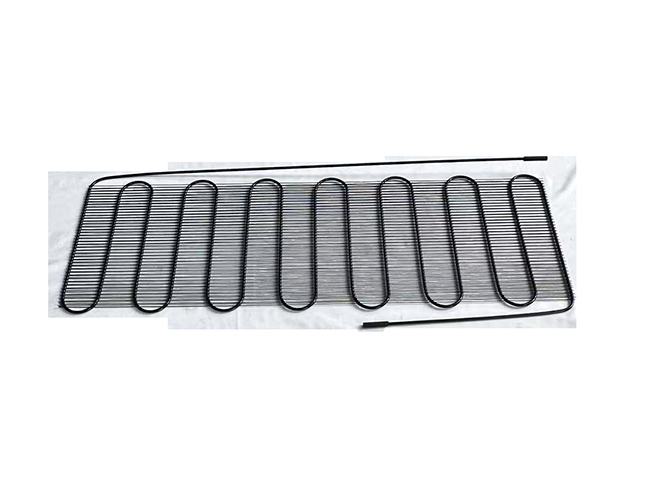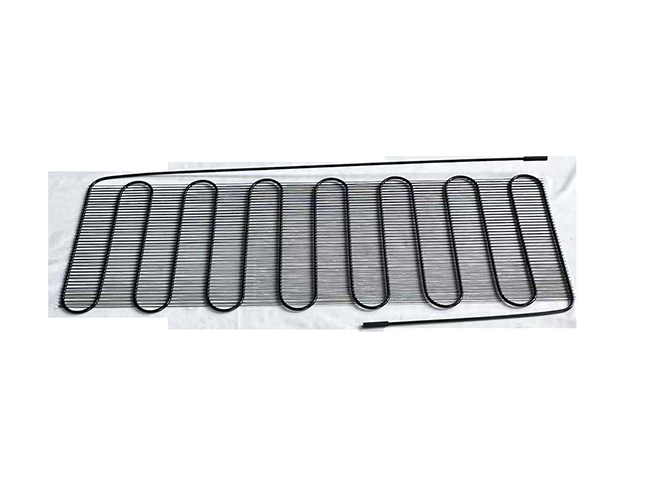
When selecting refrigeration components, buyers often compare condenser vs evaporator as if they were interchangeable heat exchangers. They are not.
A condenser and an evaporator perform opposite heat-transfer functions within the refrigeration cycle. The evaporator absorbs heat from the refrigerated space or process, while the condenser rejects that heat to the surrounding air, water, or another cooling medium.
For OEMs, refrigeration equipment manufacturers, HVAC contractors, distributors, and engineering companies, choosing the right condenser or evaporator is not simply a matter of matching dimensions. Heat-transfer capacity, refrigerant type, operating temperature, airflow or water flow, pressure drop, material, corrosion resistance, installation conditions, and required superheat or subcooling all influence actual system performance.
In simple terms:
The evaporator takes heat in. The condenser sends heat out.
The two components must also be correctly matched with the compressor and expansion device. An oversized or undersized heat exchanger can affect cooling capacity, energy consumption, operating pressure, compressor reliability, and the overall service life of the refrigeration system.
This guide explains the difference between refrigeration condensers and evaporators from an engineering and purchasing perspective, including their working principles, technical parameters, selection criteria, common applications, and practical buying considerations.
Quick Answer: Condenser vs Evaporator
Before going into the engineering details, here is the most important distinction.
| Item | Refrigeration Condenser | Refrigeration Evaporator |
| Main function | Rejects heat | Absorbs heat |
| Refrigerant entering | High-pressure vapor | Low-pressure liquid/vapor mixture |
| Refrigerant leaving | High-pressure liquid | Low-pressure vapor |
| Pressure side | High side | Low side |
| Main process | Condensation | Evaporation |
| Heat-transfer direction | Refrigerant → environment | Environment → refrigerant |
| Typical location | Outdoor or heat-rejection side | Inside refrigerated space/process |
| Main design concern | Heat rejection capacity | Cooling/heat absorption capacity |
| Common types | Air-cooled, water-cooled, evaporative | Finned coil, plate, shell-and-tube, bare tube |
| Typical applications | Refrigeration units, condensing units, chillers | Cold rooms, freezers, display cases, chillers |
| Important operating parameter | Condensing temperature/subcooling | Evaporating temperature/superheat |
A standard vapor-compression refrigeration system contains four fundamental processes:
Compression → Condensation → Expansion → Evaporation
The refrigerant continuously circulates between the condenser and evaporator, transporting heat from the low-temperature side to the high-temperature side. The refrigeration system has a low-pressure evaporating side and a high-pressure condensing side, with the refrigerant acting as the medium that transfers heat from the evaporator to the condenser.
Basics of the Refrigeration Cycle
To understand the difference between a condenser and an evaporator, it is useful to first understand the basic refrigeration cycle.
A simplified vapor-compression refrigeration cycle consists of four major components:
- Compressor
- Condenser
- Expansion device
- Evaporator
The refrigerant moves through these components in a continuous loop.
Step 1: Compression
Low-pressure refrigerant vapor leaves the evaporator and enters the compressor.
The compressor increases the refrigerant pressure and temperature.
The refrigerant becomes a high-pressure, high-temperature vapor.
Step 2: Condensation
The hot refrigerant vapor enters the condenser.
The condenser removes heat from the refrigerant and transfers it to the surrounding air or water.
As heat is removed, the refrigerant changes from vapor into liquid.
Step 3: Expansion
The high-pressure liquid passes through an expansion valve, electronic expansion valve, capillary tube, or another metering device.
The pressure drops rapidly.
Part of the refrigerant flashes into vapor, producing a low-pressure, low-temperature mixture.
Step 4: Evaporation
The cold refrigerant enters the evaporator.
Heat from the refrigerated space, product, air, or process fluid flows into the refrigerant.
The refrigerant boils and changes from liquid into vapor.
The vapor then returns to the compressor, and the cycle repeats.
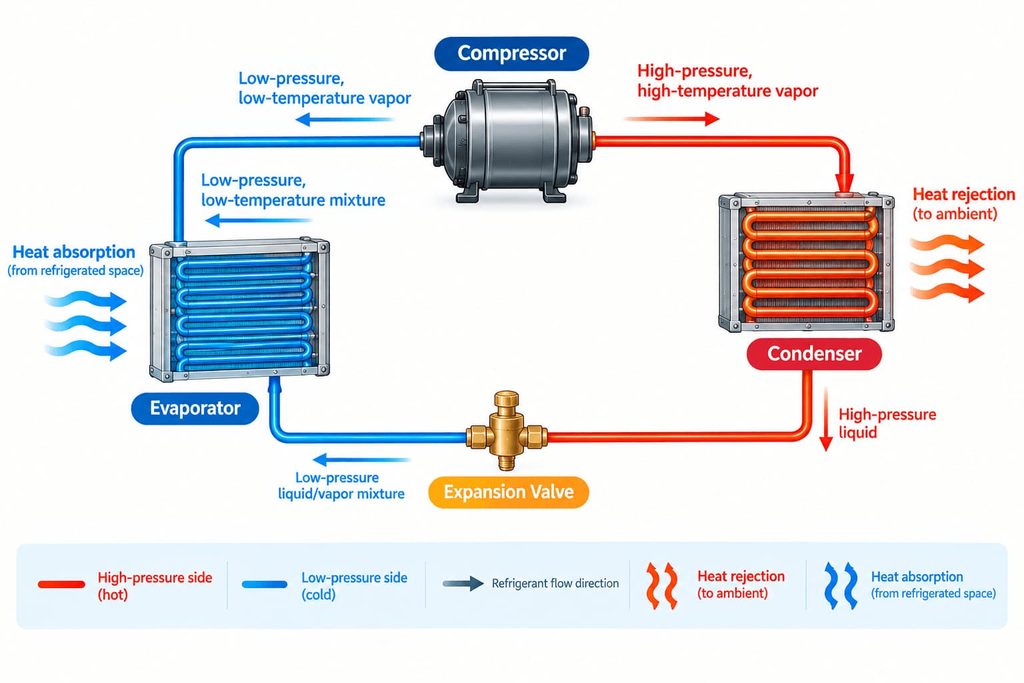
Simplified Refrigeration Cycle
Compressor
↓
High-pressure / high-temperature vapor
Condenser
↓
High-pressure liquid
Expansion Valve
↓
Low-pressure / low-temperature mixture
Evaporator
↓
Low-pressure vapor
Compressor
This is why condenser and evaporator selection cannot be considered independently.
The condenser determines how effectively the system can reject heat, while the evaporator determines how effectively the system can absorb heat.
What Is a Refrigeration Condenser?
A refrigeration condenser is a heat exchanger that removes heat from high-pressure refrigerant vapor and converts it into high-pressure liquid refrigerant.
In simple terms:
The condenser is the refrigeration system’s heat-rejection component.
The refrigerant entering the condenser has already absorbed heat inside the evaporator and gained additional energy during compression.
The condenser must therefore reject several types of heat:
- Heat absorbed by the evaporator
- Heat added during compression
- Superheat from the discharge gas
- Heat associated with condensing the refrigerant
- Potential additional heat from the system depending on configuration
The condenser must reject not only the refrigeration load but also the heat generated by the compressor and the refrigerant’s superheat.
This means a condenser generally needs a higher heat-rejection capacity than the nominal refrigeration capacity of the system. For example, a water-cooled refrigeration system with a 300 kW refrigeration load. Under the specified operating conditions, the heat rejection factor is approximately 1.19, resulting in approximately 357 kW of condenser heat rejection.
Why Is the Condenser Important?
An undersized condenser may cause:
- High condensing pressure
- Increased compressor power consumption
- Higher discharge temperature
- Reduced refrigeration capacity
- Poor energy efficiency
- Compressor overheating
- Shorter compressor life
A dirty or poorly ventilated condenser can create similar problems.
This is particularly important for air-cooled refrigeration equipment operating in high ambient temperatures.
What Is a Refrigeration Evaporator?
In simple terms:
The evaporator is the refrigeration system’s heat-absorption component.
The refrigerant enters the evaporator as a low-pressure, low-temperature liquid-vapor mixture.
Heat from the surrounding environment flows into the refrigerant.
The refrigerant absorbs this heat and boils.
By the time it reaches the outlet, most or all of the liquid refrigerant has evaporated and the refrigerant becomes vapor.
The vapor then travels through the suction line back to the compressor.
Where Are Evaporators Used?
Evaporators can be found in:
- Cold rooms
- Walk-in freezers
- Commercial refrigerators
- Display refrigerators
- Supermarket refrigeration systems
- Ice machines
- Blast freezers
- Industrial refrigeration systems
- Process cooling equipment
- Air-conditioning systems
- Chillers
- Food processing equipment
- Beverage cooling systems
- Pharmaceutical cold storageHeat pump systems
For example, in a cold-room application, the evaporator coil is installed inside the refrigerated room. Fans move room air across the coil, allowing heat from the air and stored products to transfer to the cold refrigerant.
How Does a Refrigeration Condenser Work?
A condenser normally performs three heat-transfer stages.
1. Desuperheating
Hot discharge gas first enters the condenser.
The refrigerant temperature is higher than its saturation temperature.
The first section of the condenser removes sensible heat from the superheated vapor.
2. Condensation
Once the refrigerant reaches its saturation condition, the major portion of heat transfer occurs during phase change.
The refrigerant changes from vapor to liquid while remaining approximately at the condensing pressure.
In a typical water-cooled condenser, the condensing stage is the dominant heat-transfer process and accounts for approximately 83% of total heat rejection under normal refrigeration conditions.
3. Subcooling
After most of the refrigerant has become liquid, additional heat may be removed.
The liquid temperature drops below its saturation temperature.
This is called subcooling.
Subcooling is important because it helps ensure that liquid refrigerant reaches the expansion device rather than partially flashing into vapor in the liquid line.
Subcooling can improve system efficiency and help prevent liquid refrigerant from changing into gas before reaching the evaporator.
How Does a Refrigeration Evaporator Work?
The evaporator works in the opposite direction.
The main purpose is to absorb heat from the refrigerated environment.
The process can also be divided into several stages.
1. Refrigerant Entry
After pressure reduction through the expansion device, the refrigerant enters the evaporator as a low-pressure mixture of liquid and vapor.
Its temperature is low enough to absorb heat from the surrounding environment.
2. Boiling / Evaporation
Heat flows from the warmer environment into the colder refrigerant.
The liquid refrigerant absorbs heat and boils.
This phase change allows the refrigerant to absorb a relatively large amount of heat without a major increase in temperature.
3. Superheating
Toward the outlet of the evaporator, most of the liquid refrigerant has evaporated.
Additional heat may then increase the temperature of the refrigerant vapor above its saturation temperature.
This is known as superheat.
Superheat is an important control parameter.
Evaporator superheat is measured at the evaporator outlet and provides an indication of whether the refrigerant flow into the evaporator is appropriate for the load.
The basic formula is:
Superheat = Actual vapor temperature − Saturation temperature
For example:
Saturation temperature = -10°C
Actual outlet temperature = -4°C
Therefore:
Superheat = -4 − (-10) = 6 K
The correct target depends on refrigerant, expansion device, system design, compressor requirements, and operating conditions. It should not be treated as a universal fixed number.
Condenser vs Evaporator: Core Differences
The easiest way to understand the difference is to compare their position in the cycle.
| Parameter | Condenser | Evaporator |
| Heat function | Rejects heat | Absorbs heat |
| Refrigerant state at inlet | High-pressure vapor | Low-pressure liquid/vapor |
| Refrigerant state at outlet | High-pressure liquid | Low-pressure vapor |
| Main phase change | Vapor → liquid | Liquid → vapor |
| Pressure | High | Low |
| Temperature | Generally higher | Generally lower |
| Main process | Heat rejection | Heat absorption |
| Typical design objective | Maximize heat rejection | Maximize cooling capacity |
| Key control value | Subcooling | Superheat |
| Common airflow | Heat removal to ambient | Heat pickup from refrigerated space concern |
| Common failure symptom | High head pressure | Poor cooling / low suction pressure |
| Typical location | Outside/heat rejection area | Inside cooled space or process |
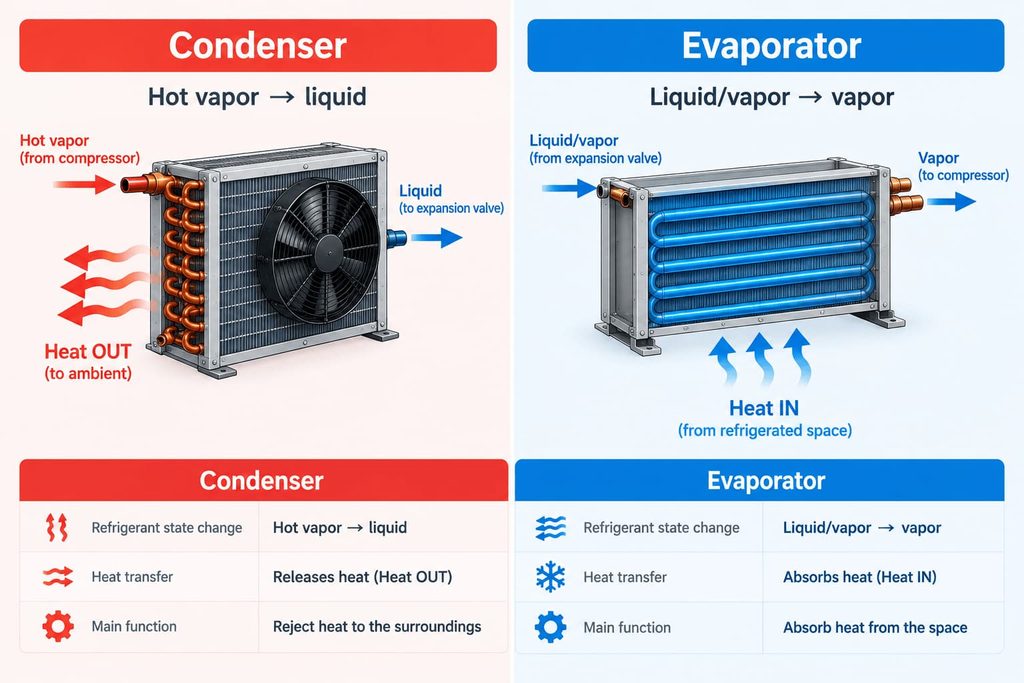
Condenser vs Evaporator: The Engineering Difference
The difference becomes even clearer when we look at heat-transfer requirements.
1. Temperature Difference
Heat transfer requires a temperature difference between the refrigerant and the secondary medium.
For a condenser:
Hot refrigerant → air/water
For an evaporator:
Air/water/product → cold refrigerant
If the temperature difference is too small, the heat exchanger may require a larger heat-transfer surface.
This is one reason why heat exchanger size cannot be determined from physical dimensions alone.
2. Heat-Transfer Surface
Heat exchanger capacity depends on multiple factors, including:
- Heat-transfer area
- Overall heat-transfer coefficient
- Temperature difference
- Refrigerant properties
- Airflow or water flow
- Tube diameter
- Fin design
- Refrigerant distribution
- Circuit arrangement
- Pressure drop
A simplified heat-transfer relationship is:
Q = U × A × ΔT
Where:
- Q = heat-transfer rate
- U = overall heat-transfer coefficient
- A = effective heat-transfer area
- ΔT = effective temperature difference
This explains why simply increasing the physical size of a condenser or evaporator does not automatically guarantee better system performance.
Air-Cooled vs Water-Cooled Condensers
For condenser purchasing, one of the first decisions is the cooling medium.
Air-Cooled Condenser
An air-cooled condenser uses ambient air to remove heat.Typical construction includes:
- Copper tubes
- Aluminum fins
- Steel frame
- Axial fansFan motor
Advantages
- Simple installation
- No cooling-water system
- Relatively low maintenance
- Suitable for many commercial refrigeration systems
- Easy modular installation
Typical Applications
- Refrigeration condensing units
- Cold rooms
- Commercial freezers
- Supermarket systems
- HVAC equipmentSmall and medium industrial refrigeration
Water-Cooled Condenser
A water-cooled condenser transfers heat to water.
Common configurations include:
- Shell-and-tube
- Tube-in-tube
- Brazed plate
- Plate-and-frame
Advantages
- High heat-transfer performance
- Compact size
- Suitable for larger systems
- Less dependent on ambient air temperature
Purchasing Considerations
The buyer must consider:
- Water quality
- Fouling
- Corrosion
- Water flow rate
- Water temperature
- Pressure drop
- Cleaning requirements
For industrial systems, these factors can be as important as nominal cooling capacity.
Common Refrigeration Evaporator Types
Different applications require different evaporator constructions.
Finned-Tube Evaporator
Finned coils are widely used in air-cooling applications.
Typical applications include:
- Cold rooms
- Freezers
- Refrigerated cabinets
- Display casesAir coolers
Fins increase the surface area available for heat transfer between the refrigerant and air.
Plate Heat Exchanger Evaporator
Plate heat exchangers offer high heat-transfer efficiency in a compact structure.
They are commonly used for:
- Chillers
- Process cooling
- Water coolingIndustrial refrigeration
They are especially attractive when space is limited.
Shell-and-Tube Evaporator
Shell-and-tube designs are commonly used in industrial systems where durability and larger capacity are important.
Applications include:
- Industrial chillers
- Process cooling
- Large refrigeration systemsWater/brine cooling
How Condenser and Evaporator Work Together in the Refrigeration Cycle
The condenser and evaporator are not independent components.
They are connected through the compressor and expansion device.
The relationship can be simplified as follows:
Evaporator
Absorbs heat from the cooled space
↓
Compressor
Raises refrigerant pressure and temperature
↓
Condenser
Rejects heat to the environment
↓
Expansion Device
Reduces pressure and temperature
↓
Evaporator
Absorbs heat again
The refrigerant therefore acts as a heat-transfer medium.
It does not simply “create cold.”
Instead, it transports heat from a low-temperature location to a higher-temperature environment.
This is the key concept that buyers should understand when evaluating refrigeration components.
Why Condenser and Evaporator Capacity Must Be Matched
One of the most common purchasing mistakes is selecting a condenser or evaporator based only on nominal dimensions.
For example, a buyer may compare two coils based on:
- Tube diameter
- Number of rows
- Coil length
- Coil widthNumber of fins
These specifications are useful, but they do not tell the complete story.
Two coils with identical external dimensions can have significantly different thermal performance because of differences in:
- Tube arrangement
- Fin pitch
- Circuit design
- Refrigerant distribution
- Material
- Air velocity
- Refrigerant type
- Evaporating temperatureCondensing temperature
Therefore, buyers should request performance data under defined operating conditions.
Key Technical Parameters to Check Before Buying
For B2B buyers, the following parameters should be included in a condenser or evaporator specification sheet.
Refrigeration Capacity
Usually expressed in:
- kW
- BTU/h
- kcal/hTR
Conversion example:
1 refrigeration ton ≈ 3.517 kW
Therefore:
10 TR ≈ 35.17 kW
However, the rated capacity must always be evaluated at specified operating conditions.
Refrigerant
The heat exchanger should be compatible with the refrigerant used by the system.
Examples may include:
- R134a
- R404A
- R507A
- R407C
- R410A
- R448A
- R449A
- R290
- R32
- CO₂/R744
- Other application-specific refrigerants
Refrigerant selection affects:
- Operating pressure
- Heat-transfer performance
- Component compatibility
- Required wall thickness
- System capacityRefrigerant charge
Therefore, do not select a heat exchanger solely by matching physical dimensions.
Operating Temperature
For evaporators, buyers should provide:
- Evaporating temperature
- Entering air temperature
- Leaving air temperature
- Required cooling capacity
For condensers:
- Condensing temperature
- Ambient temperature or entering water temperature
- Refrigeration capacity
- Required heat rejection
Without these conditions, a supplier cannot reliably evaluate actual thermal performance.
Superheat and Subcooling: Two Numbers Buyers Should Understand
Two terms frequently appear in refrigeration specifications:
Superheat
and
Subcooling
They are closely related to evaporator and condenser performance.
Evaporator → Superheat
Superheat is associated primarily with the vapor leaving the evaporator.
Superheat = Actual vapor temperature − Saturation temperature
It helps determine whether sufficient refrigerant has evaporated before reaching the compressor.
Copeland recommends measuring evaporator superheat close to the end of the evaporator, preferably near the expansion valve sensing location.
Condenser → Subcooling
Subcooling describes liquid refrigerant cooled below its saturation temperature.
Subcooling = Saturation temperature − Actual liquid temperature
It helps ensure that liquid reaches the expansion device without unwanted flash gas.
Subcooling can improve efficiency and prevent premature vaporization before the refrigerant reaches the evaporator.
Why Superheat Matters for Compressor Protection
An evaporator that is poorly selected, improperly fed, or incorrectly controlled can contribute to excessive or insufficient superheat.
Too little superheat can increase the risk of liquid refrigerant returning to the compressor.
Too much superheat may indicate insufficient refrigerant feed, excessive pressure drop, inadequate evaporator loading, or other system problems.
As one example, a minimum compressor suction superheat of approximately 20°F (11°C) for certain R-404A/R-507 hermetic compressor applications to help prevent liquid floodback. This is an application-specific manufacturer recommendation, not a universal target for every refrigeration system.
This is an important distinction for engineering buyers:
Never treat a single superheat value as a universal standard. Always check the refrigerant, compressor, expansion device and system design.
How to Select the Right Refrigeration Condenser
When requesting a condenser quotation, provide the supplier with as much of the following information as possible:
1. Refrigeration Capacity
Example:
100 kW refrigeration capacity
2. Refrigerant
Example:
R404A / R448A / R134a
3. Condensing Temperature
Example:
45°C
4. Ambient Temperature
Example:
35°C
5. Cooling Method
- Air cooled
- Water cooled
- Evaporative
6. Installation Environment
Consider:
- Indoor/outdoor
- Dust
- Salt air
- High humidity
- Corrosive atmosphere
- Limited ventilation
7. Space Restrictions
Provide:
- Maximum length
- Maximum width
- Maximum height
- Connection location
8. Material Requirements
For example:
- Copper tube
- Aluminum fin
- Stainless steel
- Copper fin
- Protective coating
A professional supplier should be able to evaluate the design against the actual operating conditions rather than simply selling a standard-size coil.
How to Select the Right Refrigeration Evaporator
For evaporators, buyers should pay particular attention to the cooling load and operating temperature.
Provide:
Cooling Capacity
For example:
50 kW
Evaporating Temperature
For example:
-10°C
Refrigerant
For example:
R448A
Entering Air Temperature
For example:
+2°C
Leaving Air Temperature
For example:
-5°C
Airflow
For forced-air evaporators:
m³/h or CFM
Application
For example:
- Cold storage
- Freezer
- Food processing
- Display cabinet
- Chiller
- Process cooling
Defrost Method
Possible options include:
- Off-cycle defrost
- Electric defrost
- Hot-gas defrost
- Water defrost
Defrost requirements can significantly influence evaporator design.
Common Problems Caused by Poor Condenser Selection
Problem 1: Condenser Too Small
Possible consequences:
- High condensing pressure
- High compressor power
- Reduced cooling capacity
- High discharge temperature
- Increased operating cost
Problem 2: Insufficient Airflow
Even a correctly designed coil cannot perform properly without sufficient airflow.
Possible causes include:
- Incorrect fan selection
- Blocked coil
- Dirty fins
- Poor installation
- Recirculation of hot discharge air
Problem 3: Poor Liquid Subcooling
Insufficient subcooling can allow flash gas to form in the liquid line.
Flash gas can increase pressure drop, reduce expansion-device capacity, cause noise, and create unstable liquid feeding.
Common Problems Caused by Poor Evaporator Selection
Problem 1: Evaporator Too Small
The system may fail to achieve the required temperature.
Problem 2: Excessive Pressure Drop
High pressure drop can reduce effective evaporating pressure and negatively affect system performance.
Problem 3: Incorrect Refrigerant Distribution
Poor distribution can cause some circuits to be starved while others are overfed.
Problem 4: Excessive Frost
For low-temperature applications, frost accumulation can reduce airflow and heat-transfer performance.
Problem 5: Incorrect Superheat
Incorrect superheat may indicate:
- Expansion valve problems
- Incorrect refrigerant charge
- Poor evaporator selection
- Insufficient airflow
- Incorrect load conditions
Condenser vs Evaporator: Which One Is More Important?
This is actually the wrong question.
A properly designed refrigeration system needs both.
An efficient evaporator cannot compensate for an undersized condenser.
Likewise, a high-performance condenser cannot compensate for an improperly selected evaporator.
The system performance is determined by the interaction between:
Compressor + Condenser + Expansion Device + Evaporator
For this reason, professional component selection should start with the complete operating envelope rather than selecting individual components independently.
Condenser and Evaporator Selection Checklist for B2B Buyers
Before placing an order, buyers should confirm the following:
| Selection Item | Condenser | Evaporator |
| Refrigerant | ✓ | ✓ |
| Required capacity | ✓ | ✓ |
| Operating pressure | ✓ | ✓ |
| Temperature conditions | ✓ | ✓ |
| Heat-transfer medium | ✓ | ✓ |
| Airflow/water flow | ✓ | ✓ |
| Pressure drop | ✓ | ✓ |
| Material | ✓ | ✓ |
| Connection size | ✓ | ✓ |
| Installation dimensions | ✓ | ✓ |
| Corrosion environment | ✓ | ✓ |
| Superheat | — | ✓ |
| Subcooling | ✓ | — |
| Defrost requirement | — | ✓ |
| Fan specification | ✓ | ✓ where applicable |
| Customization | ✓ | ✓ |
This checklist can significantly reduce the risk of ordering a component that physically fits but does not perform correctly.
How to Compare Two Refrigeration Heat Exchangers
If you are comparing suppliers, do not compare only the unit price.
A better approach is to compare performance per operating condition.
Ask both suppliers to provide:
- Rated refrigeration capacity
- Refrigerant
- Evaporating/condensing temperature
- Entering and leaving air/water temperature
- Airflow or water flow
- Refrigerant pressure drop
- Air-side pressure drop
- Heat-transfer area
- Material specification
- Tube diameter and wall thickness
- Fin material and thickness
- Fin pitch
- Circuit configuration
- Maximum working pressure
- Leak-test pressure
- Design temperature range
- Applicable standards
- Performance test conditions
Only after these parameters are aligned does a price comparison become meaningful.
What Makes a Good Refrigeration Condenser or Evaporator Supplier?
For OEM and wholesale buyers, the supplier’s engineering capability can be as important as the component itself.
A reliable supplier should be able to provide:
Engineering Support
The supplier should understand:
- Refrigerant selection
- Heat-transfer calculations
- Refrigeration capacity
- Pressure drop
- Airflow
- Refrigerant distribution
- Superheat/subcooling
- System operating conditions
Customization
Common customization requirements include:
- Coil dimensions
- Tube diameter
- Fin spacing
- Number of rows
- Circuit arrangement
- Connection position
- Header design
- Material
- Surface coating
- Mounting brackets
Quality Control
A professional manufacturer should have appropriate quality-control procedures covering:
- Raw material inspection
- Tube inspection
- Brazing/welding quality
- Dimensional inspection
- Pressure testing
- Leak testing
- Performance testing where applicable
- Final inspection
For international B2B buyers, documentation and traceability should also be considered.
Frequently Asked Question
Is a condenser the same as an evaporator?
No.
A condenser rejects heat and changes refrigerant from vapor to liquid.
An evaporator absorbs heat and changes refrigerant from liquid to vapor.
Which is colder, the condenser or evaporator?
The evaporator operates at the low-pressure, low-temperature side of the refrigeration system.
The condenser operates at the high-pressure, high-temperature side.
Can an evaporator be used as a condenser?
Not automatically.
Although both are heat exchangers, their design, refrigerant distribution, pressure conditions, heat-transfer requirements, oil return, flow direction, and operating temperatures may be different.
A heat exchanger should be evaluated for the specific application before being used in reverse.
Does a larger condenser always improve refrigeration performance?
No.
Increasing condenser size can improve heat rejection under some conditions, but the complete system must still be balanced.
Fan selection, refrigerant flow, pressure drop, compressor capacity, ambient temperature, and system control all matter.
Does a larger evaporator always mean better cooling?
No.
A larger evaporator can provide additional heat-transfer area, but actual system performance also depends on refrigerant distribution, airflow, evaporating temperature, compressor capacity, expansion-device control, and system load.
Conclusion: Condenser vs Evaporator—The Key Takeaway
The difference between a condenser and evaporator can be summarized in one sentence:
The evaporator absorbs heat from the cooled space, while the condenser rejects that heat to the surrounding environment.
But for professional refrigeration equipment selection, the difference goes much deeper.
The evaporator operates on the low-pressure side and is responsible for absorbing the required cooling load. Its performance is strongly related to evaporating temperature, refrigerant distribution, airflow, heat-transfer area, pressure drop, and superheat.
The condenser operates on the high-pressure side and must reject the heat absorbed by the evaporator plus the heat added by the compressor. Its performance depends on condensing temperature, ambient or water temperature, airflow/water flow, heat-transfer area, pressure drop, and subcooling.
For B2B buyers, the most important lesson is:
Do not purchase a condenser or evaporator based on dimensions or price alone.
Instead, compare the component under the same engineering conditions:
Refrigerant + Capacity + Operating Temperature + Flow Rate + Pressure Drop + Material + Installation Conditions
This approach gives OEMs, distributors, refrigeration contractors, and equipment manufacturers a much more reliable basis for purchasing decisions.
If you are sourcing refrigeration components for an OEM project, providing the operating conditions to the manufacturer is usually the fastest way to determine whether a standard coil is suitable or whether a customized condenser or evaporator is required.
Need Help Selecting a Refrigeration Condenser or Evaporator?
Before requesting a quotation, prepare the following information:
Refrigerant | Cooling Capacity | Evaporating Temperature | Condensing Temperature | Air/Water Temperature | Flow Rate | Installation Dimensions | Application
With these parameters, a refrigeration component manufacturer can evaluate the required heat-transfer capacity and recommend a suitable configuration.
Explore our Refrigeration Condenser and Refrigeration Evaporator product ranges to find a configuration suitable for your application.
For OEM and wholesale projects, contact our engineering team for technical specifications, customized dimensions, heat-transfer requirements, and application-based recommendations.