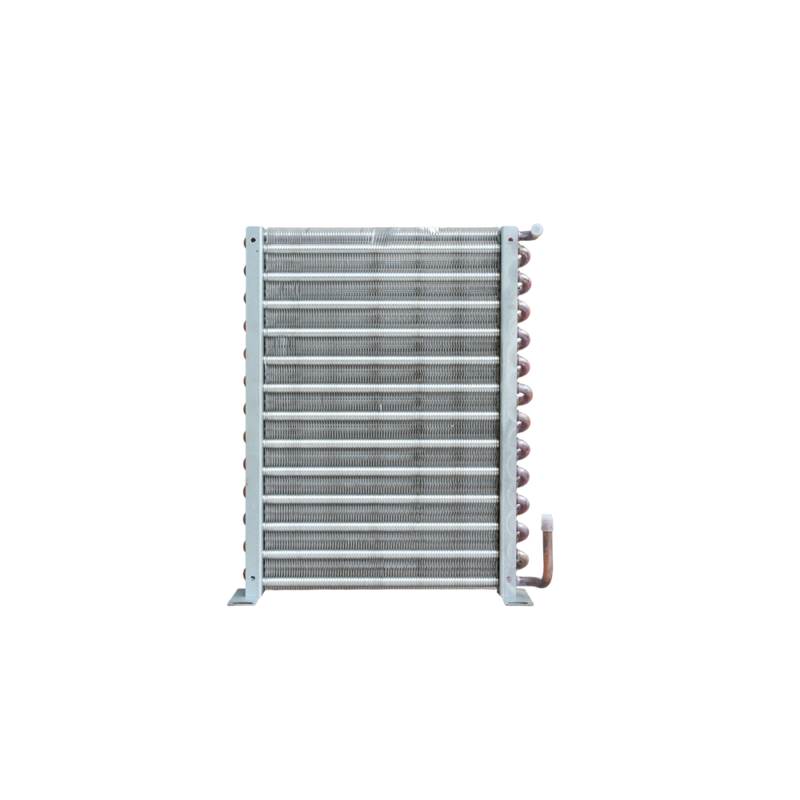
Introduction: The Difference Is More Than Just Their Functions
An evaporator and a compressor perform two fundamentally different jobs in a refrigeration system.
The evaporator absorbs heat from the air, water, or process fluid that needs to be cooled. The compressor draws low-pressure refrigerant vapor from the evaporator and raises its pressure and temperature, enabling the refrigerant to circulate through the refrigeration cycle.
Although their functions are different, their operating conditions are closely connected.
An evaporator that cannot deliver the required cooling capacity may affect the compressor’s suction conditions. Excessive pressure drop, unsuitable evaporating temperature, unstable superheat, or poor refrigerant distribution can influence the refrigerant entering the compressor. In turn, the compressor’s available capacity and operating conditions determine how effectively the system can use the evaporator.
This relationship becomes especially important when selecting equipment for industrial refrigeration systems, replacing an existing evaporator, or evaluating whether a compressor and evaporator are properly matched.
For an equipment manufacturer, system integrator, or industrial refrigeration buyer, understanding the difference between these two components is only the first step. The more important questions are:
- How do the evaporator and compressor work together?
- How can evaporator performance affect compressor operation?
- Does evaporator capacity need to equal compressor capacity?
- What happens when the two components are incorrectly matched?
- What technical information should be checked before replacing an evaporator or compressor?
This guide focuses on these engineering and purchasing decisions rather than repeating a general explanation of the complete refrigeration cycle.
The key principle is simple: an evaporator and compressor should not be selected independently. Their capacities and operating conditions must be evaluated together under the actual design conditions of the refrigeration system.
1. What Is an Evaporator in an Industrial Refrigeration System?
1.1 The Main Function of a Refrigeration Evaporator
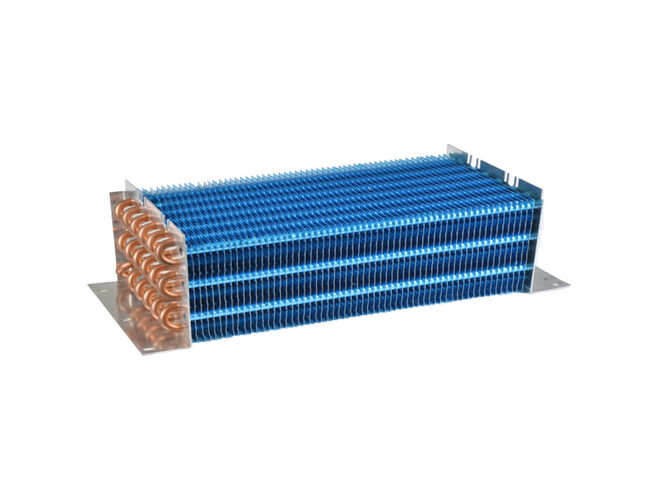
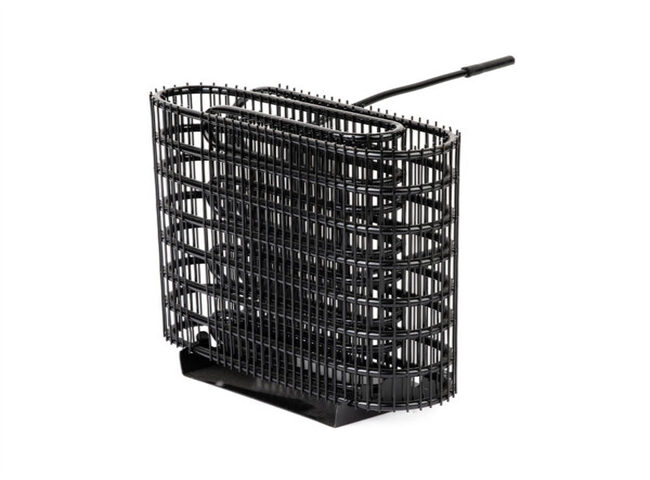
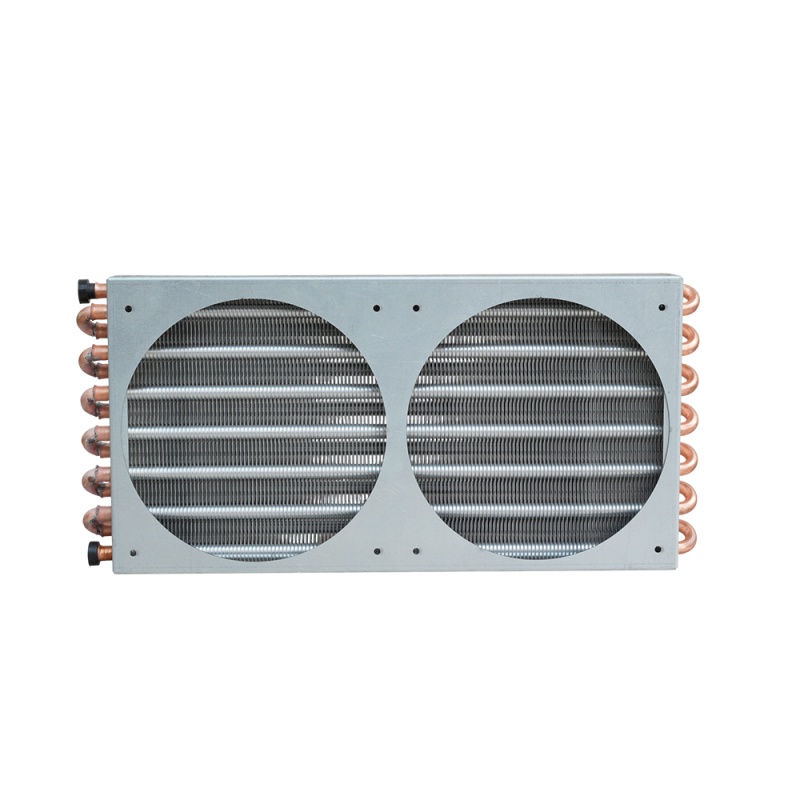
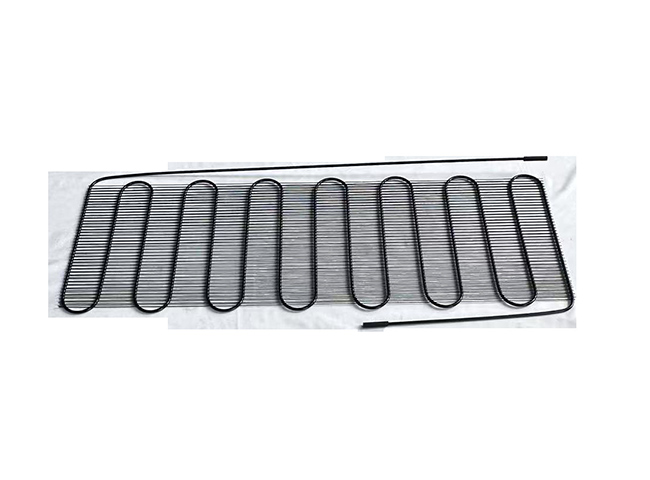
An evaporator is a heat exchanger that absorbs heat from a medium and transfers that heat to the refrigerant flowing inside its circuits.
Depending on the application, the medium being cooled may be:
- Air in a cold room, freezer, or industrial cooling space.
- Water or a water-glycol solution in a process cooling system.
- Process fluids used in food processing, chemical production, or manufacturing.
- Air circulating through industrial refrigeration equipment.
The refrigerant enters the evaporator at a low pressure and temperature, typically as a two-phase mixture containing both liquid and vapor. As it absorbs heat, the liquid refrigerant boils and gradually becomes vapor.
The evaporator therefore performs three important functions:
- Heat absorption: It transfers heat from the product, air, or process fluid into the refrigerant.
- Refrigerant evaporation: It provides the heat-transfer surface required for liquid refrigerant to boil.
- Refrigerant supply to the compressor: It delivers refrigerant vapor toward the compressor suction side under the specified operating conditions.
The evaporator does not generate cooling independently. Its performance depends on the refrigeration system’s ability to circulate refrigerant and maintain the required pressure and temperature conditions.

1.2 How Does an Evaporator Work?
The evaporator operates through heat transfer and refrigerant phase change.
A typical operating process includes the following stages:
Stage 1: Low-pressure refrigerant enters the evaporator
After passing through the expansion device, the refrigerant enters the evaporator at a lower pressure and temperature. It is generally a mixture of liquid and vapor.
Stage 2: Heat transfers from the warmer medium to the refrigerant
Air, water, or another process medium flows across or through the evaporator’s heat-transfer surface. Because the medium is warmer than the refrigerant, heat moves toward the refrigerant.
Stage 3: Liquid refrigerant evaporates
The absorbed heat causes the liquid refrigerant to boil. During the main two-phase evaporation process, the refrigerant absorbs heat while its pressure and saturation temperature remain approximately constant, subject to pressure losses and operating conditions.
Stage 4: Refrigerant vapor leaves the evaporator
After most or all of the liquid refrigerant has evaporated, the vapor may continue absorbing heat and become superheated. The required outlet superheat depends on the system design and expansion-device control.
The refrigerant then travels through the suction line toward the compressor.
1.3 Key Evaporator Performance Parameters
An evaporator should be evaluated using its actual operating conditions rather than dimensions or nominal capacity alone.
| Parameter | What It Describes | Why It Matters |
|---|---|---|
| Refrigeration capacity (kW) | Heat-removal rate under specified conditions | Determines whether the evaporator can meet the cooling load |
| Evaporating temperature (°C) | Refrigerant saturation temperature during evaporation | Influences heat-transfer conditions and compressor suction pressure |
| Refrigerant mass flow rate (kg/s) | Refrigerant flowing through the evaporator | Affects the amount of heat that can be absorbed |
| Airflow or fluid flow rate | Flow of the medium being cooled | Influences heat transfer and temperature distribution |
| Heat-transfer surface area (m²) | Available surface for heat exchange | Affects the evaporator’s heat-transfer capability |
| Refrigerant pressure drop (kPa) | Pressure loss through the evaporator circuits | Influences the pressure available at the compressor suction |
| Outlet superheat (K) | Temperature above saturation at the outlet pressure | Helps assess the refrigerant condition leaving the evaporator |
| Frosting and operating conditions | Environmental and application-related factors | Can affect airflow, heat transfer, and operating stability |
A critical purchasing consideration is that an evaporator’s rated capacity is meaningful only when its rating conditions are understood.
For example, two evaporators with the same nominal cooling capacity may not deliver the same performance when the refrigerant, evaporating temperature, entering air temperature, airflow, or other design conditions differ.
The evaporator’s performance depends on more than its basic heat-absorption function. Coil design, refrigerant distribution, airflow, heat-transfer area, and operating conditions all influence its actual performance. For a more detailed explanation of evaporator types, design considerations, capacity calculations, and selection factors, see our complete guide to refrigeration evaporators.
2. What Is a Refrigeration Compressor?
2.1 The Main Function of a Refrigeration Compressor
A refrigeration compressor is a mechanical device that draws low-pressure refrigerant vapor from the evaporator and compresses it to a higher pressure.
Its main functions are to:
- Draw refrigerant vapor from the evaporator.
- Increase refrigerant pressure through mechanical compression.
- Increase refrigerant temperature during compression.
- Maintain the pressure difference required for refrigerant circulation through the system.
Without the compressor, the refrigeration system cannot maintain the required pressure conditions for continuous refrigerant circulation.
The compressor is often described as the driving component of the vapor-compression refrigeration cycle. However, it does not directly absorb heat from the cooled space. That is the evaporator’s function.
2.2 What Happens to Refrigerant Inside the Compressor?
Under normal vapor-compression refrigeration operation, the compressor receives refrigerant vapor under specified suction conditions.
The process can be simplified into three stages:
- Suction: Low-pressure refrigerant vapor enters the compressor.
- Compression: Mechanical work increases the refrigerant’s pressure and temperature.
- Discharge: High-pressure, high-temperature refrigerant vapor leaves the compressor and moves toward the condenser.
The compressor does not normally perform the main liquid-to-vapor phase change. That phase change takes place in the evaporator.
The compressor is designed to operate within a specified range of suction pressure, discharge pressure, temperature, refrigerant, and other operating conditions. The exact requirements depend on the compressor design and manufacturer.
2.3 Key Compressor Operating Parameters
| Parameter | Description | Engineering Importance |
|---|---|---|
| Refrigerant type | Refrigerant used in the system | Determines operating pressures and performance characteristics |
| Tekanan sedutan | Pressure at the compressor inlet | Influences refrigerant density and compressor operating conditions |
| Suction temperature | Temperature of refrigerant vapor entering the compressor | Helps evaluate inlet conditions and superheat |
| Tekanan pelepasan | Pressure at the compressor outlet | Relates to condensing conditions and pressure ratio |
| Discharge temperature | Temperature of refrigerant leaving the compressor | Important for evaluating operating limits |
| Evaporating temperature | Refrigerant saturation temperature on the low-pressure side | Influences available refrigeration capacity |
| Suhu pemadatan | Refrigerant saturation temperature on the high-pressure side | Influences compression requirements |
| Kapasiti penyejukan | Cooling capacity delivered at a specified operating point | Used to evaluate whether the compressor meets the system load |
| Pressure ratio | Absolute discharge pressure divided by absolute suction pressure | Helps evaluate compression conditions |
| Power input | Electrical or mechanical power consumed | Important for energy evaluation and operating cost |
| Operating envelope | Manufacturer-defined permissible operating range | Helps determine whether the compressor can safely operate at the selected conditions |
One important distinction is that compressor refrigeration capacity is not the same as compressor motor power.
A compressor’s motor input is the power consumed to operate the compressor. Its refrigeration capacity is the rate at which the refrigeration system can remove heat under specified operating conditions.
These values must not be treated as interchangeable when matching an evaporator with a compressor.
2.4 Does Refrigerant Change State in the Compressor?
Under normal operation, refrigerant enters the compressor as vapor and leaves as high-pressure, high-temperature vapor.
The compressor raises pressure and temperature through mechanical compression. It is not designed to evaporate liquid refrigerant or condense refrigerant.
This distinction matters because liquid refrigerant entering a compressor can create serious operating risks, depending on compressor design and operating conditions.
For this reason, the evaporator outlet condition, expansion-device control, suction-line arrangement, and compressor requirements must be considered together.
The exact allowable suction condition should always be checked against the compressor manufacturer’s technical documentation.
3. Evaporator vs. Compressor: Key Differences at a Glance

3.1 Their Primary Roles in the Refrigeration System
The evaporator and compressor are connected, but they perform different physical processes.
- The evaporator is a heat exchanger that absorbs heat.
- The compressor is a mechanical device that increases refrigerant pressure.
- The evaporator supplies refrigerant vapor to the compressor.
- The compressor maintains the pressure conditions that allow the refrigeration cycle to continue.
Understanding this distinction helps prevent a common equipment-selection mistake: assuming that an evaporator and compressor can be compared simply by their physical size or nominal capacity.
3.2 Key Differences in Function, Operating Conditions, and Performance
| Comparison | Penguap | Pemampat |
|---|---|---|
| Fungsi utama | Menyerap haba | Compresses refrigerant vapor |
| Equipment type | Heat exchanger | Mechanical compression equipment |
| Proses utama | Heat transfer and evaporation | Pressure increase through mechanical work |
| Refrigerant inlet | Usually low-pressure two-phase mixture | Low-pressure refrigerant vapor |
| Refrigerant outlet | Vapor, normally with specified superheat | High-pressure, high-temperature vapor under normal operation |
| Main operating side | Low-pressure side | Connects low-pressure suction and high-pressure discharge |
| Key temperature | Evaporating temperature | Suction and discharge temperatures |
| Key pressure | Evaporator operating pressure and pressure drop | Suction and discharge pressures |
| Main capacity consideration | Heat-transfer capacity under rated conditions | Refrigeration capacity at the specified operating point |
| Main energy consideration | Heat-transfer performance and auxiliary fan or pump requirements | Compression power input |
| Common performance concerns | Fouling, frosting, insufficient airflow, refrigerant maldistribution | High pressure ratio, unsuitable suction conditions, excessive discharge temperature |
| Main selection factors | Cooling load, refrigerant, temperatures, flow rates, pressure drop, installation conditions | Refrigerant, capacity, suction and discharge conditions, power, operating envelope |
Although the evaporator absorbs heat and the compressor raises refrigerant pressure, they are not the only two components responsible for refrigeration performance. The condenser also plays a critical role by rejecting heat from the refrigerant. If you want to compare the two heat-exchange components in more detail, read condenser vs. evaporator in a refrigeration system.
3.3 Are an Evaporator and a Compressor the Same?
No. They are different components with different functions.
An evaporator absorbs heat from the medium being cooled. A compressor uses mechanical energy to compress refrigerant vapor and maintain the pressure difference needed for refrigerant circulation.
They cannot replace each other, and neither component can perform the complete refrigeration process alone.
However, their operating conditions must be coordinated. A compressor may have sufficient rated capacity on paper, but the actual system performance can still be limited by an evaporator that cannot transfer enough heat under the required operating conditions.
4. How Do the Evaporator and Compressor Work Together?

4.1 Step 1: Low-Pressure Refrigerant Enters the Evaporator
The expansion device reduces the refrigerant pressure before it enters the evaporator.
The refrigerant is generally a low-pressure liquid-vapor mixture. Its saturation temperature is below the temperature of the air, water, or process medium that needs to be cooled.
This temperature difference provides the driving force for heat transfer.
4.2 Step 2: The Evaporator Absorbs Heat and Produces Refrigerant Vapor
As the warmer medium transfers heat to the refrigerant, the liquid portion boils.
The amount of heat absorbed depends on several factors, including:
- Temperature difference between the refrigerant and the cooled medium.
- Evaporator heat-transfer surface area.
- Airflow or secondary-fluid flow.
- Refrigerant mass flow rate.
- Refrigerant distribution across the evaporator circuits.
- Fouling, frost, and other operating conditions.
The evaporator must provide sufficient heat-transfer capability to meet the required load at the specified design conditions.
4.3 Step 3: The Compressor Draws Vapor from the Evaporator
The refrigerant vapor leaving the evaporator travels through the suction line to the compressor.
The compressor’s suction pressure is influenced by the pressure at the evaporator outlet and the pressure losses along the suction path.
In simplified form:
Compressor suction pressure = evaporator outlet pressure − suction-line pressure losses
The exact pressure relationship depends on the system arrangement and measurement locations.
This is why evaluating evaporator pressure drop alone is not always enough. The suction piping between the evaporator and compressor also needs to be considered.
4.4 Step 4: The Compressor Raises Refrigerant Pressure and Temperature
The compressor draws in the refrigerant vapor and increases its pressure and temperature.
The high-pressure vapor then moves to the condenser, where heat is rejected to the surrounding air, water, or another cooling medium.
The refrigerant subsequently passes through the rest of the refrigeration system and returns to the evaporator.
The evaporator and compressor are two connected components within the vapor-compression refrigeration cycle. Their operating conditions are also influenced by the condenser, expansion device, refrigerant, and system controls. To understand how these components work together throughout the complete cycle, see our guide to refrigeration systems and the refrigeration cycle.
4.5 The High-Pressure and Low-Pressure Sides: Why They Matter
The evaporator and compressor are closely associated with the low-pressure side of the refrigeration system.
However, the compressor also connects the low-pressure side to the high-pressure side.
| System Area | Typical Component or Condition | What to Evaluate |
|---|---|---|
| Low-pressure side | Penguap | Evaporating temperature, heat absorption, pressure drop |
| Low-pressure side | Suction line | Pressure loss, heat gain, insulation, refrigerant condition |
| Compressor inlet | Suction condition | Pressure, temperature, superheat, vapor condition |
| Keluaran pemampat | Discharge condition | Pressure, temperature, operating limits |
| High-pressure side | Penyejuk | Heat rejection, condensing temperature, pressure |
The pressure difference between the low-pressure and high-pressure sides enables refrigerant circulation. A change in evaporator operating conditions can therefore influence the compressor’s operating point.
5. How Evaporator Performance Affects Compressor Operation
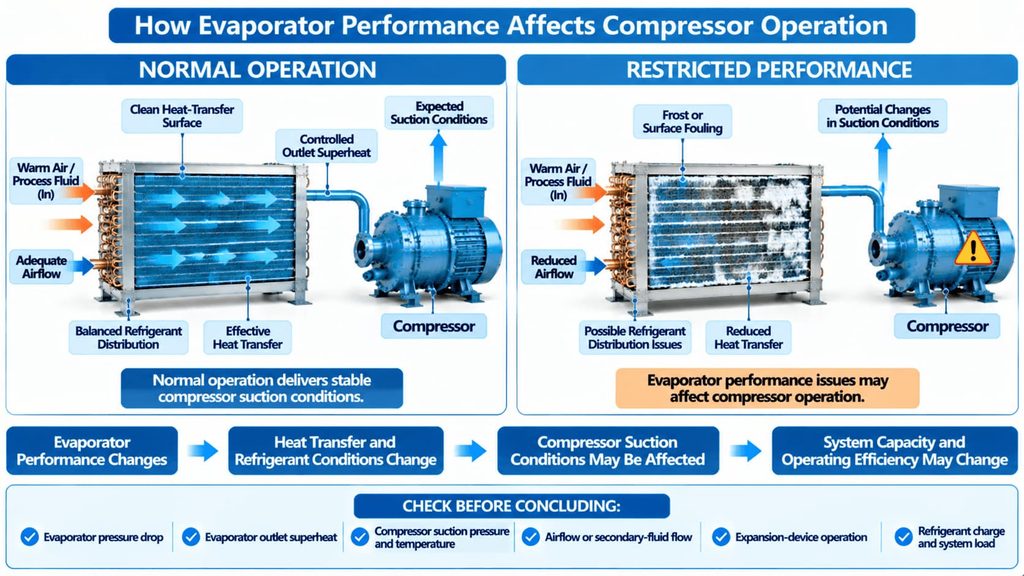
This is one of the most important relationships when evaluating an industrial refrigeration system.
An evaporator does not directly control compressor performance, but its heat-transfer characteristics and operating conditions influence the refrigerant supplied to the compressor.
5.1 Evaporating Temperature and Compressor Pressure Ratio
Evaporating temperature determines the refrigerant saturation pressure on the low-pressure side.
When the evaporating temperature decreases, the corresponding saturation pressure generally decreases for a given refrigerant.
If condensing pressure remains comparable, the compressor must operate across a larger pressure ratio.
The pressure ratio is calculated as:
Pressure Ratio = Absolute Discharge Pressure / Absolute Suction Pressure
For example, consider a simplified hypothetical comparison:
| Operating Point | Suction Pressure (Absolute) | Discharge Pressure (Absolute) | Pressure Ratio |
|---|---|---|---|
| Condition A | 3 bar | 12 bar | 4.0 |
| Condition B | 2 bar | 12 bar | 6.0 |
In this illustrative example, reducing suction pressure while keeping discharge pressure unchanged increases the pressure ratio from 4.0 to 6.0.
These figures are for explaining the relationship only. They are not recommended operating pressures for any specific refrigerant or compressor.
A higher pressure ratio may influence:
- Compressor refrigeration capacity.
- Power demand.
- Discharge temperature.
- Volumetric efficiency.
- Operating limits.
The actual result depends on the refrigerant, compressor design, capacity-control method, and operating conditions.
Purchasing implication: When selecting an evaporator for a low-temperature industrial application, the design evaporating temperature must be confirmed before comparing compressor capacity or evaluating replacement equipment.
5.2 Evaporator Pressure Drop and Compressor Suction Conditions
Pressure drop is the reduction in refrigerant pressure as it flows through a component or pipe.
An evaporator may have pressure losses caused by:
- Refrigerant flow through tubes or circuits.
- Circuit length and internal geometry.
- Refrigerant mass flow rate.
- Flow distribution.
- Operating conditions.
Additional pressure losses occur in the suction line between the evaporator and compressor.
The compressor therefore does not necessarily receive refrigerant at exactly the same pressure as the refrigerant saturation pressure used to rate the evaporator.
Consider the following simplified relationship:
Compressor suction pressure = Evaporator outlet pressure − Suction-line pressure drop
Excessive pressure loss can reduce the suction pressure available at the compressor.
This may increase the pressure ratio and influence compressor capacity and power consumption.
When selecting a replacement evaporator, buyers should therefore ask for more than cooling capacity. Evaporator pressure drop under the required operating conditions is also relevant.
5.3 Evaporator Outlet Superheat and Compressor Inlet Conditions
Superheat is the difference between the actual refrigerant vapor temperature and its saturation temperature at the same pressure.
Superheat = Actual Vapor Temperature − Saturation Temperature at the Measured Pressure
For example, if refrigerant has a saturation temperature of -10°C at the measured pressure and an actual vapor temperature of -5°C, the superheat is:
-5°C − (-10°C) = 5 K
This is a simplified calculation using illustrative temperatures.
Superheat is important because the compressor is generally designed to receive refrigerant vapor under specified suction conditions.
Two measurement locations should be distinguished:
- Evaporator outlet superheat: Measured at or near the evaporator outlet.
- Compressor suction superheat: Evaluated at the compressor inlet.
These values may differ because the suction line can introduce pressure loss and heat gain between the two measurement points.
Why Excessive Superheat Can Matter
Excessive superheat may indicate that the refrigerant is receiving more heat after evaporation than intended, or that refrigerant supply and heat-transfer conditions are not properly balanced.
Depending on the system, it can reduce suction gas density and affect the compressor’s available refrigeration capacity.
Why Insufficient Superheat Can Matter
Insufficient superheat may increase the risk of liquid refrigerant reaching the compressor.
Liquid return can be particularly damaging to compressors that are not designed to handle liquid refrigerant at the inlet.
However, the acceptable superheat range is system- and compressor-specific. It should not be determined using a universal value.
5.4 Heat-Transfer Performance, Airflow, and Refrigerant Distribution
The evaporator’s ability to absorb heat depends on more than its nominal surface area.
Its actual performance can be affected by several operating conditions.
Dirty or blocked heat-transfer surfaces
Dust, oil, scale, or other deposits can increase thermal resistance and reduce heat transfer.
Insufficient airflow or secondary-fluid flow
When the air or fluid flow rate is lower than the design requirement, the evaporator may not receive enough heat from the cooled medium.
Uneven refrigerant distribution
Poor distribution can cause some circuits to receive more refrigerant than others. This may create uneven heat-transfer performance and unstable outlet conditions.
Frost accumulation
In low-temperature air-cooling applications, frost can restrict airflow and increase thermal resistance. Defrost strategy and operating conditions therefore need to be considered during evaporator selection.
These issues can reduce cooling performance and influence the refrigerant conditions supplied to the compressor.
5.5 Can a Poorly Performing Evaporator Cause Compressor Problems?
A poorly performing evaporator can contribute to unfavorable compressor operating conditions, but it is not correct to assume that every compressor problem originates from the evaporator.
For example:
| Observed Condition | Possible Evaporator-Related Factors | Other Factors to Check |
|---|---|---|
| Low suction pressure | Insufficient heat transfer, low refrigerant feed, excessive evaporator pressure drop | Refrigerant charge, expansion device, system load, restrictions |
| High superheat | Insufficient refrigerant supply, uneven distribution | Expansion-valve setting, sensor location, refrigerant charge |
| Poor cooling performance | Fouling, frosting, insufficient airflow | Compressor capacity, condenser performance, control settings |
| Unstable suction conditions | Uneven refrigerant distribution, fluctuating load | Expansion-device control, system controls, refrigerant charge |
| Possible liquid return | Unstable evaporation or poor superheat control | Expansion-device operation, defrost sequence, system design |
The correct approach is to diagnose the complete refrigeration system rather than replace a component based on one symptom.
6. What Happens When an Evaporator and Compressor Are Mismatched?
An evaporator and compressor are mismatched when their capacities or operating characteristics are unsuitable for the actual system requirements.
A mismatch does not always mean that the two components have different nominal capacity numbers. It can also result from comparing their ratings at different operating conditions.
6.1 Evaporator Capacity Is Insufficient for the Required Cooling Load
If the evaporator cannot absorb the required amount of heat under the design conditions, the system may fail to achieve the target temperature.
Possible consequences include:
- Longer cooling or pull-down time.
- Failure to maintain the required process temperature.
- Reduced cooling performance during peak load.
- Changes in refrigerant outlet conditions.
- Unstable operation under certain load conditions.
An evaporator’s capacity depends on its design and rating conditions. A unit that appears adequate under one set of conditions may not provide the same capacity at a lower evaporating temperature or different entering-air conditions.
6.2 Compressor Capacity Does Not Match the Actual System Load
Compressor capacity should be evaluated against the actual refrigeration load and operating point.
An undersized compressor may not provide enough refrigeration capacity to meet the required load.
Possible consequences include:
- Insufficient cooling.
- Longer operating periods.
- Failure to reach the target temperature during peak demand.
An oversized compressor may have difficulty operating efficiently under low-load conditions if the system does not provide suitable capacity control.
Possible consequences include:
- Frequent cycling in some system configurations.
- Unstable temperature control.
- Less favorable part-load operation.
- Increased mechanical and electrical operating demands in certain applications.
Compressor staging, unloading, and variable-speed control can help manage changing loads, but these strategies must be considered during system design.
6.3 Incorrect Evaporating Temperature Selection
Evaporator capacity is strongly influenced by the evaporating temperature and the temperature difference between the refrigerant and the medium being cooled.
Selecting an evaporator using a capacity rating from a different evaporating temperature can lead to an incorrect comparison.
For example, an evaporator rated at one design condition should not be assumed to provide the same capacity at a significantly lower evaporating temperature.
The buyer should confirm:
- Required leaving-air or leaving-fluid temperature.
- Design evaporating temperature.
- Entering-air or entering-fluid temperature.
- Jenis penyejuk.
- Required cooling capacity.
6.4 Excessive Evaporator and Suction-Line Pressure Drop
Excessive pressure drop can cause the compressor suction pressure to be lower than expected.
This can increase the pressure ratio and affect the compressor’s operating point.
When comparing replacement evaporators, pressure drop should be considered alongside cooling capacity, refrigerant flow, and connection requirements.
A design that achieves a nominal capacity but creates excessive pressure loss may not be suitable for the existing system.
6.5 Unstable Superheat and Refrigerant Distribution
A system may experience unstable operation when refrigerant distribution across evaporator circuits is uneven or when the expansion device cannot maintain the required operating conditions.
Potential issues include:
- Uneven circuit loading.
- Fluctuating outlet superheat.
- Unstable expansion-device control.
- Reduced heat-transfer effectiveness.
- Increased risk of liquid refrigerant returning to the compressor.
The evaporator distributor, circuit arrangement, expansion device, and refrigerant mass flow should therefore be considered as part of the selection process.
6.6 Common Signs of an Improperly Matched System
The following table provides a diagnostic starting point, not a definitive fault-diagnosis chart.
| Symptom | Possible Equipment-Matching Issue | Parameters to Check |
|---|---|---|
| Cooling target cannot be reached | Insufficient evaporator or compressor capacity | Actual load, evaporator capacity, compressor capacity |
| Long pull-down time | Capacity insufficient for peak load | Pull-down load, operating time, temperature conditions |
| Low suction pressure | Low evaporator load, pressure drop, insufficient refrigerant feed | Evaporator outlet pressure, compressor suction pressure, refrigerant flow |
| Excessive superheat | Insufficient refrigerant feed or uneven distribution | Evaporator outlet superheat, suction superheat, expansion-device operation |
| Unstable temperature | Capacity-control or refrigerant-distribution problems | Load variation, control settings, circuit distribution |
| High compressor discharge temperature | High pressure ratio or unfavorable suction conditions | Suction pressure, discharge pressure, suction temperature, operating envelope |
| Excessive energy consumption | Poor system efficiency or unsuitable operating point | Compressor power, cooling load, evaporating and condensing conditions |
A proper diagnosis should include measurements at defined locations and comparison with the equipment manufacturer’s performance data.
7. How to Match an Evaporator with a Refrigeration Compressor
Correct equipment matching starts with the refrigeration load and operating conditions, not with choosing two components that have similar nameplate capacity values.
The following process provides a practical engineering framework.

7.1 Step 1: Define the Actual Refrigeration Load
Before selecting an evaporator or compressor, determine how much heat must be removed.
The cooling load may include:
- Product or process heat.
- Heat entering through walls, floors, ceilings, or insulation.
- Heat from equipment and machinery.
- Heat generated by people, lighting, or other internal sources.
- Air infiltration and ventilation loads.
- Defrost-related or operating-cycle loads where applicable.
For industrial process cooling, the load may also change significantly between startup, pull-down, and steady-state operation.
The design should distinguish between:
Pull-down load: The cooling capacity required to reduce the temperature of a product, process medium, or space from its initial condition to the target condition.
Steady-state load: The cooling capacity required to maintain the target temperature after the initial cooling period.
Selecting equipment based only on the steady-state load may be insufficient when the application requires rapid pull-down.
7.2 Step 2: Confirm Refrigerant and Design Operating Conditions
The refrigerant and operating temperatures must be established before comparing equipment performance.
| Design Input | Information Required |
|---|---|
| Refrigeran | Exact refrigerant type |
| Evaporating temperature | Required refrigerant saturation temperature |
| Suhu pemadatan | Expected refrigerant saturation temperature |
| Cooling medium | Air, water, glycol, or process fluid |
| Entering temperature | Temperature of the medium entering the evaporator |
| Leaving temperature | Required temperature of the medium leaving the evaporator |
| Flow rate | Airflow or secondary-fluid flow |
| Superheat requirement | Required outlet or suction condition |
| Ambient conditions | Relevant design ambient temperature and humidity |
These conditions form the basis for evaluating compressor and evaporator performance.
7.3 Step 3: Check Compressor Capacity at the Actual Operating Point
Compressor capacity should be taken from manufacturer performance data for the selected refrigerant and operating conditions.
Check:
- Refrigeration capacity at the required evaporating and condensing temperatures.
- Suction and discharge conditions.
- Refrigerant mass flow rate where available.
- Power input.
- Discharge temperature.
- Allowable operating envelope.
- Capacity-control range.
Do not compare compressor capacities using figures taken from different refrigerants or temperature conditions.
A compressor rated at a higher evaporating temperature may have a different available capacity from the same compressor operating at a lower evaporating temperature.
7.4 Step 4: Select Evaporator Capacity Under the Same Conditions
The evaporator should be selected using the same refrigerant and relevant design operating conditions used for compressor evaluation.
Important factors include:
- Required cooling capacity.
- Evaporating temperature.
- Entering-air or entering-fluid temperature.
- Leaving-air or leaving-fluid temperature.
- Airflow or fluid flow rate.
- Refrigerant mass flow rate.
- Kawasan pemindahan haba.
- Penurunan tekanan.
- Circuit arrangement and refrigerant distribution.
The evaporator’s rated capacity must be checked at the actual project conditions.
A nominal rating without its associated test or selection conditions is not sufficient for a reliable comparison.
Selecting an evaporator is not simply a matter of matching nominal cooling capacity. The coil must also meet the required refrigerant, evaporating temperature, airflow, heat-transfer conditions, and system operating requirements. If you are evaluating a component for a new installation or replacement project, explore our refrigeration evaporator solutions to learn more about evaporator configurations and application requirements.
Before selecting an evaporator, the required cooling capacity should be established under the actual design conditions. The selection should account for the application load, refrigerant, evaporating temperature, temperature difference, and operating conditions rather than relying on a nominal capacity figure alone. For a step-by-step explanation, read our guide to refrigeration evaporator sizing and cooling capacity calculation.
7.5 Step 5: Verify Superheat, Pressure Drop, and Refrigerant Distribution
After the initial capacity selection, verify that the evaporator can provide suitable refrigerant outlet conditions.
Review:
- Evaporator outlet superheat.
- Pressure drop through evaporator circuits.
- Suction-line pressure loss.
- Refrigerant distribution between circuits.
- Expansion-device compatibility.
- Oil return considerations where relevant.
These factors can influence both evaporator performance and compressor inlet conditions.
7.6 Step 6: Review System Controls and Part-Load Operation
Industrial refrigeration systems do not always operate at a constant load.
The system may experience:
- Different product loads.
- Changes in ambient temperature.
- Startup and shutdown cycles.
- Seasonal changes.
- Defrost periods.
- Variable process demand.
The compressor’s capacity-control method and the expansion device’s control behavior should be reviewed together with the evaporator design.
For low-temperature applications, defrost strategy is particularly important because frost accumulation can change airflow and heat-transfer performance.
7.7 Step 7: Validate the Final Selection with Engineering Performance Data
Before confirming the equipment selection, review the complete system.
A useful validation checklist includes:
- Is the required cooling load clearly defined?
- Are the refrigerant and design temperatures confirmed?
- Is the compressor capacity available at the actual operating point?
- Is the evaporator capacity rated under comparable conditions?
- Are pressure losses acceptable?
- Are superheat and refrigerant distribution requirements addressed?
- Are the compressor and evaporator compatible with the expansion device and controls?
- Does the compressor remain within its permitted operating envelope?
- Have installation constraints and maintenance requirements been considered?
The final selection should be based on the system’s operating conditions and manufacturer performance data, not simply on matching two nominal capacity figures.
8. Does Evaporator Capacity Need to Equal Compressor Capacity?
No. Evaporator capacity and compressor capacity do not necessarily need to have identical numerical ratings.
However, they must be compatible with the same refrigeration load and design operating conditions.
8.1 Understanding Evaporator Cooling Capacity
Evaporator cooling capacity is the rate at which the evaporator transfers heat from the cooled medium to the refrigerant.
It is commonly expressed in:
- kW
- kcal/h
- Btu/h
Its actual value depends on the refrigerant, evaporating temperature, entering-medium temperature, airflow or fluid flow, and other design conditions.
8.2 Understanding Compressor Refrigeration Capacity
Compressor refrigeration capacity is the cooling capacity that the compressor can support under a specified set of operating conditions.
It depends on factors such as:
- Jenis penyejuk.
- Evaporating temperature.
- Suhu pemadatan.
- Suction superheat.
- Compressor design.
- Operating speed and capacity-control method.
It should not be confused with the compressor’s electrical power input.
8.3 Why Both Capacities Must Be Compared at the Same Operating Conditions
A meaningful comparison requires consistent rating conditions.
For example, it is not reliable to compare:
- An evaporator capacity rated at one evaporating temperature.
- A compressor capacity rated at another evaporating temperature.
- Different refrigerants.
- Different entering-air or fluid temperatures.
- Different assumptions about superheat and operating conditions.
The comparison should use the project design conditions and the relevant manufacturer selection data.
8.4 A Practical Example of Evaporator and Compressor Capacity Matching
Consider a hypothetical industrial refrigeration application with the following design requirement:
| Item | Illustrative Value |
|---|---|
| Required steady-state cooling load | 100 kW |
| Selected evaporator capacity | 105 kW |
| Compressor capacity at the specified operating point | 100 kW |
| Refrigeran | To be confirmed for the project |
| Design evaporating temperature | To be confirmed |
| Design condensing temperature | To be confirmed |
In this simplified example, the evaporator has a nominal selected capacity of 105 kW, while the compressor provides 100 kW of refrigeration capacity at the specified operating point.
This does not automatically indicate a mismatch.
The 5 kW difference is only an illustrative capacity difference. Whether the selection is appropriate depends on the actual rating conditions, system design, load profile, controls, and manufacturer recommendations.
The example should not be interpreted as a universal rule that an evaporator must be 5% larger than a compressor.
8.5 Why Nameplate Ratings Alone Are Not Enough
A component’s nameplate or catalog capacity may be based on specific rating conditions.
If the project conditions differ, actual performance may also differ.
For procurement teams, the more useful question is not:
“Do these two components have the same capacity number?”
It is:
“Can these two components operate together to meet the required cooling load at the actual refrigerant, temperature, flow, and pressure conditions?”
That is the basis of reliable equipment matching.
9. Replacing an Evaporator or Compressor: What Should You Check?
Replacing one component in an existing refrigeration system requires more than finding a product with similar dimensions.
The replacement must be compatible with the existing system and its actual operating conditions.
9.1 When Replacing an Existing Evaporator
Before ordering a replacement evaporator, confirm the following information.
| Checkpoint | Information to Confirm | Why It Matters |
|---|---|---|
| Original model | Existing evaporator model and available specifications | Provides a starting point for comparison |
| Refrigeran | Refrigerant currently used | Determines compatibility and operating conditions |
| Kapasiti penyejukan | Required capacity at actual design conditions | Helps ensure sufficient heat-transfer performance |
| Evaporating temperature | Actual or design evaporating temperature | Affects evaporator capacity |
| Suhu pemadatan | Relevant system design condition | Helps establish the compressor operating point |
| Dimensions | Overall dimensions and installation space | Ensures physical fit |
| Connections | Refrigerant connection sizes and positions | Supports installation compatibility |
| Airflow or fluid flow | Required flow rate and direction | Influences heat-transfer performance |
| Pressure drop | Allowable refrigerant-side pressure loss | Helps protect system performance |
| Circuit arrangement | Refrigerant circuit and distributor configuration | Influences refrigerant distribution |
If the original evaporator is unavailable or its specifications are incomplete, the replacement should be evaluated using the actual system operating data rather than dimensions alone.
9.2 When Replacing an Existing Compressor
When replacing a compressor, check:
- Refrigerant compatibility.
- Required cooling capacity at the actual operating point.
- Suction and discharge pressure conditions.
- Suction and discharge temperatures.
- Power input and electrical requirements.
- Compressor operating envelope.
- Existing evaporator capacity and pressure drop.
- Expansion-device compatibility.
- Control-system requirements.
A replacement compressor with a similar nominal capacity may still operate differently if its performance characteristics or operating conditions differ.
The existing evaporator should therefore be reviewed before the replacement is finalized.
9.3 Should the Evaporator and Compressor Always Be Replaced Together?
No. The evaporator and compressor do not automatically need to be replaced at the same time.
The decision depends on:
- The condition of the existing component.
- Whether it can still meet the required cooling load.
- Compatibility with the replacement component.
- Refrigerant and operating-temperature requirements.
- Pressure drop and refrigerant distribution.
- Expansion-device and control-system requirements.
For example, if a compressor fails but the existing evaporator remains in good condition and is suitable for the replacement compressor’s operating point, replacing the evaporator may not be necessary.
Likewise, if an evaporator needs replacement but the existing compressor remains suitable for the system load and operating conditions, replacing the compressor may not be justified.
The correct approach is to verify system compatibility before making a replacement decision.
9.4 Questions to Ask Before Ordering a Replacement Evaporator
Before requesting a quotation, clarify:
- Is the replacement required for the same refrigeration load?
- Will the existing compressor remain unchanged?
- Will the refrigerant remain the same?
- Have the evaporating or condensing temperatures changed?
- Is the installation space fixed?
- Are the original performance specifications available?
- Is the current evaporator’s pressure drop known?
- Are there airflow, connection, or installation limitations?
These details help the manufacturer evaluate whether a replacement evaporator can meet the actual application requirements.
For additional guidance, see our buyer’s guide to replacement refrigeration evaporator coils.
10. Technical Information Required for an Evaporator Selection or Quotation
For industrial B2B buyers, a quotation based only on product dimensions or a general description may not provide enough information for accurate equipment selection.
A more useful request for quotation (RFQ) should include the operating conditions and application requirements.
10.1 Essential Technical Information
| Information Required | Example or Description | Selection Purpose |
|---|---|---|
| Permohonan | Cold storage, process cooling, industrial refrigeration | Identifies the operating environment |
| Refrigerant type | Specify the refrigerant | Establishes refrigerant compatibility |
| Required cooling capacity | kW or other capacity unit | Defines the heat-removal requirement |
| Evaporating temperature | °C | Establishes the refrigerant-side design condition |
| Suhu pemadatan | °C | Helps define the overall system operating point |
| Compressor model | Existing or proposed model | Helps evaluate equipment matching |
| Entering-air or fluid temperature | °C | Defines the heat source entering the evaporator |
| Leaving-air or fluid temperature | °C | Defines the required cooling result |
| Airflow or fluid flow rate | m³/h, kg/s, or other suitable unit | Supports heat-transfer evaluation |
| Installation dimensions | Length, width, height, available space | Confirms physical compatibility |
| Connections | Connection type, size, and location | Supports installation planning |
| Operating conditions | Hours, load variation, ambient conditions | Helps assess the application |
| Other requirements | Material, corrosion conditions, special design needs | Supports customization and final selection |
Not every project will have every value available. If some information is unknown, provide the existing equipment model, application details, available drawings, and operating measurements.
An engineering team can then identify which additional information is needed before confirming the selection.
10.2 Why Complete Operating Data Leads to Better Equipment Selection
A suitable evaporator is not determined by dimensions alone.
Two evaporators may have similar external dimensions but different:
- Heat-transfer surface areas.
- Tube and fin arrangements.
- Refrigerant circuit designs.
- Refrigerant-side pressure drops.
- Airflow characteristics.
- Cooling capacities under actual operating conditions.
Likewise, a replacement unit with a similar nominal capacity may not provide the same performance if its rating conditions differ.
Providing complete operating data helps reduce the risk of selecting an evaporator that physically fits but cannot meet the required system performance.
10.3 Need an Evaporator Matched to Your Refrigeration System?
Need a replacement refrigeration evaporator or a custom evaporator matched to your compressor and system conditions?
Our team can review your application requirements and available technical information to support an initial evaporator selection evaluation.
To help us understand your project, provide:
- Jenis penyejuk.
- Required cooling capacity.
- Evaporating temperature.
- Suhu pemadatan.
- Existing or proposed compressor model.
- Entering and leaving air or fluid temperatures.
- Airflow or fluid flow rate.
- Installation dimensions and connection requirements.
Contact our team for an evaporator selection evaluation.
Providing accurate operating conditions at the quotation stage helps make the equipment-selection process more efficient and reduces the risk of comparing unsuitable products.
11. Frequently Asked Questions
11.1 What Is the Difference Between an Evaporator and a Compressor?
An evaporator absorbs heat from air, water, or another process medium and transfers that heat to the refrigerant. A compressor draws low-pressure refrigerant vapor from the evaporator and increases its pressure and temperature.
The evaporator is a heat exchanger, while the compressor is a mechanical compression device.
11.2 Are an Evaporator and Compressor the Same?
No. They perform different functions in a refrigeration system.
The evaporator absorbs heat and produces refrigerant vapor. The compressor compresses that vapor and maintains the pressure difference needed for refrigerant circulation.
11.3 Does Refrigerant Change State Inside the Compressor?
Under normal operation, refrigerant enters the compressor as vapor and leaves as high-pressure, high-temperature vapor.
The main liquid-to-vapor phase change occurs in the evaporator, not inside the compressor.
11.4 How Do the Evaporator and Compressor Work Together?
The evaporator absorbs heat and supplies refrigerant vapor to the compressor. The compressor draws in this vapor and increases its pressure and temperature.
The refrigerant then moves to the condenser and continues through the refrigeration cycle.
The evaporator’s outlet conditions influence the refrigerant entering the compressor.
11.5 Can a Poorly Performing Evaporator Affect Compressor Performance?
Yes. Poor evaporator heat transfer, excessive pressure drop, insufficient refrigerant feed, uneven distribution, or unstable superheat can influence compressor suction conditions.
However, similar symptoms may also be caused by refrigerant charge, expansion-device problems, suction-line restrictions, condenser performance, or system controls.
A complete system diagnosis is necessary before identifying the cause.
11.6 Does a Lower Evaporating Temperature Increase Compressor Power Consumption?
Under comparable condensing conditions, a lower evaporating temperature generally reduces suction pressure and increases the compressor pressure ratio.
This can increase compression work and influence power demand.
The actual effect depends on the refrigerant, compressor design, operating conditions, and capacity-control method. Manufacturer performance data should be used for project evaluation.
11.7 Does Evaporator Capacity Need to Equal Compressor Capacity?
No. Their nominal capacity values do not need to be numerically identical.
They must, however, be compatible with the same refrigeration load and design operating conditions.
Compare evaporator and compressor performance using the same refrigerant and relevant operating temperatures rather than relying on nameplate values alone.
11.8 What Happens If the Evaporator Is Too Small for the Compressor?
If the evaporator cannot transfer enough heat under the required conditions, the system may fail to meet the cooling load.
Depending on the system design and operating conditions, this may contribute to unfavorable suction conditions, longer operating periods, and reduced cooling performance.
The actual result should be evaluated using evaporator performance data, compressor operating conditions, and system measurements.
11.9 What Is the Difference Between Evaporator Superheat and Compressor Suction Superheat?
Evaporator outlet superheat is measured at or near the evaporator outlet. Compressor suction superheat is evaluated at the compressor inlet.
The values may differ because the suction line can introduce pressure loss and heat gain between these locations.
Both should be interpreted using the pressure and temperature measured at the corresponding location.
11.10 Should an Evaporator and Compressor Be Replaced Together?
Not necessarily.
If one component fails, the other may remain suitable for continued operation. Before deciding, verify the existing component’s condition, refrigerant compatibility, capacity, operating temperatures, pressure drop, and control requirements.
Replacing both components without checking their condition and compatibility may result in unnecessary cost.
11.11 Can a Dirty or Frosted Evaporator Cause Low Suction Pressure?
A dirty or frosted evaporator can reduce heat transfer and, in air-cooled applications, may restrict airflow.
Depending on the system conditions, this can contribute to changes in refrigerant flow and suction pressure.
However, low suction pressure can also result from other causes, including insufficient refrigerant charge, expansion-device restrictions, low system load, or refrigerant-side restrictions.
The evaporator should be inspected alongside the rest of the refrigeration system.
12. Conclusion: Why Evaporator and Compressor Matching Matters
The evaporator and compressor perform different but closely connected functions in an industrial refrigeration system.
The evaporator absorbs heat from the cooled medium and supplies refrigerant vapor to the compressor. The compressor increases refrigerant pressure and temperature, maintaining the pressure difference required for continuous refrigerant circulation.
Their relationship goes beyond their individual functions.
Evaporating temperature, evaporator pressure drop, outlet superheat, refrigerant distribution, and heat-transfer performance can all influence compressor suction conditions. At the same time, compressor capacity and its operating envelope determine whether the system can meet the required cooling load.
For equipment buyers and system designers, three principles are especially important:
- Evaluate actual operating conditions. Evaporator and compressor capacities should be compared using the same refrigerant and relevant design temperatures.
- Check the complete operating relationship. Pressure drop, superheat, refrigerant distribution, airflow, and system controls all influence equipment compatibility.
- Verify before replacing. An evaporator and compressor do not automatically need to be replaced together. Their condition and compatibility should be assessed independently and as part of the complete system.
If you are selecting a new evaporator or replacing an existing unit, provide the application, refrigerant, cooling capacity, evaporating temperature, condensing temperature, compressor information, and installation requirements.
A properly selected evaporator should do more than fit the available space. It should deliver the required heat-transfer performance under the actual operating conditions of the refrigeration system.
Explore our refrigeration evaporator products atau contact our team to discuss your application and equipment requirements.