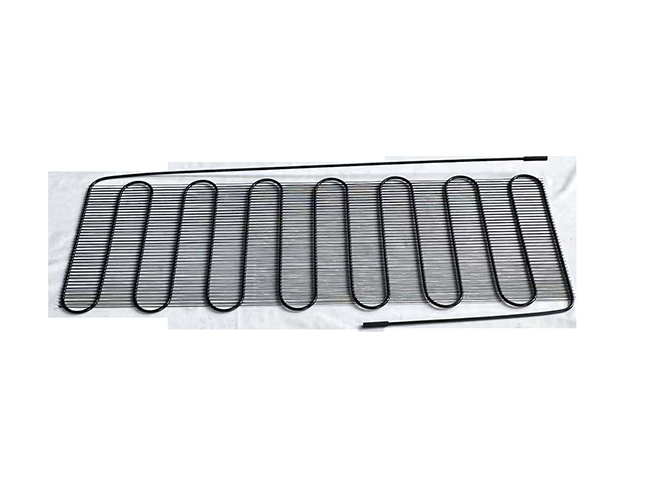
Introduction: Understanding the Refrigeration System Before Selecting Its Components
A refrigeration system is not simply a collection of individual components. Its performance depends on how the compressor, condenser, expansion device, evaporator, refrigerant, piping, and control system work together as one integrated system.
For engineers and B2B buyers, this distinction is important.
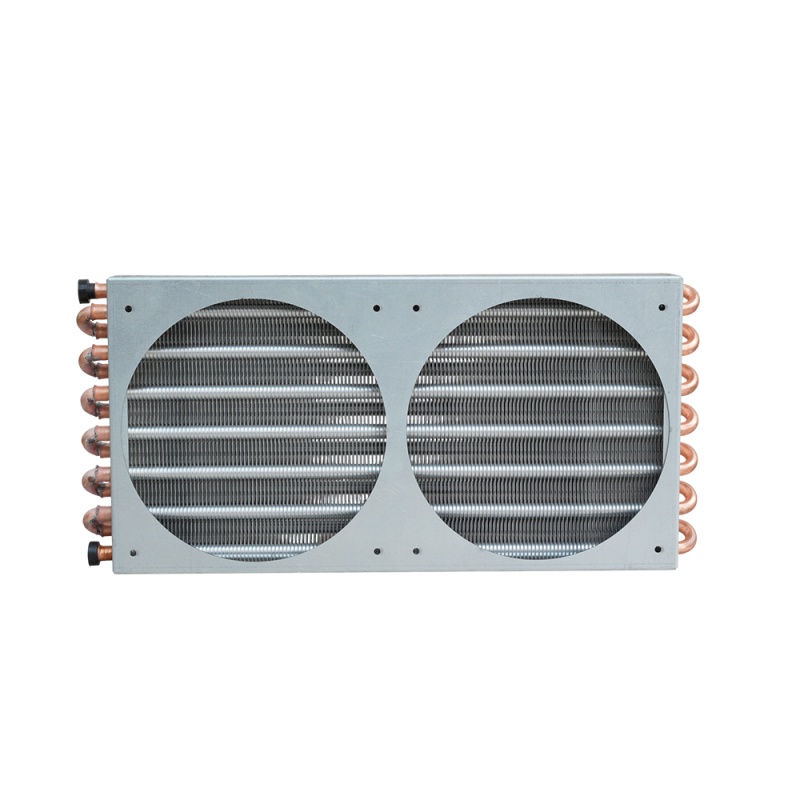
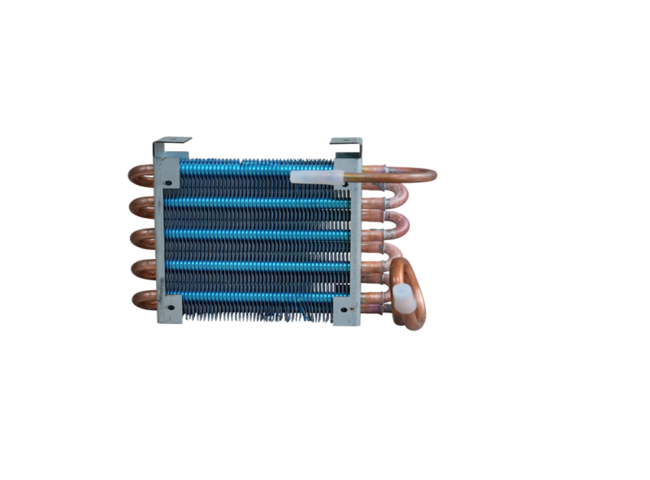
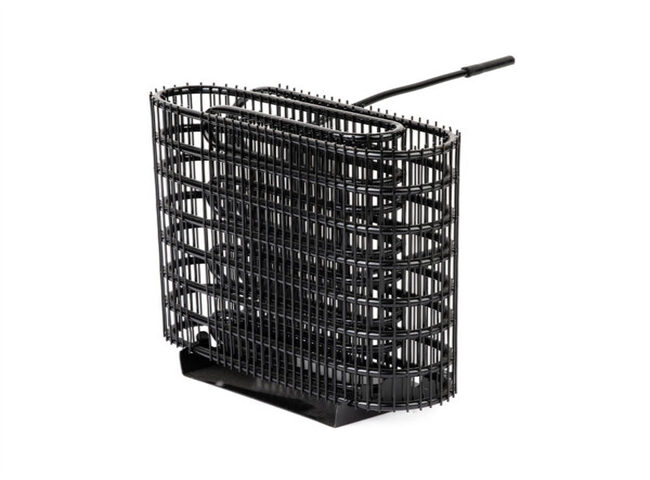
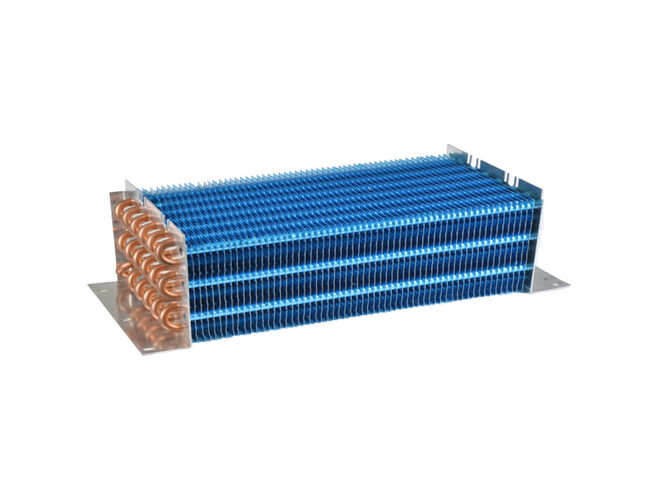
When selecting a refrigeration condenser or 冷凍用蒸発器, dimensions, material, and price are only part of the decision. The component must also match the refrigeration system’s cooling capacity, evaporating temperature, condensing temperature, refrigerant, airflow, pressure drop, heat-transfer requirements, and application conditions.
The basic vapor-compression refrigeration cycle can be summarized as:
Evaporation → Compression → Condensation → Expansion → Evaporation
The evaporator absorbs heat from the low-temperature space or product. The compressor raises the refrigerant pressure. The condenser rejects heat to the surrounding environment. The expansion device reduces pressure and controls refrigerant flow before the refrigerant returns to the evaporator.
This continuous process allows a refrigeration system to remove heat from a low-temperature area and reject it to a higher-temperature environment.
For buyers sourcing refrigeration components, understanding this relationship helps answer a much more practical question:
How do I select a condenser and evaporator that actually work correctly within my complete refrigeration system?
This guide explains the refrigeration system and refrigeration cycle from an engineering and procurement perspective, including the four major components, refrigerant state changes, pressure and temperature relationships, system types, performance factors, component selection, troubleshooting, and the technical information required for an accurate RFQ.

What Is a Refrigeration System?
Refrigeration System Definition
A refrigeration system is an engineered system designed to remove heat from a low-temperature space, product, process, or environment and reject that heat to a higher-temperature environment.
The system does not “create cold” in the conventional sense.
Instead, it continuously transfers heat.
In a typical mechanical refrigeration system:
Heat is absorbed → refrigerant carries the energy → heat is rejected
This process is repeated continuously while the system is operating.
What Is the Main Purpose of a Refrigeration System?
Depending on the application, refrigeration systems can provide:
- Cooling
- Temperature control
- Food preservation
- Cold storage
- プロセス冷却
- Industrial temperature control
- 製品の冷却
- Humidity control in some applications
- Low-temperature freezing
The equipment configuration depends heavily on the required operating conditions.
Where Are Refrigeration Systems Used?
| 用途 | Typical Use | Typical System Considerations |
| Commercial refrigeration | Display cases, supermarkets, food service | Frequent door opening, variable load |
| Industrial refrigeration | Process cooling, production facilities | High capacity, continuous operation |
| 冷蔵室 | Food and temperature-controlled storage | Room temperature, infiltration, frost |
| 冷凍保管 | Frozen food and other low-temperature products | Low evaporating temperature, defrost |
| Transport refrigeration | Refrigerated trucks and containers | Variable ambient conditions and vibration |
| Marine refrigeration | Marine cooling systems | Compact design, corrosion environment |
| Domestic refrigeration | Refrigerators and freezers | Compact components, low noise |
| Chillers | Process and comfort cooling | Heat exchanger and water-side requirements |
The same refrigeration principle can therefore be implemented in very different system configurations.
What Is the Refrigeration Cycle?
Refrigeration Cycle Definition
The refrigeration cycle is the continuous thermodynamic process through which refrigerant absorbs heat from a low-temperature area and rejects that heat to a higher-temperature environment.
The refrigeration system is the physical equipment.
The refrigeration cycle is the process occurring inside that equipment.
A simple way to understand the relationship is:
The refrigeration system provides the hardware; the refrigeration cycle describes what happens inside the system.
The basic vapor-compression refrigeration cycle consists of four primary processes:
- Compression
- Condensation
- Expansion
- 蒸発
These processes are performed by four major components:
- コンプレッサー
- 凝縮器
- 拡張装置
- 蒸発器
The four components must be properly matched because changing one component can affect the operating conditions of the others.
How Does the Refrigeration Cycle Work?
The basic process can be represented as:
Heat Absorption → Compression → Heat Rejection → Pressure Reduction → Repeat
More specifically:
Evaporator → Compressor → Condenser → Expansion Device → Evaporator
The refrigerant continuously changes pressure, temperature, and physical state as it moves through the system.
A simplified sequence is:
| Stage | コンポーネント | Refrigerant Condition | 主な機能 |
| 1 | 蒸発器の出口 | 低圧蒸気 | Heat has been absorbed |
| 2 | Compressor outlet | High-pressure hot vapor | Pressure and temperature increase |
| 3 | Condenser outlet | High-pressure liquid | Heat is rejected |
| 4 | Expansion device outlet | 低圧の液気混合物 | Pressure and temperature decrease |
| 5 | 蒸発器 | 低圧冷媒 | Heat is absorbed |
This is the fundamental operating principle behind many refrigeration systems.
The 4 Main Components of a Refrigeration Cycle
A basic vapor-compression refrigeration system has four major components.

1. Compressor
What Does the Compressor Do?
The compressor receives low-pressure refrigerant vapor from the evaporator and compresses it to a higher pressure.
During compression:
- Refrigerant pressure increases
- Refrigerant temperature increases
- Vapor density increases
- Refrigerant moves toward the condenser
The compressor therefore provides the driving force for refrigerant circulation.
A simplified state change is:
Low-pressure vapor → High-pressure hot vapor
Why Is the Compressor Necessary?
Without compression, the refrigeration system would not be able to maintain the pressure difference required for continuous refrigerant circulation and heat transfer.
The compressor must also be matched with the system’s cooling load and operating conditions.
An incorrectly sized compressor can affect:
- 冷却能力
- エネルギー消費量
- Suction pressure
- Discharge pressure
- Refrigerant mass flow
- Operating stability
- Compressor temperature
For a closer look at how these two components interact and how to match a condenser to compressor operating conditions, read our guide to condenser vs. compressor.
2. Condenser
What Does the Condenser Do?
The refrigeration condenser receives high-pressure refrigerant vapor from the compressor and rejects heat to the surrounding environment.
As heat is removed, the refrigerant condenses.
The simplified process is:
High-pressure hot vapor → High-pressure liquid
The condenser therefore performs the heat rejection function of the refrigeration cycle.
Main Types of Refrigeration Condensers
Common configurations include:
- Air-cooled condensers
- Water-cooled condensers
- Other specialized heat-rejection configurations
The correct condenser depends on:
- Refrigeration capacity
- 冷媒
- Condensing temperature
- Ambient temperature
- Heat rejection requirement
- Airflow or water flow
- Installation environment
- Available space
- Material requirements
For a detailed engineering discussion of construction, sizing, applications, and selection, see:
Refrigeration Condenser: Complete Engineering Guide
3. Expansion Device
What Does the Expansion Device Do?
The expansion device reduces refrigerant pressure before the refrigerant enters the evaporator.
It also controls refrigerant flow into the low-pressure side of the system.
A simplified process is:
High-pressure liquid → Low-pressure liquid-vapor mixture
Common expansion devices include:
- Thermostatic expansion valves
- Electronic expansion valves
- Capillary tubes
The expansion device is important because refrigerant pressure determines the saturation temperature at which evaporation occurs.
Poor expansion control can result in:
- Insufficient refrigerant feed
- 過度の過熱
- Flooding
- Poor evaporator utilization
- Unstable system operation
- Reduced cooling performance
The expansion device should therefore be considered together with the evaporator rather than as an isolated component.
4. Evaporator
What Does the Evaporator Do?
The refrigeration evaporator is the component where the refrigerant absorbs heat from the cooled space, product, air, water, or process.
The refrigerant enters the evaporator at low pressure and evaporates as it absorbs heat.
The simplified process is:
Low-pressure liquid-vapor mixture → Low-pressure vapor
The evaporator therefore performs the heat absorption function of the refrigeration cycle.
Why Is the Evaporator Important for Cooling?
The evaporator is directly connected to the cooling requirement.
Its design affects:
- 冷却能力
- Heat-transfer performance
- Air temperature
- Refrigerant evaporation
- Frost formation
- 気流
- Defrost requirements
- System efficiency
For a detailed discussion of evaporator construction, heat transfer, design, sizing, and selection:
Refrigeration Evaporator: Complete Guide
How Does the Refrigeration Cycle Work Step by Step?
Stage 1 — Compression
The compressor receives low-pressure vapor from the evaporator.
The refrigerant is compressed:
Low-pressure vapor → High-pressure hot vapor
The pressure and temperature increase.
The high-pressure refrigerant then enters the condenser.
Stage 2 — Condensation
The hot refrigerant enters the condenser.
The condenser transfers heat from the refrigerant to the surrounding environment.
During the main condensation process:
High-pressure vapor → High-pressure liquid
This is the Heat OUT stage of the refrigeration cycle.
The condenser must reject not only the heat absorbed in the evaporator, but also the energy added to the refrigerant during compression.
Therefore:
Condenser heat rejection is greater than evaporator cooling capacity under normal operating conditions.
Stage 3 — Expansion
The high-pressure liquid reaches the expansion device.
The expansion device creates a pressure drop.
The refrigerant changes from a high-pressure liquid condition to a low-pressure liquid-vapor mixture.
This pressure reduction lowers the refrigerant’s saturation temperature, preparing it to absorb heat inside the evaporator.
Stage 4 — Evaporation
The low-pressure refrigerant enters the evaporator.
Heat from the cooled environment is transferred into the refrigerant.
The refrigerant evaporates:
Low-pressure liquid-vapor mixture → Low-pressure vapor
This is the Heat IN stage of the refrigeration cycle.
The vapor then returns to the compressor and the cycle repeats.
Refrigeration Cycle Flow Direction
Refrigerant Flow Direction
The basic flow direction is:
圧縮機 → 凝縮器 → 膨張装置 → 蒸発器 → 圧縮機
Understanding this direction is important when analyzing a refrigeration system schematic.
The refrigerant does not simply circulate randomly.
Each component performs a specific thermodynamic function.
High-Pressure Side vs Low-Pressure Side
High-Pressure Side
The high-pressure side generally includes:
- Compressor discharge
- 凝縮器
- Liquid line
- Expansion device inlet
The refrigerant is at relatively high pressure before passing through the expansion device.
Low-Pressure Side
The low-pressure side generally includes:
- Expansion device outlet
- 蒸発器
- Suction line
- Compressor inlet
The refrigerant pressure is lower, allowing evaporation to occur at a lower temperature.
This pressure separation is fundamental to mechanical refrigeration.
Refrigerant State Changes Throughout the Cycle
One of the most useful ways to understand a refrigeration cycle is to follow the refrigerant state.
| 場所 | Relative Pressure | Typical Refrigerant State | 主なプロセス |
| Compressor inlet | Low | Vapor | Suction |
| Compressor outlet | High | 過熱蒸気 | Compression |
| Condenser inlet | High | Hot vapor | Desuperheating |
| Condenser middle | High | Two-phase | Condensation |
| Condenser outlet | High | Liquid | Condensation/subcooling |
| Expansion outlet | Low | 液気混合物 | Expansion |
| 蒸発器の入口 | Low | 二相混合物 | 蒸発 |
| 蒸発器の出口 | Low | Vapor | 過熱 |
The exact temperature and pressure values depend on the refrigerant and system operating conditions.
For this reason, a component should not be selected from dimensions alone.
Saturated Refrigerant
Saturation is the condition at which a refrigerant is at the boundary between liquid and vapor states at a given pressure.
For refrigeration engineers, saturation temperature is particularly important because:
- Evaporating pressure determines evaporating temperature.
- Condensing pressure determines condensing temperature.
Therefore, pressure and temperature cannot be considered independently.
過熱
Superheat refers to vapor heated above its saturation temperature at a given pressure.
Superheat is particularly important near the evaporator outlet.
A certain amount of superheat can help ensure that liquid refrigerant does not reach the compressor.
However, excessive superheat can indicate that the evaporator is not being fully utilized.
Therefore, the objective is not simply “more superheat.”
The objective is appropriate superheat under the actual operating conditions.
Subcooling
Subcooling refers to liquid refrigerant cooled below its saturation temperature at a given pressure.
It is commonly considered at the condenser outlet or liquid line.
Subcooling can help ensure that liquid refrigerant reaches the expansion device under the intended conditions.
The appropriate value depends on:
- 冷媒
- System configuration
- Operating condition
- Liquid-line arrangement
- 拡張装置
- Manufacturer design
For this reason, subcooling should not be treated as a universal fixed number.

Pressure and Temperature in a Refrigeration Cycle
Pressure and temperature are two of the most important operating variables in a refrigeration system.
High-Pressure Side
The high-pressure side includes the compressor discharge and condenser.
The refrigerant is at a pressure corresponding to a higher saturation temperature.
Low-Pressure Side
The low-pressure side includes the evaporator and compressor suction.
The lower pressure allows the refrigerant to evaporate at a lower saturation temperature.
Evaporating Temperature
The evaporating temperature is associated with the refrigerant’s saturation condition at evaporator pressure.
The difference between the cooled medium temperature and refrigerant evaporating temperature is an important factor in evaporator heat transfer.
Condensing Temperature
The condensing temperature is associated with the refrigerant’s saturation condition at condenser pressure.
The difference between ambient or cooling-medium temperature and refrigerant condensing temperature affects condenser heat rejection.
Why Does Pressure Difference Matter?
The pressure difference across the system allows the refrigerant to circulate and establishes the temperature levels required for heat transfer.
However, excessive pressure differences can also increase compressor work and affect system efficiency.
This is why refrigeration system design must consider the entire operating envelope rather than only nominal capacity.
Heat Transfer in a Refrigeration System
Heat transfer is the central purpose of the refrigeration cycle.
Where Is Heat Absorbed?
Heat is absorbed primarily in the:
蒸発器
The source of heat can be:
- Room air
- 製品
- Process fluid
- 水
- Glycol
- Other cooled media
Where Is Heat Rejected?
Heat is rejected primarily in the:
凝縮器
Depending on the condenser configuration, the heat may be transferred to:
- 大気
- 冷却水
- Another heat-transfer medium
How Does Refrigerant Carry Heat Through the System?
The overall energy path can be simplified as:
Cooled Space → Evaporator → Refrigerant → Compressor → Condenser → Environment
The refrigerant acts as the working fluid that enables heat transfer between the low-temperature and high-temperature sides.
Why Does Heat-Transfer Performance Matter?
Heat-transfer performance depends on multiple factors:
- Heat-transfer area
- Temperature difference
- Refrigerant flow
- 気流
- Fluid velocity
- Tube geometry
- フィンの設計
- Circuit configuration
- Fouling
- Frost
- Material properties
- 圧力損失
This is why a heat exchanger cannot be evaluated only by external dimensions.
A physically larger coil is not automatically a better coil.
The internal circuiting, refrigerant distribution, airflow, fin density, tube configuration, and operating conditions all affect performance.
For detailed component-level analysis:
Refrigeration Evaporator: Complete Guide
Refrigeration Condenser: Complete Engineering Guide
Main Types of Refrigeration Systems
Vapor Compression Refrigeration
Vapor compression is the most relevant refrigeration cycle for most mechanical refrigeration applications and is particularly important when selecting condensers and evaporators.
The basic system contains:
- コンプレッサー
- 凝縮器
- 拡張装置
- 蒸発器
Typical applications include:
- Refrigerators
- 冷凍庫
- 冷蔵室
- Commercial refrigeration
- Industrial refrigeration
- Chillers
- Air-conditioning systems
Vapor Absorption Refrigeration
Absorption refrigeration uses a heat-driven process rather than relying on a conventional mechanical compression process as the primary refrigerant circulation mechanism.
Common configurations involve:
- 冷媒
- Absorbent
- Generator
- 凝縮器
- Expansion process
- 蒸発器
- Absorber
Thermoelectric Refrigeration
Thermoelectric refrigeration uses the thermoelectric effect rather than a conventional refrigerant vapor-compression cycle.
It can be useful for:
- Electronics
- Small cooling applications
- Specialized equipment
It is fundamentally different from conventional mechanical refrigeration.
Evaporative Cooling
Evaporative cooling uses evaporation of water to provide cooling.
Although the term “evaporative” may sound similar to an evaporator in a refrigeration cycle, the mechanisms are different.
A mechanical refrigeration evaporator is part of a refrigerant circuit.
An evaporative cooler generally relies on water evaporation and air-side heat and mass transfer.
Refrigeration System vs Refrigeration Cycle
These two terms are often confused.
| Refrigeration System | Refrigeration Cycle |
|---|---|
| Physical equipment/system | Thermodynamic process |
| Includes components and controls | Describes the sequence of processes |
| Compressor, condenser, evaporator, expansion device, piping | Compression, condensation, expansion, evaporation |
| Physical installation | Operating principle |
| Can include electrical and control systems | Focuses on refrigerant and energy transformation |
A useful analogy is:
The refrigeration system is the machine; the refrigeration cycle is the process that makes the machine perform cooling.
This distinction is particularly important when discussing system design and component procurement.
How Refrigeration System Design Affects Performance
A refrigeration system should be designed as an integrated system.
Cooling Load
Cooling load may include:
- Product load
- Transmission load
- Door-opening load
- 浸透
- Lighting
- Fan heat
- Personnel
- Equipment heat
The total cooling load determines the required refrigeration capacity.
For a simplified load calculation:
Q_total = Q_product + Q_transmission + Q_infiltration + Q_internal
The actual engineering calculation may include additional load categories depending on the application.
Refrigerant Selection
Refrigerant selection affects:
- Operating pressure
- Evaporating temperature
- Condensing temperature
- 冷却能力
- Component compatibility
- Safety
- Regulatory requirements
- Energy performance
The refrigerant must be compatible with the compressor, condenser, evaporator, expansion device, seals, materials, and control strategy.
The condenser and evaporator should therefore be selected only after the intended refrigerant and operating conditions are sufficiently defined.
Condenser Selection
A refrigeration condenser should be evaluated based on more than physical size.
重要なパラメータには、以下のものがあります:
- Heat rejection capacity
- Refrigeration capacity
- Condensing temperature
- Ambient temperature
- 冷媒
- 気流
- Installation environment
- Available installation space
- 素材
- Corrosion conditions
A condenser must be capable of rejecting the system’s required heat under the expected operating conditions.
Evaporator Selection
An evaporator should be matched to the cooling load and operating conditions.
重要なパラメータには、以下のものがあります:
- 冷却能力
- 冷媒
- Evaporating temperature
- Room temperature
- 気流
- フィン間隔
- Humidity
- Defrost requirements
- Installation dimensions
- 素材
- Refrigerant circuit configuration
For low-temperature applications, frost formation can significantly affect heat transfer and airflow.
Therefore, evaporator selection should consider not only nominal capacity but also operating environment and defrost strategy.
Condenser vs Evaporator: What Is the Difference?
The condenser and evaporator are both heat exchangers, but they perform opposite functions.
| パラメータ | Refrigeration Condenser | Refrigeration Evaporator |
|---|---|---|
| Main function | 熱を遮断する | 熱を吸収する |
| Heat direction | Heat OUT | Heat IN |
| Refrigerant process | Condensation | 蒸発 |
| Typical refrigerant condition at inlet | High-pressure vapor | 低圧の液気混合物 |
| Typical refrigerant condition at outlet | High-pressure liquid | 低圧蒸気 |
| System side | High-pressure side | Low-pressure side |
| Main design concern | Heat rejection | Heat absorption |
| Common external medium | Air or water | Air, water, glycol, or process medium |
For a complete side-by-side explanation:
Condenser vs Evaporator in a Refrigeration System
How to Evaluate Refrigeration System Performance
Cooling Capacity
Cooling capacity represents the rate at which the refrigeration system removes heat from the cooled environment.
Common engineering units include:
- kW
- W
- BTU/h
- Tons of refrigeration
The required capacity depends on the actual heat load rather than the physical size of the room alone.
Refrigeration Effect
The refrigeration effect describes the amount of heat absorbed by the refrigerant during its passage through the evaporator.
Conceptually:
Refrigeration Effect = Heat absorbed in the evaporator per unit mass of refrigerant
The actual calculation depends on refrigerant enthalpy values at the relevant states.
COP of a Refrigeration System
Coefficient of Performance, or COP, is commonly expressed as:
COP = Refrigeration Effect / Energy Input
For a complete system, performance depends on multiple factors, including:
- Evaporating temperature
- Condensing temperature
- Compressor efficiency
- Heat exchanger performance
- 冷媒
- 圧力損失
- System controls
- 動作条件
A refrigeration system with good component matching can therefore perform differently from another system using components with similar nominal capacities.
Ideal vs Actual Refrigeration Cycle
The ideal refrigeration cycle provides a simplified model for understanding thermodynamic behavior.
Real refrigeration systems deviate from the ideal cycle.
Ideal Refrigeration Cycle
An idealized cycle assumes simplified processes and limited losses.
It is useful for:
- Thermodynamic analysis
- Basic calculations
- Understanding pressure and temperature relationships
- Comparing theoretical performance
Actual Refrigeration Cycle
A real system experiences:
- 圧力損失
- Heat transfer losses
- Compressor inefficiency
- Non-ideal expansion
- Refrigerant pressure losses
- 過熱
- Subcooling
- Heat exchanger limitations
- Flow restrictions
This is why engineering component selection cannot rely solely on ideal theoretical conditions.
The actual operating environment should be considered.
Common Refrigeration System Problems and What They Mean
A refrigeration system that does not achieve the expected performance may have problems in one or more parts of the system.
System Not Cooling Enough
Possible causes include:
- Insufficient refrigerant
- Poor airflow
- Dirty condenser
- Evaporator icing
- Expansion device problems
- Compressor problems
- Incorrect component matching
The correct diagnosis requires operating data rather than replacing components immediately.
High Condensing Pressure
High condensing pressure can be associated with condenser-side conditions such as:
- Insufficient airflow
- High ambient temperature
- Fouling
- Restricted heat transfer
- Incorrect condenser selection
This makes condenser performance an important part of system troubleshooting.
Low Evaporating Temperature
Possible contributing factors include:
- Refrigerant feed problems
- Airflow problems
- Cooling load conditions
- Evaporator restrictions
- System control issues
The evaporator should therefore be evaluated together with the expansion device and operating conditions.
Evaporator Icing
Evaporator icing can be associated with:
- Insufficient airflow
- High humidity
- Defrost problems
- Low operating temperature
- Refrigerant/feed conditions
- Operating conditions outside the intended design range
An iced coil can reduce airflow and heat transfer, creating a feedback loop in which cooling performance becomes progressively worse.
Abnormal Superheat or Subcooling
Superheat and subcooling are useful diagnostic parameters.
Abnormal readings may indicate issues involving:
- Refrigerant charge
- Expansion device operation
- 気流
- Heat transfer
- Load
- 冷媒の分配
- System configuration
However, these parameters should always be interpreted together with pressure, temperature, refrigerant, and system design.
Refrigeration System Applications
業務用冷凍・冷蔵設備
Typical applications include:
- Supermarkets
- Display cases
- Restaurants
- 飲料の冷却
- Food service equipment
Commercial systems often experience changing loads because doors open frequently and product loading varies.
産業用冷凍
Industrial refrigeration systems are commonly used for:
- プロセス冷却
- Production facilities
- Large cold storage
- 食品加工
- Temperature-controlled manufacturing
Industrial systems generally require more detailed consideration of capacity, redundancy, operating conditions, maintenance, and system controls.
Cold Room Refrigeration
Cold rooms require careful coordination between:
- Room temperature
- Product load
- Door opening
- 浸透
- Evaporator capacity
- Condenser capacity
- Defrost
- 気流
For low-temperature rooms, fin spacing and frost management become particularly important.
Transport Refrigeration
Transport refrigeration must operate under changing ambient conditions.
The system may experience:
- High outdoor temperature
- Low outdoor temperature
- Vibration
- Frequent operating changes
- Limited installation space
- Variable thermal load
Component selection therefore requires consideration of the actual transport environment.
Marine Refrigeration
Marine applications may require additional attention to:
- Corrosion resistance
- Compact dimensions
- Vibration
- Salt exposure
- Maintenance access
- Available cooling medium
How to Select the Right Refrigeration System Components
A reliable selection process should follow the actual engineering decision path.
Step 1 — Define the Application
Determine whether the system is intended for:
- Cold storage
- 冷凍保管
- Commercial refrigeration
- 工業プロセスの冷却
- Transport refrigeration
- Marine refrigeration
- Chiller applications
Step 2 — Determine Cooling Load
Establish the required cooling capacity.
Consider:
- Product load
- トランスミッション
- 浸透
- Door opening
- Internal heat sources
- Pull-down requirements
Step 3 — Define Target Temperature
Specify:
- Room temperature
- Product temperature
- Process temperature
- Required leaving temperature
Step 4 — Define the Refrigerant
The refrigerant affects:
- Operating pressure
- Capacity
- 温度
- Component compatibility
- Safety
- Regulations
Step 5 — Match Compressor Capacity
The compressor should be evaluated according to:
- Required capacity
- 蒸発条件
- 凝縮条件
- 冷媒
- Operating envelope
Step 6 — Select the Condenser
Evaluate:
- Heat rejection requirement
- Ambient temperature
- Condensing temperature
- 冷媒
- Airflow or water flow
- Installation space
Step 7 — Select the Expansion Device
Consider:
- 冷媒
- Capacity range
- Control method
- Evaporator requirements
- Operating range
Step 8 — Select the Evaporator
Evaluate:
- 冷却能力
- Evaporating temperature
- Room temperature
- 気流
- フィン間隔
- Defrost
- Dimensions
- 素材
- 冷媒の分配
Step 9 — Check Pressure Drop and Heat Transfer
The design should verify:
- Refrigerant pressure drop
- Air-side pressure drop
- Heat-transfer performance
- 冷媒の分配
- 気流
Step 10 — Verify the Complete System
The final step is not simply checking each component individually.
The complete system must be evaluated as an integrated refrigeration circuit.
This is where many procurement decisions can go wrong.
A condenser may meet a nominal capacity requirement but still be unsuitable for the actual condensing temperature.
An evaporator may fit the available space but fail to provide the required heat-transfer performance under the specified evaporating temperature and airflow.
Refrigeration System Design Checklist for B2B Buyers
Before requesting a quotation, prepare the following information.
| パラメータ | Information Needed |
|---|---|
| 用途 | Cold room / commercial / industrial / other |
| Cooling Capacity | kW / BTU/h / TR |
| Room Temperature | °C / °F |
| Evaporating Temperature | °C / °F |
| Condensing Temperature | °C / °F |
| 冷媒 | 冷媒の種類 |
| 気流 | Required airflow |
| Evaporator Type | Finned / plate / other |
| Condenser Type | Air-cooled / water-cooled |
| Fin Spacing | mm / FPI |
| Defrost | Electric / hot gas / off-cycle / other |
| Installation Space | Length × width × height |
| 素材 | Copper / aluminum / stainless steel / other |
| Fan Requirement | Quantity, voltage, airflow |
| Application Environment | Indoor / outdoor / humid / corrosive |
| Quantity | Required quantity |
| OEM Requirement | Standard or customized |
| Special Requirements | Corrosion resistance / custom circuiting / etc. |
Providing this information significantly improves the quality of component matching.
What Information Should You Provide When Requesting a Refrigeration Component Quote?
For B2B procurement, the quality of the RFQ directly affects the quality of the engineering response.
Information Needed for an Evaporator RFQ
At minimum, provide:
- 用途
- 冷却能力
- 冷媒
- Evaporating temperature
- Room temperature
- 気流
- Dimensions
- フィン間隔
- Defrost method
- 素材
- Quantity
Additional information may include:
- Humidity
- Air inlet/outlet temperature
- Fan voltage
- Noise requirements
- Installation orientation
- Drain configuration
- Refrigerant connection size
- OEM drawing
Why Complete Evaporator Information Matters
The same external evaporator dimensions can produce different results depending on:
- 冷媒
- Circuiting
- Fin density
- 気流
- Temperature difference
- Operating pressure
- Heat-transfer conditions
Therefore, providing operating conditions is more useful than simply sending a dimensional requirement.
Information Needed for a Condenser RFQ
For a refrigeration condenser, provide:
- Refrigeration capacity
- 冷媒
- Condensing temperature
- Ambient temperature
- Condenser type
- 気流
- Dimensions
- Fan requirements
- Quantity
Additional information may include:
- Installation location
- Maximum ambient temperature
- Noise requirements
- Corrosion environment
- Fan voltage
- Material requirements
- Connection configuration
- OEM drawing
Why Complete Condenser Information Matters
The condenser must be able to reject the system’s required heat under the expected operating conditions.
Therefore, a quotation based only on external dimensions may not provide sufficient information for correct engineering matching.
Refrigeration System Maintenance and Practical Checks
Routine maintenance helps maintain heat-transfer performance and operating stability.
Condenser Maintenance
Regular checks may include:
- Coil cleaning
- Airflow inspection
- Fin inspection
- Fan inspection
- Corrosion inspection
- Connection inspection
A dirty or restricted condenser can reduce heat rejection and increase the condensing temperature.
Evaporator Maintenance
Important checks include:
- Frost condition
- 気流
- Coil cleanliness
- Drainage
- Defrost operation
- Corrosion
- Refrigerant leakage
For low-temperature systems, frost management is particularly important because accumulated frost can restrict airflow and reduce effective heat-transfer performance.
Refrigerant Circuit Checks
Depending on the system and maintenance procedure, engineers may monitor:
- 圧力
- 温度
- 過熱
- Subcooling
- Leakage
- Refrigerant charge
- Operating stability
The values should be interpreted according to the specific refrigerant and system design rather than compared against universal numbers.
Frequently Asked Questions About Refrigeration Systems and Refrigeration Cycles
What are the four main components of a refrigeration cycle?
The four primary components in a basic vapor-compression refrigeration cycle are:
- コンプレッサー
- 凝縮器
- 拡張装置
- 蒸発器
Each performs a different function within the refrigeration cycle.
How does a refrigeration cycle work?
A refrigeration cycle absorbs heat through the evaporator, compresses the refrigerant, rejects heat through the condenser, reduces refrigerant pressure through the expansion device, and repeats the process.
What does the evaporator do in a refrigeration system?
The evaporator absorbs heat from the cooled space, product, or process medium. The refrigerant evaporates while absorbing this heat.
What does the condenser do in a refrigeration system?
The condenser rejects heat from the refrigerant to the surrounding environment or cooling medium and converts high-pressure vapor into liquid.
What does the expansion valve do?
The expansion device reduces refrigerant pressure and controls refrigerant flow into the evaporator.
What does the compressor do?
The compressor draws low-pressure vapor from the evaporator and raises its pressure and temperature before sending it to the condenser.
What is the difference between a refrigeration system and a refrigeration cycle?
A refrigeration system is the physical equipment containing components such as the compressor, condenser, evaporator, expansion device, piping, and controls.
The refrigeration cycle describes the thermodynamic processes that occur as the refrigerant circulates through the system.
What is the most common refrigeration cycle?
Vapor-compression refrigeration is the primary cycle associated with many mechanical refrigeration applications, including commercial, industrial, cold-storage, chiller, and air-conditioning systems.
Where is heat absorbed in a refrigeration system?
Heat is primarily absorbed in the evaporator.
Where is heat rejected?
Heat is primarily rejected in the condenser.
What is superheat in a refrigeration cycle?
Superheat is the temperature of vapor above its saturation temperature at a given pressure.
It is particularly relevant at the evaporator outlet and compressor suction.
What is subcooling in a refrigeration cycle?
Subcooling is the condition in which liquid refrigerant is cooled below its saturation temperature at a given pressure.
It is commonly considered at the condenser outlet and liquid line.
What factors affect refrigeration system efficiency?
重要な要素としては、次のようなものがあります:
- Evaporating temperature
- Condensing temperature
- Compressor efficiency
- Heat exchanger performance
- 冷媒
- 圧力損失
- 気流
- System design
- Frost and fouling
- Control strategy
What information is needed to select a refrigeration evaporator?
At minimum, the selection process should consider:
- 冷却能力
- 冷媒
- Evaporating temperature
- Room temperature
- 気流
- Dimensions
- フィン間隔
- Defrost requirements
- 素材
- 用途
What information is needed to select a refrigeration condenser?
重要なパラメータには、以下のものがあります:
- Refrigeration capacity
- 冷媒
- Condensing temperature
- Ambient temperature
- Condenser type
- Airflow or water flow
- Dimensions
- Installation environment
Conclusion: A Refrigeration System Is Only as Strong as Its Component Matching
A refrigeration cycle explains how heat moves.
A refrigeration system combines the physical components required to make that heat-transfer process happen.
The four primary components of a basic vapor-compression system—compressor, condenser, expansion device, and evaporator—must work together under compatible operating conditions.
For B2B buyers, this leads to three practical conclusions:
1. The refrigeration cycle explains how heat moves
The evaporator absorbs heat, the compressor raises refrigerant pressure, the condenser rejects heat, and the expansion device reduces pressure before the refrigerant returns to the evaporator.
2. The refrigeration system combines the components that make this process possible
The performance of an individual component cannot always be evaluated independently.
Refrigerant, cooling capacity, evaporating temperature, condensing temperature, airflow, pressure drop, heat-transfer area, and application conditions all influence component selection.
3. Condenser and evaporator selection must be based on complete operating conditions
Dimensions and price matter, but they should not be the only purchasing criteria.
A technically suitable component should be matched to the refrigeration system’s:
- 冷却能力
- 冷媒
- Operating temperatures
- 気流
- Pressure conditions
- Heat-transfer requirements
- Installation environment
- Defrost requirements
- Customization requirements
For buyers sourcing refrigeration components, providing complete technical information at the quotation stage can significantly improve the accuracy of component selection.
Need a refrigeration condenser or evaporator matched to your system requirements?
Provide your application, cooling capacity, refrigerant, evaporating temperature, condensing temperature, dimensions, airflow, and other relevant requirements for an engineering evaluation.
Have your technical requirements ready?
お問い合わせ for Refrigeration Component Evaluation →