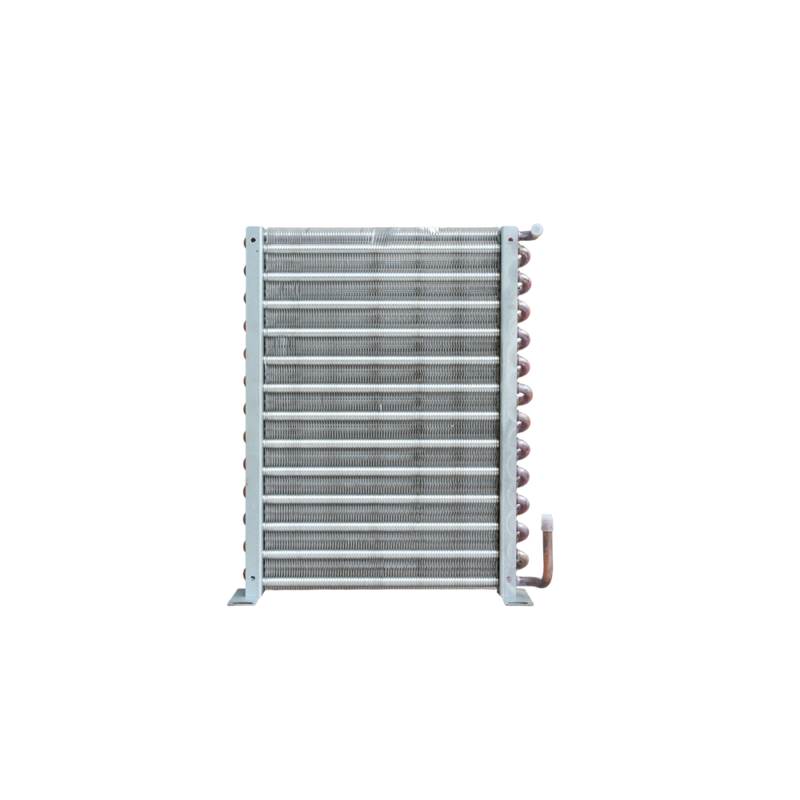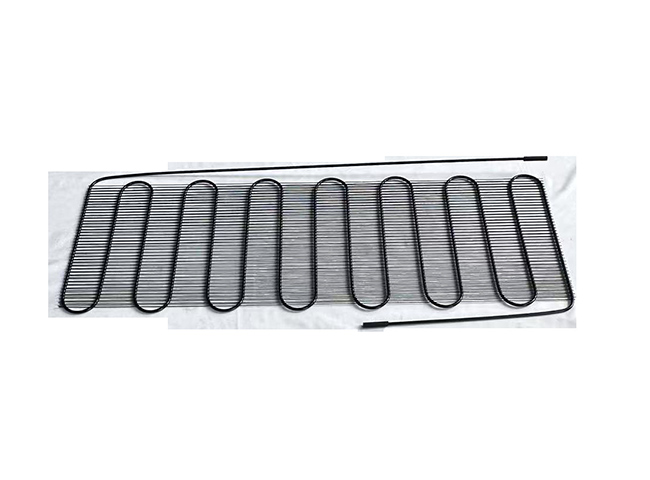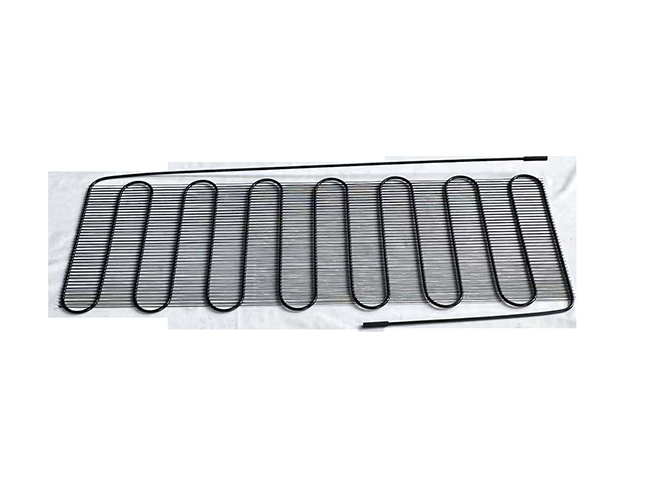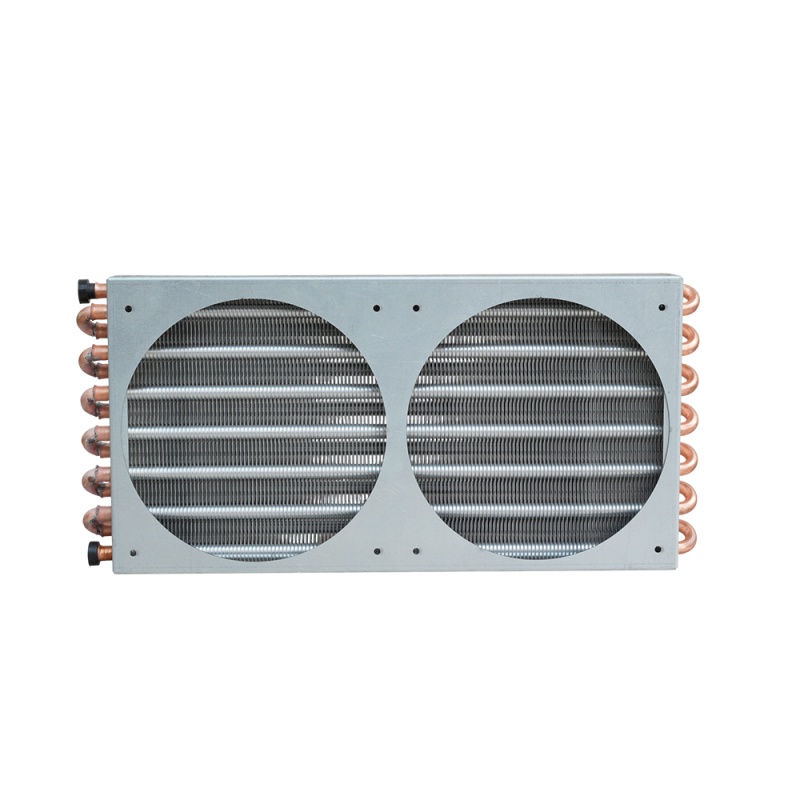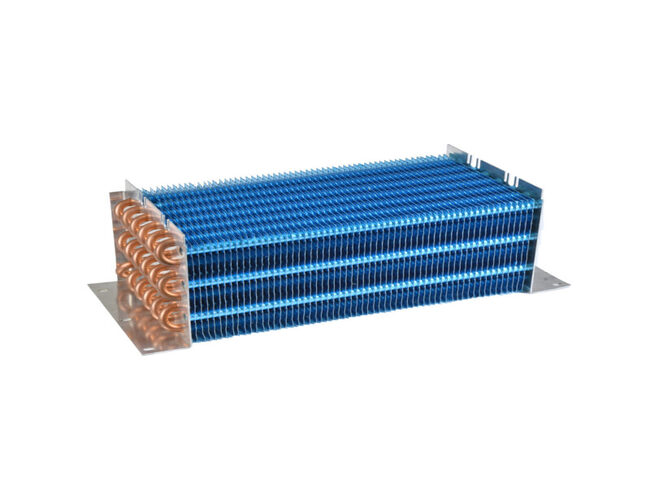
Introduction: Why the Condenser Is Critical to Refrigeration System Performance
A condenseur de réfrigération does more than cool hot refrigerant. It rejects heat absorbed from the refrigerated space or process, together with the energy added during compression, so that the refrigerant can condense into liquid and circulate through the system again.
If a condenser cannot reject enough heat under the actual operating conditions, condensing pressure may rise, compressor power consumption may increase, and the refrigeration system may struggle to maintain its required temperature. In commercial and industrial applications, the result can be higher operating costs, unstable performance, or unexpected downtime.
For OEMs, refrigeration equipment manufacturers, system integrators, and industrial buyers, understanding condenser function is therefore an important step in selecting the right refrigeration components.
This guide explains how a condenser works, what happens to refrigerant inside it, how different condenser types compare, which factors affect heat rejection, and what technical information is needed to specify a condenser for a particular application.

Quel est le rôle d'un condenseur dans un système de réfrigération ?
A condenser is a heat exchanger that transfers heat from the refrigerant to a cooler surrounding medium, such as air or water. In a conventional vapor-compression refrigeration system, it receives high-pressure refrigerant vapor from the compressor and rejects enough heat for the refrigerant to become liquid.
The condenser is part of the high-pressure side of the refrigeration cycle. It works with the compressor, expansion device, and evaporator to maintain continuous refrigerant circulation.
To understand how compressor discharge conditions influence condenser operation, see our guide to the differences between a condenser and a compressor.
What Does a Condenser Do in a Refrigeration System?
A refrigeration condenser performs several related functions:
- Rejects heat: Transfers heat from the refrigerant to the surrounding air, water, or another heat sink.
- Desuperheats the discharge vapor: Removes sensible heat from the hot refrigerant vapor leaving the compressor.
- Condenses the refrigerant: Removes latent heat as the refrigerant changes from vapor to liquid at approximately constant pressure, subject to pressure drop.
- May subcool the liquid: Removes additional sensible heat from the liquid refrigerant below its saturation temperature at the relevant pressure.
- Supplies liquid refrigerant downstream: Delivers refrigerant toward the receiver, liquid line, and expansion device, depending on system configuration.
These functions are connected. The condenser must reject heat effectively while maintaining acceptable pressure drop and providing the refrigerant condition required by the downstream components.
What Is the Primary Function of a Condenser in a Refrigeration Cycle?
The primary function is heat rejection and refrigerant condensation.
The evaporator absorbs heat from the space, product, or process being cooled. The compressor raises the refrigerant pressure and adds energy to the refrigerant. The condenser then rejects this combined heat to the environment.
For a simplified steady-state vapor-compression cycle, the heat balance is:
[Q_{\mathrm{cond}} \approx Q_{\mathrm{evap}} + W_{\mathrm{comp}}]
Où :
- (Q_{\mathrm{cond}}) = condenser heat-rejection rate
- (Q_{\mathrm{evap}}) = evaporator cooling capacity
- (W_{\mathrm{comp}}) = compressor power transferred to the refrigerant
This is an engineering approximation for a conventional cycle. Actual system calculations may need to account for compressor motor heat, oil cooling, heat losses, heat recovery, and other energy transfers. The condenser’s rated total heat rejection should be checked against the actual system configuration.
Exemple :
Suppose a refrigeration system provides 20 kW of evaporator cooling capacity and the compressor transfers 6 kW of power into the refrigerant.
| Paramètre | Example value |
|---|---|
| Evaporator cooling capacity | 20 kW |
| Compressor power transferred to refrigerant | 6 kW |
| Approximate condenser heat-rejection requirement | 26 kW |
[Q_{\mathrm{cond}} \approx 20 + 6 = 26\ \mathrm{kW}]
The condenser must reject approximately 26 kW under the specified design conditions, rather than only 20 kW.
This is an illustrative calculation, not a final equipment selection. The actual requirement must be confirmed using compressor performance data, refrigerant properties, operating conditions, and any additional heat loads.
Does a Condenser Reject Heat or Store Heat?
A condenser primarily rejects heat. It is not intended to store the heat absorbed by the refrigeration system.
In an air-cooled condenser, heat passes from the refrigerant through the tube wall and fins into the air. In a water-cooled condenser, heat passes through a heat-transfer surface into circulating water. In an evaporative condenser, water evaporation helps transfer heat to the surrounding air.
The condenser’s metal, refrigerant, and cooling medium may temporarily store some thermal energy because their temperatures change during startup or load variations. However, temporary thermal storage is not the condenser’s main function.
The heat must ultimately be transferred to a suitable heat sink. If the heat sink is too warm, airflow is inadequate, water flow is insufficient, or the heat-transfer surfaces are fouled, the condenser may not be able to reject heat at the required rate.
Why Is the Condenser Important to Overall System Performance?
Condenser performance affects the operating conditions of the entire refrigeration system.
When condensing temperature rises, the compressor generally has to operate across a larger pressure difference. Depending on the compressor and refrigerant, this can increase power consumption, affect capacity, and raise discharge temperature.
An effective condenser helps the system maintain suitable condensing conditions, but the lowest possible condensing pressure is not always appropriate. The expansion device, refrigerant feed, oil management, control strategy, and minimum operating-pressure requirements must also be considered.
For equipment buyers, the practical question is not simply whether a condenser can reject heat. It is whether it can reject the required heat across the expected range of ambient conditions, cooling-medium conditions, and system loads.
To understand the condenser’s role in the complete system, start with our Systèmes de réfrigération et cycle de réfrigération : guide technique complet, which explains how the compressor, condenser, expansion device, and evaporator work together to maintain the refrigeration cycle.
Comment fonctionne un condenseur de réfrigération ?
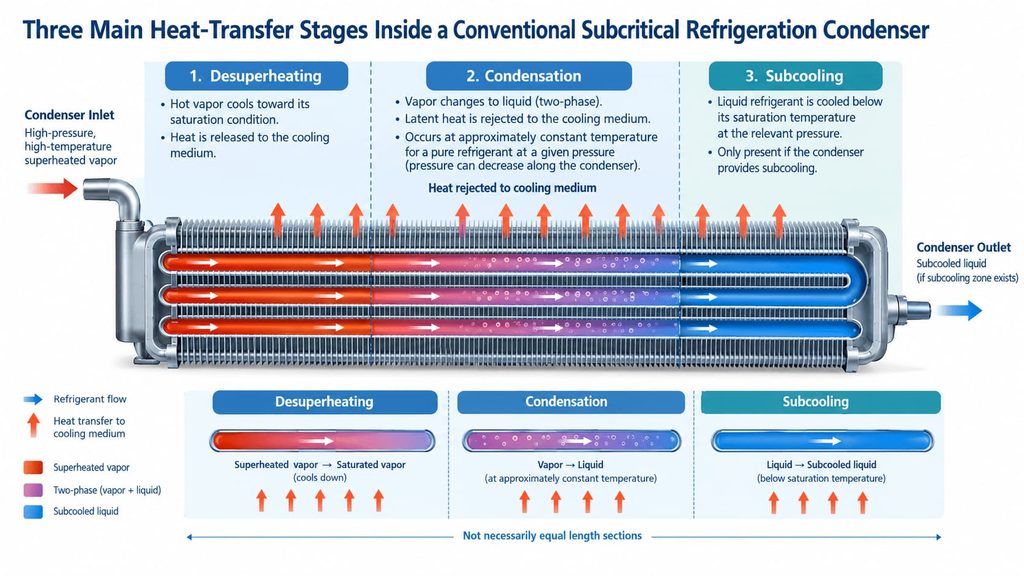
A conventional condenser operates through a sequence of heat-transfer processes. Hot, high-pressure vapor enters the condenser, loses superheat, condenses into liquid, and may then undergo subcooling before leaving the heat exchanger.
The exact proportions of these stages depend on refrigerant, operating conditions, circuit arrangement, and condenser design. They should not be assumed to occupy fixed percentages of the heat-transfer surface in every application.
Step 1 — High-Pressure Refrigerant Vapor Enters the Condenser
The compressor draws low-pressure vapor from the evaporator and compresses it to a higher pressure. The refrigerant leaves the compressor as high-pressure, high-temperature vapor and enters the condenser.
At this point, its temperature is generally above the saturation temperature corresponding to its pressure. The refrigerant is therefore superheated.
The condenser must transfer heat from this vapor to a cooler medium. The temperature difference between the refrigerant and the cooling medium drives the heat transfer.
For an air-cooled condenser, the entering air temperature is particularly important. For water-cooled equipment, the entering water temperature and available water flow must be considered. For an evaporative condenser, wet-bulb temperature and water-management conditions are also important.
Engineering implication: A condenser selected using an unrealistically low ambient temperature may not deliver its rated heat rejection on the hottest design day. Always evaluate capacity at the actual design condition.
Step 2 — The Refrigerant Releases Superheat
The first heat-transfer stage cools the refrigerant vapor from its compressor-discharge condition toward saturation.
This process is called desuperheating.
The refrigerant remains vapor during this stage, provided the entering state and operating conditions are those of a conventional subcritical condensation process.
What Happens During Desuperheating?
The refrigerant loses sensible heat as its temperature decreases. The heat passes through the condenser’s heat-transfer surface into the cooling medium.
For example, imagine refrigerant entering the condenser at a temperature substantially above its saturation temperature. As heat is removed, its temperature approaches the saturation temperature corresponding to the local refrigerant pressure.
The exact temperature change depends on refrigerant properties, mass flow rate, inlet superheat, pressure drop, and heat-transfer performance.
Desuperheating is important, but cooling the vapor alone does not complete the condenser’s job. The refrigerant must also release latent heat to change from vapor to liquid.
Step 3 — The Refrigerant Condenses into Liquid
Once the refrigerant reaches its saturation condition, further heat rejection causes vapor to condense into liquid in a conventional subcritical cycle.
During this phase change, refrigerant temperature is approximately constant at a given pressure for a pure refrigerant, although actual temperature and pressure can change along the condenser because of pressure drop. Refrigerant mixtures with temperature glide may behave differently.
How Does Heat Rejection Cause Condensation?
The condenser removes latent heat from the refrigerant. As energy is transferred to the cooling medium, the vapor fraction decreases, and the liquid fraction increases.
This is the main condensation process. It is not merely a matter of making the refrigerant colder; it changes the refrigerant’s physical state.
The heat-transfer surface, refrigerant distribution, mass flow, cooling-medium conditions, and pressure drop all influence the performance of this process.
A condenser that is too small for the required duty may need a higher condensing temperature to transfer the same amount of heat. A condenser with restricted airflow, inadequate water flow, or fouled surfaces may also struggle to maintain the required operating conditions.
What Happens If the Condenser Cannot Reject Enough Heat?
Insufficient heat rejection can cause several problems:
- Condensing pressure and temperature may rise.
- Compressor power demand may increase.
- Refrigeration capacity and system stability may deteriorate.
- High-pressure protection may shut the system down.
- Operating costs may increase.
- Repeated high-pressure operation may place additional stress on system components.
These symptoms are not unique to an undersized condenser. Blocked coils, fan failure, poor ventilation, excessive recirculation of hot discharge air, inadequate water flow, noncondensable gases, overcharging, and other system faults can produce similar symptoms.
For troubleshooting, engineers should measure operating pressures and temperatures, verify airflow or water flow, inspect heat-transfer surfaces, and compare operating conditions with the equipment’s design data before deciding that the condenser must be replaced.
Step 4 — Liquid Refrigerant May Be Subcooled
After condensation, the refrigerant may leave the condenser at its saturation temperature or as a subcooled liquid.
Subcooling occurs when the liquid is cooled below its saturation temperature at the relevant pressure.
What Is Subcooling in a Condenser?
Subcooling is the difference between the refrigerant’s saturation temperature at the measured pressure and its actual liquid temperature.
For a refrigerant with negligible temperature glide at the relevant conditions:
T_{\mathrm{sat,cond}} – T_{\mathrm{liquid}}]
For example, if the saturation temperature corresponding to the liquid-line pressure is 40°C and the measured liquid temperature is 35°C, the subcooling is approximately 5 K.
This example assumes suitable pressure and temperature measurements and an appropriate refrigerant property reference. Pressure drop between the condenser and measurement point must be considered.
Why Does Subcooling Matter?
Subcooling can help ensure that liquid refrigerant reaches the expansion device without unwanted flashing in the liquid line.
It can also affect refrigeration capacity and system efficiency, depending on the cycle and operating conditions. However, additional subcooling is not automatically beneficial in every design: the method used to achieve it, the additional heat-exchanger area, pressure losses, and system controls all matter.
Condenser guidance describes desuperheating, condensation, and subcooling as the main heat-transfer processes and discusses the effects of subcooling on system performance. Actual benefits depend on the application and operating conditions.
For condenser buyers: Specify the required liquid outlet condition and confirm whether the quoted heat-rejection capacity includes desuperheating, condensation, and subcooling at the same rating conditions.
What Happens to the Refrigerant Inside a Condenser?
The refrigerant does not simply pass through the condenser and emerge as a colder version of the same fluid. Its temperature, enthalpy, and physical state change as heat is rejected.
Does a Condenser Have Refrigerant Inside It?
Yes. The condenser contains refrigerant flowing through its tubes, coils, or heat-transfer passages.
The cooling medium is outside the refrigerant circuit in a typical air-cooled or evaporative condenser. In a water-cooled shell-and-tube condenser, refrigerant and water occupy separate flow passages divided by a heat-transfer surface.
Keeping the refrigerant and cooling medium in their intended circuits is essential to safe, reliable operation. Material selection, pressure rating, joining methods, and manufacturing quality must suit the refrigerant and operating conditions.
What State Is the Refrigerant in When It Enters the Condenser?
In a conventional subcritical vapor-compression cycle, the refrigerant typically enters the condenser as high-pressure, high-temperature vapor, usually superheated.
The precise state depends on the cycle design and operating condition. In special system configurations, the inlet condition may differ.
Transcritical systems using refrigerants such as carbon dioxide require a separate explanation: above the critical point, the high-side heat exchanger operates as a gas cooler rather than a conventional condenser, because the refrigerant does not condense through the usual vapor-to-liquid phase change at that pressure.
What State Is the Refrigerant in When It Leaves the Condenser?
In a conventional subcritical cycle, the refrigerant should generally leave the condenser as liquid, with the degree of subcooling determined by the design and operating conditions.
The downstream expansion device requires an appropriate liquid supply for stable operation. If the liquid line experiences excessive pressure drop or heat gain, some liquid may flash before reaching the valve, potentially affecting feeding and performance.
The required outlet condition should therefore be specified as part of the complete refrigeration-system design.
Condenser vs. Evaporator: How Are Their Functions Different?
The condenser and evaporator are both heat exchangers, but they perform opposite functions in the refrigeration cycle.
| Comparison | Condenseur | Évaporateur |
|---|---|---|
| Fonction principale | Réflexe la chaleur | Absorbe la chaleur |
| Typical refrigerant inlet | High-pressure, high-temperature vapor | Mélange liquide-vapeur à basse pression |
| Changement de phase principal | Vapor to liquid | Liquid to vapor |
| Côté pression | Côté haute pression | Côté basse pression |
| Sens du transfert thermique | Refrigerant to surroundings | Cooled space or process to refrigerant |
| Typical outlet state | Liquid, potentially subcooled | Vapor, often with controlled superheat |
| Common design considerations | Ambient conditions, heat rejection, airflow or water flow, condensing pressure | Cooling load, evaporating temperature, airflow or fluid flow, refrigerant distribution |
The condenser does not generate the cooling effect by itself. It rejects heat so that the refrigerant can return to the expansion device and evaporator and continue absorbing heat from the target application.
For a more detailed comparison, see the article Condenser vs. Evaporator in a Refrigeration System: Key Differences, Working Principles and Selection Guide.
Où se trouve le condenseur dans un système de réfrigération ?
The condenser is located downstream of the compressor and upstream of the expansion device in a conventional vapor-compression cycle:
Compresseur → Condenseur → Détendeur → Évaporateur → Compresseur
Its physical location depends on the equipment design, heat-rejection method, available installation space, and maintenance requirements.
Where Is the Condenser in a Commercial or Industrial Refrigeration System?
In commercial and industrial systems, the condenser may be installed outdoors, in a dedicated plant room, on a rooftop, or near a cooling tower or water-circulation system.
An air-cooled condenser needs an adequate supply of cool ambient air and a clear path for hot discharge air. If hot air returns to the condenser inlet, the entering-air temperature can rise and reduce heat-rejection performance.
Water-cooled condensers are often integrated with a cooling-water loop and may work alongside a cooling tower. Evaporative condensers are generally installed where their airflow, water supply, drainage, access, and maintenance requirements can be accommodated.
For industrial buyers, installation conditions should be confirmed before finalizing the equipment. A condenser that meets the thermal duty in a laboratory rating condition may not achieve the same performance if installed in a confined space or exposed to unusually high ambient temperatures.
Where Is the Condenser in a Refrigerator?
In a domestic refrigerator, the condenser is commonly located at the back, beneath the cabinet, or integrated into the cabinet walls, depending on the design.
The condenser rejects heat extracted from the refrigerator compartment plus the energy added by the compressor. It may feel warm during normal operation because heat is being transferred to the surrounding room.
Commercial display cabinets, bottle coolers, and undercounter refrigerators may use compact air-cooled condenser coils with fans. The exact arrangement varies by manufacturer and equipment type.
Why Does Condenser Installation Location Matter?
Installation location affects the conditions under which the condenser operates.
Check the following before installation:
- Air circulation: Ensure that the condenser can draw in the required volume of air and discharge hot air without obstruction.
- Air recirculation: Avoid layouts in which hot discharge air flows back into the condenser inlet.
- Ambient temperature: Confirm that the design condition reflects the highest expected entering-air temperature.
- Water conditions: For water-cooled and evaporative systems, confirm water temperature, flow, quality, treatment, and drainage requirements.
- Service access: Allow space to inspect coils, clean heat-transfer surfaces, maintain fans or pumps, and replace components.
- Environmental exposure: Consider corrosion, dust, salt-laden air, humidity, and other site-specific conditions.
The installation must also comply with applicable electrical, pressure-system, refrigerant-handling, noise, and environmental requirements.
What Are the Main Types of Condensers in Refrigeration Systems?
Condensers are commonly classified by the cooling medium and heat-rejection method. The three principal types used across many refrigeration applications are air-cooled, water-cooled, and evaporative condensers. Other configurations exist for specialized systems.
The best choice depends on more than the initial purchase price. Buyers should evaluate heat-rejection capacity, expected operating conditions, utility consumption, maintenance, installation constraints, and the cost of ownership.
Condenseur à refroidissement par air
An air-cooled condenser transfers heat from the refrigerant to ambient air. Refrigerant flows through tubes, while fins increase the external heat-transfer surface area. Natural convection or fans move air across the coil.
Comment fonctionne un condenseur à refroidissement par air ?
Hot refrigerant enters the coil and transfers heat through the tube wall and fins to the air. As heat is rejected, the refrigerant desuperheats and condenses; additional subcooling may occur if the design provides sufficient heat-transfer area.
Fan performance, coil geometry, fin spacing, entering-air temperature, and air-side pressure drop influence capacity.
Advantages and Limitations
Avantages
- Does not require a continuous condenser-water supply.
- Often has a relatively straightforward installation.
- Can be suitable for remote outdoor installation.
- Avoids condenser-water treatment and cooling-tower maintenance.
Limitations
- Performance is sensitive to ambient dry-bulb temperature.
- Fans consume electricity and may generate noise.
- Dust, grease, and debris can obstruct the coil.
- Hot-air recirculation or restricted airflow can reduce performance.
Air-cooled condensers are common in commercial refrigeration, refrigeration condensing units, packaged systems, and applications where water availability is limited.
Condenseur à refroidissement par eau
A water-cooled condenser transfers refrigerant heat to circulating water through a heat-transfer surface. Common designs include shell-and-tube and other water-to-refrigerant heat exchangers.
How Does a Water-Cooled Condenser Work?
Refrigerant releases heat while water absorbs it. The heated water then transfers the heat elsewhere, commonly through a cooling tower, dry cooler, or another heat-rejection arrangement.
The condenser’s performance depends on entering-water temperature, water flow, refrigerant conditions, heat-transfer area, fouling, and pressure drop.
Advantages and Limitations
Avantages
- Can provide effective heat rejection when suitable cooling water is available.
- May offer a compact installation for a given duty in some applications.
- Can be integrated with a centralized plant or cooling-water loop.
- Allows system designers to optimize the condenser and heat-rejection equipment together.
Limitations
- Requires a suitable water circuit and associated equipment.
- Water treatment and fouling control may be necessary.
- Pumping energy must be included in operating-cost comparisons.
- Corrosion, scaling, and water quality can affect service life.
Water-cooled systems are often considered for industrial refrigeration plants, process cooling, and larger installations where the water circuit and maintenance resources are available.
Evaporative Condenser
An evaporative condenser combines air movement and water evaporation to reject heat. Refrigerant flows inside a coil, while water is distributed over the coil surface and air moves across it.
Comment fonctionne un condenseur évaporatif ?
Heat passes from the refrigerant through the coil into the water film and surrounding air. Some of the water evaporates, removing heat from the system. This evaporative process can allow the condenser to operate at conditions influenced more strongly by the ambient wet-bulb temperature than by dry-bulb temperature alone.
Actual performance depends on wet-bulb temperature, airflow, water distribution, coil condition, water quality, and the design of the equipment.
Key Design and Operating Considerations
Evaporative condensers require appropriate water treatment, regular inspection, drift control, cleaning, and maintenance of pumps, fans, and distribution components. Water consumption and local water-management regulations must be included in the selection process.
Where relevant, buyers should also assess the applicable requirements for controlling biological hazards associated with evaporative water systems.
How Do You Choose Between Air-Cooled, Water-Cooled and Evaporative Condensers?
| Selection factor | Air-cooled | Water-cooled | Par évaporation |
|---|---|---|---|
| Main heat sink | Air ambiant | Circulating water | Air and evaporating water |
| Key ambient design condition | Température au thermomètre sec | Entering-water temperature | Wet-bulb temperature and water conditions |
| Approvisionnement en eau | Generally not required for heat rejection | Obligatoire | Obligatoire |
| Main auxiliary equipment | Fans, controls | Pumps and often a heat-rejection system | Fans, pumps, water distribution |
| Typical maintenance focus | Coil cleaning, fans, airflow | Water-side fouling, scaling, corrosion | Coil, water circuit, fans, pumps, water treatment |
| Common selection constraint | High ambient temperature or limited airflow | Water availability and water quality | Water use, water management, wet-bulb conditions |
This table is a qualitative guide, not a universal performance ranking. A properly selected system can perform well or poorly depending on its design conditions, controls, maintenance, and installation.
What Factors Affect Condenser Performance?
Condenser performance depends on the heat that must be rejected and the ability of the heat exchanger to transfer that heat under the actual operating conditions.
Condensing Temperature and Condensing Pressure
Condensing pressure and saturation temperature are closely related for a given refrigerant. If the condenser must operate at a higher condensing temperature to reject the same heat, the compressor may need to operate at a higher discharge pressure.
This can increase compression work and affect system capacity and efficiency. However, operating pressure must remain within the limits required by the compressor, refrigerant, expansion device, and control strategy.
Ambient Temperature and Cooling Medium Conditions
A condenser transfers heat only when a suitable temperature difference exists between the refrigerant and the cooling medium.
For an air-cooled condenser, higher entering-air temperatures generally reduce the available temperature difference at a given condensing temperature. For water-cooled equipment, warmer entering water can have a similar effect. Evaporative condensers are strongly affected by wet-bulb temperature.
Condenser ratings must therefore be compared at equivalent operating conditions.
Heat-Transfer Surface Area and Heat-Transfer Coefficient
Heat-transfer capacity depends on the effective surface area and the overall heat-transfer coefficient, together with the temperature difference driving the process.
A larger coil does not automatically guarantee better system performance. Tube arrangement, fin design, refrigerant circuiting, air or water distribution, pressure drop, and the operating point all affect the result.
For a practical equipment comparison, use the manufacturer’s rated heat rejection at the specified refrigerant and cooling-medium conditions rather than relying on dimensions alone.
Airflow, Fan Performance and Water Flow
In air-cooled equipment, blocked fins, failed fans, incorrect fan rotation, recirculated hot air, or restricted inlet and outlet spaces can reduce heat rejection.
In water-cooled equipment, insufficient water flow, scaling, and fouling can reduce heat transfer. In evaporative equipment, uneven water distribution and poor water management can also affect performance.
The relevant airflow or water-flow requirements should be checked against the equipment data and the system’s operating conditions.
Refrigerant Type and Operating Conditions
Refrigerants differ in thermodynamic properties, operating pressures, mass flow requirements, and heat-transfer behavior. A condenser rated for one refrigerant and operating condition should not be assumed to provide the same capacity with another refrigerant.
Before ordering, confirm refrigerant type, evaporating temperature, condensing temperature or pressure, mass flow where available, and required outlet liquid condition. Any refrigerant change should be assessed for compatibility with the complete system.
Condenser Fouling, Blocked Coils and Poor Ventilation
Dirt and debris can restrict airflow through a finned coil. Water-side scale or deposits can add thermal resistance to a water-cooled heat exchanger. Poor installation ventilation can cause hot air to return to the condenser.
These problems can produce symptoms similar to insufficient condenser capacity. Inspection and measurements should precede replacement decisions.
How Is Condenser Heat-Rejection Capacity Estimated?
For a conventional refrigeration cycle, a first estimate is:
[Q_{\mathrm{cond}} \approx Q_{\mathrm{evap}} + W_{\mathrm{comp}}]
For example, a system with a 30 kW evaporator load and 8 kW of compressor power transferred to the refrigerant has an approximate heat-rejection requirement of:
[Q_{\mathrm{cond}} \approx 30 + 8 = 38\ \mathrm{kW}]
This is an illustrative energy balance, not a complete condenser-sizing calculation. Use the compressor’s actual input or power-transfer data as appropriate, and account for oil cooling, motor cooling, heat recovery, and other relevant energy paths.
The condenser must then be selected using its rated capacity at the specified refrigerant, condensing condition, cooling-medium condition, and installation requirements. The manufacturer’s rating tables or an engineering selection calculation are needed to turn the heat-rejection requirement into an actual model and size.
What Are the Common Signs of a Condenser Problem?
A condenser problem may appear as a high condensing pressure, insufficient cooling, increased power consumption, or repeated high-pressure shutdowns. However, these symptoms can also originate elsewhere in the refrigeration system.
Use operating measurements and equipment documentation to identify the cause before selecting a replacement.
High Condensing Pressure
High condensing pressure can result from:
- High ambient or cooling-water temperature.
- Restricted airflow or inadequate water flow.
- Dirty condenser coils or water-side fouling.
- Hot-air recirculation around an air-cooled condenser.
- Noncondensable gases in the refrigerant circuit.
- Incorrect refrigerant charge or other system-control problems.
- A condenser that is undersized for the actual heat-rejection requirement.
The correct diagnosis depends on the refrigerant, operating conditions, and system configuration. Compare measured pressure with the expected saturation pressure at the measured temperature, and verify that instruments and operating data are reliable.
The Refrigeration System Is Not Cooling Properly
Poor cooling can be associated with insufficient condenser performance, but it can also result from a refrigerant-feed problem, compressor fault, evaporator airflow restriction, excessive cooling load, or incorrect control settings.
Check the following:
- Confirm the actual cooling load and target temperature.
- Record suction and discharge pressures and relevant refrigerant temperatures.
- Check condenser airflow or cooling-water conditions.
- Inspect the condenser for dirt, damage, and airflow obstruction.
- Review refrigerant charge, expansion-device operation, and compressor performance.
A condenser should not be replaced solely because the system is not reaching its target temperature.
Condenser Fan Is Not Running
For an air-cooled condenser, a failed fan can substantially reduce heat rejection when the design depends on forced airflow.
Possible causes include a power-supply problem, motor failure, control fault, damaged wiring, or a failed fan-control device. Some systems intentionally cycle or modulate fans according to operating conditions, so a fan that is not running is not necessarily faulty.
Electrical inspection and repairs should be performed by qualified personnel using the manufacturer’s safety procedures.
Should a Condenser Be Hot or Cold?
A condenser is normally warm or hot during operation because it transfers heat from the refrigerant to the cooling medium.
Its temperature depends on the refrigerant, operating pressure, load, ambient conditions, and location along the heat exchanger. The inlet region may be hotter than the condensing region, while the liquid outlet may be cooler if subcooling occurs.
A warm condenser alone is not evidence of a problem. More useful indicators include condensing pressure, temperature differences, airflow or water flow, compressor power, and the system’s ability to meet its cooling requirement.
Can a Condenser Be Repaired or Does It Need Replacement?
The decision depends on the type and severity of the fault.
| Problème | Possible response |
|---|---|
| Dirty or obstructed coil | Clean using an appropriate procedure |
| Fan or motor fault | Inspect and repair or replace the faulty component |
| Water-side scaling or fouling | Apply a suitable cleaning and water-treatment procedure |
| Damaged tubing or refrigerant leak | Assess pressure-boundary integrity and repair feasibility |
| Severe corrosion or repeated leakage | Evaluate replacement and long-term reliability |
| Insufficient capacity at design conditions | Reassess sizing, operating conditions, and system matching |
| Incorrect installation or hot-air recirculation | Correct the installation or airflow arrangement |
Refrigerant-circuit repairs must be carried out by qualified technicians in accordance with applicable regulations. After a repair, the system should be checked for leakage, correct refrigerant charge, proper operation, and safe performance.
Replacement may be the better long-term option where the condenser has extensive corrosion, repeated failures, incompatible materials, or insufficient heat-rejection capacity that cannot be corrected through practical system improvements.
How to Select the Right Refrigeration Condenser for Your Application
For B2B buyers, selecting the right condenser begins with the system’s actual operating requirements—not with a product photograph or an approximate dimensional match.
Step 1 — Define the Application and Cooling Load
Identify the equipment and process in which the condenser will operate.
En voici quelques exemples :
- Commercial refrigerators and display cabinets.
- Walk-in cold rooms and freezer systems.
- Industrial process chillers.
- Food-processing and cold-storage equipment.
- Groupes de condensation pour la réfrigération.
- Specialized OEM refrigeration assemblies.
Confirm the required cooling capacity, operating schedule, load profile, and expected peak conditions. A system with significant startup or pull-down loads may require a different assessment from a system operating at a relatively steady load.
Step 2 — Confirm Refrigerant and Operating Temperatures
Provide the refrigerant type and the expected evaporating and condensing conditions.
These values affect compressor performance, refrigerant mass flow, pressure levels, and condenser capacity. If the system uses a refrigerant blend with temperature glide, specify the appropriate dew-point, bubble-point, or mean-temperature basis where relevant.
The condenser, compressor, expansion device, and evaporator must be compatible as a complete system.
Step 3 — Determine Required Heat-Rejection Capacity
Calculate the required heat rejection using the system’s design data.
For a simplified conventional cycle:
[Q_{\mathrm{cond}} \approx Q_{\mathrm{evap}} + W_{\mathrm{comp}}]
Do not assume that evaporator cooling capacity equals condenser capacity. Compressor power contributes to the heat that must be rejected, subject to the system’s actual energy balance.
Confirm the calculation using compressor performance data and the condenser manufacturer’s rating method.
Step 4 — Choose the Condenser Type
Compare air-cooled, water-cooled, and evaporative options according to:
- Available cooling medium.
- Design ambient and water conditions.
- Installation space and ventilation.
- Water consumption and treatment requirements.
- Auxiliary power consumption.
- Noise and maintenance constraints.
- Expected operating hours and total ownership cost.
The most economical option depends on the site and the operating profile. A lower initial purchase price may not deliver the lowest lifetime cost.
Step 5 — Evaluate Airflow, Heat Transfer and Installation Constraints
For an air-cooled condenser, specify the available airflow, fan arrangement, installation clearances, and maximum entering-air temperature.
For a water-cooled condenser, specify water inlet temperature, flow rate, allowable pressure drop, and water-quality conditions.
For an evaporative condenser, confirm wet-bulb conditions, water supply, water-management requirements, and service access.
Physical dimensions are important, but they should be checked after the thermal and operating requirements are established.
Step 6 — Check Material, Corrosion Resistance and Service Requirements
Material selection depends on the refrigerant, operating pressure, heat-transfer medium, environment, and applicable safety requirements.
Réfléchissez à ceci :
- Tube and fin materials.
- Corrosion exposure, including coastal or industrial environments.
- Joining and manufacturing quality.
- Design pressure and applicable pressure-system requirements.
- Cleaning access and serviceability.
- Expected operating life and maintenance resources.
For OEM projects, confirm any required drawings, dimensional tolerances, inspection documentation, testing, and product-specific quality requirements before production.
Step 7 — Verify Compatibility with the Complete Refrigeration System
Before finalizing a condenser, verify that it can operate with the intended compressor, refrigerant, evaporator, expansion device, controls, and piping arrangement.
Review:
- Required heat rejection at design conditions.
- Condensing pressure and temperature limits.
- Refrigerant flow and allowable pressure drop.
- Liquid outlet condition and subcooling requirements.
- Startup and low-ambient operating conditions.
- Fan or pump control strategy.
- Installation and maintenance constraints.
A component may satisfy its nominal capacity rating and still perform poorly if the rating conditions do not match the actual application.
For a more detailed engineering discussion, see the article Condenseur de réfrigération : guide technique complet sur les types, les principes de fonctionnement, le dimensionnement, les applications et le choix.
What Information Is Needed to Request a Refrigeration Condenser Quote?
A well-prepared request for quotation (RFQ) helps a manufacturer assess the application, select an appropriate design, and identify missing technical information before production.
Essential Technical Information for a Condenser RFQ
| Information required | What to provide | Why it matters |
|---|---|---|
| Demande | Cold room, chiller, display cabinet, industrial process, or other use | Establishes operating requirements |
| Décharge thermique requise | kW or BTU/h, including the rating basis | Determines the thermal duty |
| Evaporator cooling capacity | kW or BTU/h, if available | Supports the system heat balance |
| Compressor data | Model, operating conditions, power or performance data | Helps establish heat-rejection requirements |
| Réfrigérant | Exact refrigerant designation | Affects pressure, capacity, and compatibility |
| Evaporating condition | Evaporating temperature or pressure | Helps define compressor and system operating conditions |
| Condensing condition | Condensing temperature or pressure | Establishes the rating point |
| Cooling medium | Air, water, or evaporative cooling | Determines the condenser design approach |
| Conditions ambiantes | Design dry-bulb or wet-bulb temperature, as applicable | Affects rated capacity |
| Water conditions | Inlet temperature, flow rate, water quality, if applicable | Supports water-cooled or evaporative selection |
| Liquid outlet requirements | Required subcooling or outlet condition, if specified | Helps verify downstream refrigerant supply |
| Dimensions | Maximum available length, width, height, and mounting constraints | Confirms installation fit |
| Matériaux | Corrosion and environmental requirements | Supports durability and compatibility |
| Quantity and project schedule | Prototype, sample, trial order, or production quantity | Supports manufacturing and delivery planning |
| Documentation | Drawings, test requirements, certificates, or other requested records | Aligns deliverables with project requirements |
Not every project will have every parameter available at the initial inquiry stage. The objective is to provide enough information for a meaningful engineering review.
What If You Do Not Have All the Technical Parameters?
You can still start a technical discussion with the information available.
For example, provide the application, refrigerant, compressor model, target temperature, approximate cooling capacity, installation dimensions, and available cooling medium. A technical team may be able to identify missing data and explain which measurements or calculations are needed before confirming a condenser selection.
However, approximate application details should not be treated as a substitute for a verified thermal rating. The final design should be confirmed using the operating conditions and required performance.
Why Engineering Review Matters Before Finalizing a Condenser
A quote based only on physical dimensions or a general capacity label may overlook the conditions that determine actual heat rejection.
Engineering review helps verify the rating basis, identify compatibility issues, assess the expected operating range, and reduce the risk of selecting equipment that cannot meet the required duty.
For OEMs and industrial buyers, this is particularly important when the condenser is part of a new product design, a replacement project with uncertain original specifications, or a system expected to operate under demanding ambient conditions.
Frequently Asked Questions About Condenser Function in Refrigeration Systems
What Is the Primary Function of a Condenser in a Refrigeration System?
The primary function is to reject heat from the refrigerant and condense high-pressure vapor into liquid in a conventional subcritical vapor-compression system. This allows the refrigerant to return to the expansion device and evaporator.
What Does a Condenser Do in a Refrigeration Cycle?
The condenser removes heat absorbed in the evaporator plus the energy added during compression, subject to the system’s energy balance. It usually includes desuperheating, condensation, and potentially subcooling.
Un condenseur rejette-t-il de la chaleur ?
Yes. It transfers heat from the refrigerant to air, water, or another heat sink. In a conventional system, this is essential for maintaining continuous refrigeration.
What Happens to Refrigerant Inside a Condenser?
The refrigerant typically enters as high-pressure, superheated vapor. It releases sensible heat, condenses into liquid, and may be further cooled below its saturation temperature through subcooling.
What State Is Refrigerant in When It Enters a Condenser?
In a conventional subcritical cycle, it typically enters as high-pressure, high-temperature vapor. The exact condition depends on the system design and operating point.
What Is the Difference Between a Condenser and an Evaporator?
A condenser rejects heat and generally changes refrigerant vapor into liquid. An evaporator absorbs heat and generally changes refrigerant liquid into vapor. Both are heat exchangers, but they perform opposite heat-transfer roles in the refrigeration cycle.
What Are the Three Main Types of Refrigeration Condensers?
The three principal types are air-cooled, water-cooled, and evaporative condensers. They differ in how heat is transferred to the surrounding environment and in their requirements for water, airflow, installation, and maintenance.
What Causes High Condensing Pressure?
Possible causes include high ambient temperature, inadequate airflow or water flow, dirty heat-transfer surfaces, hot-air recirculation, noncondensable gases, incorrect refrigerant charge, and insufficient condenser capacity. Diagnosis requires system measurements rather than relying on a single symptom.
How Do You Choose the Right Condenser for a Refrigeration System?
Start with the required heat rejection at the design operating conditions. Then verify refrigerant compatibility, condensing temperature, ambient or cooling-water conditions, pressure drop, outlet liquid requirements, installation constraints, material requirements, and maintenance needs.
Conclusion — The Right Condenser Starts with the Right Operating Conditions
The condenser is essential to refrigeration system performance because it rejects the heat absorbed by the evaporator and the energy added during compression. Its job involves more than cooling the refrigerant: it must provide the required heat rejection, condense the refrigerant under the intended operating conditions, and supply a suitable liquid condition to the downstream circuit.
For equipment manufacturers, OEMs, and industrial refrigeration buyers, the most important selection step is to establish the required heat-rejection capacity at the actual design conditions. Refrigerant type, condensing temperature, ambient conditions, airflow or water flow, pressure drop, materials, and system compatibility all affect the final choice.
Selecting by dimensions or purchase price alone can lead to inadequate capacity, higher operating costs, or avoidable redesign. A specification based on verified operating data gives buyers a more reliable foundation for comparing products and requesting quotations.
Need a Refrigeration Condenser Matched to Your System?
Si vous êtes à la recherche d'un condenseur de réfrigération for an OEM product, commercial refrigeration unit, or industrial cooling application, share your application, required heat-rejection capacity, refrigerant, evaporating and condensing conditions, available installation dimensions, cooling-medium conditions, and other project requirements.
Our engineering team can review the available information, clarify missing parameters, and assess a suitable condenser configuration for your application.
Contactez-nous to discuss your refrigeration condenser requirements and request an engineering review.