Introduction: Replacing an Evaporator Coil Requires More Than Matching Dimensions
When an evaporator coil develops a refrigerant leak, suffers corrosion, or can no longer deliver the required cooling performance, replacement may be necessary. For refrigeration equipment manufacturers, cold-storage operators, system integrators, and parts distributors, however, finding a suitable replacement is not simply a matter of ordering a coil with similar dimensions.
A replacement refrigeration evaporator coil must be compatible with the existing system’s refrigerant, operating conditions, required cooling capacity, circuit configuration, pressure requirements, and installation space. If the coil forms part of a complete air-cooling unit, fan performance, defrost arrangements, drainage, and mounting details may also need to be verified.
A coil that physically fits but performs differently from the original can create problems such as insufficient cooling, excessive pressure drop, uneven refrigerant distribution, recurring frost accumulation, or unstable system operation.
The practical objective is therefore not to find a coil that merely fits. It is to find a replacement that meets the application’s thermal, mechanical, and operating requirements.
This guide explains how to evaluate replacement refrigeration evaporator coils, when coil-only replacement makes sense, which technical specifications must be checked, what affects cost, and what information to send a manufacturer for an accurate quotation.
The key principle: confirm the operating requirements first, verify physical and refrigerant compatibility second, and compare quotations only after the technical scope is clear.
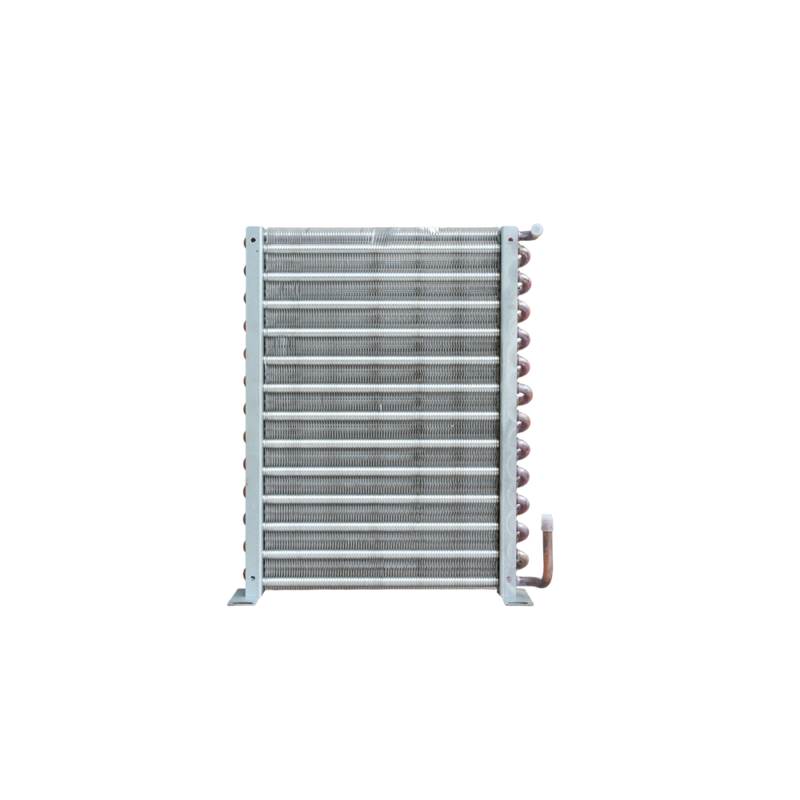
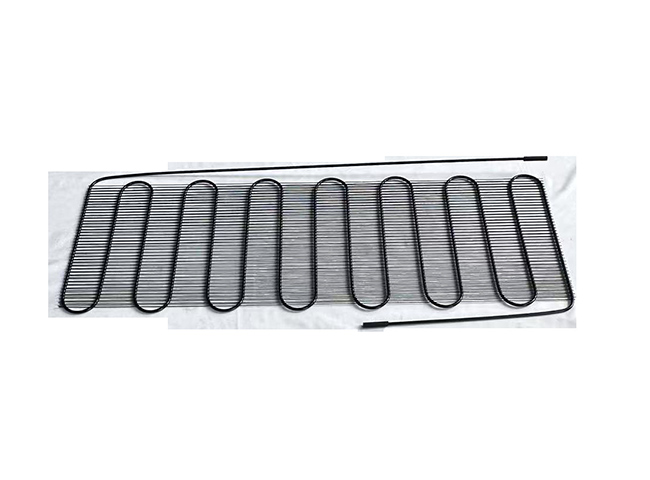
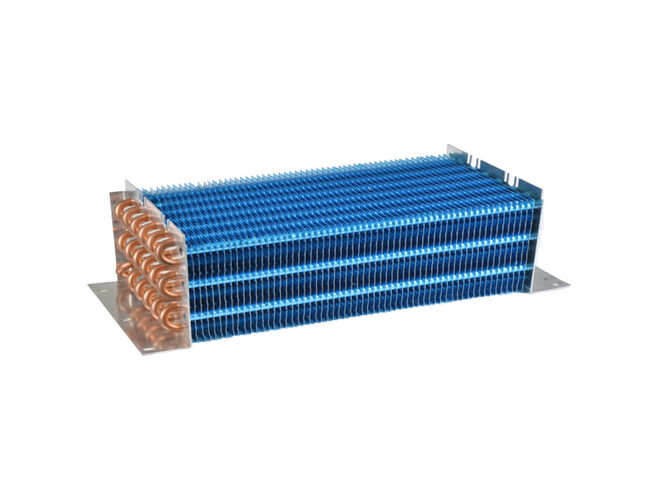
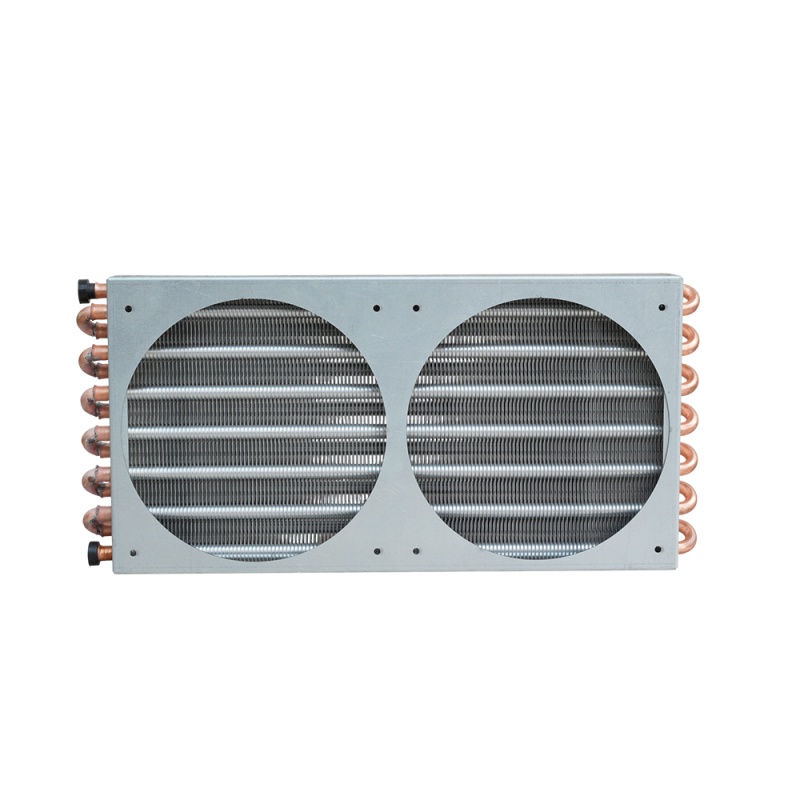
For OEMs, refrigeration equipment manufacturers, and industrial buyers, selecting the right refrigeration evaporator coils requires more than matching external dimensions. Refrigerant compatibility, cooling capacity, operating conditions, and connection specifications must also be considered.

1. What Is a Replacement Refrigeration Evaporator Coil?
A replacement refrigeration evaporator coil is a heat exchanger intended to replace an existing evaporator coil in a refrigeration system. It may be an OEM replacement built to an existing specification or a custom-designed coil engineered around the original equipment and its operating conditions.
The coil contains refrigerant passages and a heat-transfer surface that allow energy to move from the cooled air or process fluid into the refrigerant. In an air-cooling application, the assembly commonly uses tubes and fins to increase heat-transfer area. In liquid-cooling applications, different heat-exchanger configurations may be used.
Replacement requirements vary considerably by application. A finned-tube coil for a cold room, a compact evaporator for commercial equipment, and an evaporator used in an industrial liquid chiller should not be treated as interchangeable products.
What Does an Evaporator Coil Do in a Refrigeration System?
The evaporator coil absorbs heat from the medium being cooled. Refrigerant enters at a low pressure and temperature, absorbs heat, and evaporates as it moves through the heat exchanger. The resulting vapor then returns toward the compressor.
The actual capacity depends on more than the coil’s external size. Important factors include:
- Refrigerant type and operating conditions
- Verdampfungstemperatur
- Air-inlet or fluid-inlet temperature
- Erforderliche Kühlleistung
- Heat-transfer surface area and construction
- Refrigerant circuit design and distribution
- Airflow or liquid flow rate
- Pressure drop and control requirements
For a replacement project, these variables matter because the original coil’s design may have been matched to a particular compressor, expansion device, refrigerant, and application.
A replacement that differs in circuiting or heat-transfer characteristics may change the operating balance of the system even if the connection points are similar.
What Is the Difference Between an Evaporator and an Evaporator Coil?
The terms are related, but they do not always describe the same scope of supply.
An evaporator refers to the heat exchanger or evaporating component within the refrigeration system. An evaporator coil generally refers to the coil or heat-transfer core itself. A complete evaporator unit may include additional components such as fans, a frame, a drain pan, a defrost system, and associated electrical or control parts.
| Artikel | Typical scope | What buyers should verify |
|---|---|---|
| Replacement evaporator coil | Heat-transfer core, including tubes and fins where applicable | Capacity, refrigerant circuit, materials, dimensions, connections |
| Evaporator coil with headers and connections | Coil core plus specified manifolds or connection components | Header arrangement, connection sizes, inlet/outlet locations |
| Complete evaporator unit | Coil plus some or all supporting components | Fans, frame, drain pan, defrost system, controls and mounting |
| Custom evaporator assembly | Scope defined for the project | Detailed drawing, performance conditions, included accessories and inspection requirements |
The exact supply boundary varies by manufacturer. Buyers should ask for a written scope rather than assume that items such as fans, valves, sensors, or drain pans are included.
When Is a Replacement Coil Different from a Complete Evaporator Assembly?
Replacing the coil alone may be appropriate when the existing fan motors, frame, drain pan, defrost equipment, and controls remain serviceable and are suitable for reuse.
A complete assembly may be preferable when several components are damaged, the original unit is obsolete, the installation requires a different configuration, or the cost and risk of reusing old parts outweigh the benefits.
Before requesting a quotation, establish whether the project requires:
- The heat-transfer coil only
- A coil with specified headers and refrigerant connections
- A complete evaporator unit
- A redesigned assembly to fit an existing installation
This distinction prevents quotations from appearing comparable when they actually cover different products.
To understand how coil geometry, heat-transfer performance, and operating conditions affect replacement decisions, see our refrigeration evaporator design and selection guide.
2. When Should a Refrigeration Evaporator Coil Be Replaced?
Replacement is usually considered when a coil has a confirmed defect that cannot be repaired reliably, when its performance is no longer suitable for the application, or when an obsolete component cannot be sourced in its original form.
Not every cooling problem requires a new coil. Fan failures, defrost-control problems, blocked airflow, incorrect refrigerant charge, expansion-device faults, and other system issues can produce similar symptoms. A qualified refrigeration technician should establish the cause before the buyer commits to replacement.
Refrigerant Leaks and Coil Corrosion
A confirmed refrigerant leak is an important reason to assess the coil for repair or replacement. Whether repair is suitable depends on the leak location, tube and header condition, material, pressure requirements, accessibility, applicable regulations, and the reliability expected from the repaired component.
Repeated leaks or widespread corrosion can indicate that the problem extends beyond a single repairable point.
Common contributing conditions include:
- Corrosive moisture or chemical exposure
- Salt-laden air in coastal or seafood-processing environments
- Chemical cleaning agents incompatible with the coil materials
- Vibration or mechanical stress at connections
- Tube-wall deterioration over time
- Poor drainage that leaves surfaces persistently wet
The decision should be based on the actual condition of the coil, not on age alone. A local defect in an otherwise sound coil may justify repair, while widespread corrosion or repeated leakage may support replacement.
For a custom replacement, provide the manufacturer with the existing coil material, operating refrigerant, design-pressure requirements, environmental conditions, and any known history of leakage. These details help establish whether the replacement needs a different material or corrosion-protection approach.
Repeated Freezing, Frost Buildup and Reduced Heat Transfer
Frost is normal in many low-temperature refrigeration applications. The problem occurs when frost accumulates faster than the system can remove it, or when defrosting fails to restore adequate airflow.
A heavily frosted coil can experience:
- Reduced airflow through the heat exchanger
- Increased air-side thermal resistance
- Lower cooling output
- Longer operating cycles
- Uneven temperature distribution
- Increased maintenance and defrost demand
However, repeated icing does not automatically mean the coil needs replacement. Possible causes include inadequate defrost settings, a faulty heater or control, excessive moisture infiltration, a failed fan, poor air distribution, incorrect refrigerant feed, or unsuitable fin spacing for the operating environment.
Replacement becomes more reasonable when the coil is physically damaged, severely corroded, persistently blocked by a design or configuration problem, or unable to meet the required performance after the underlying system faults have been addressed.
For low-temperature applications, fin spacing is particularly important. A coil designed for a relatively frost-free environment may not be suitable for a freezer where frost accumulation is expected. The replacement specification should reflect the actual temperature, humidity, operating schedule, and defrost strategy.
Physical Damage, Blocked Passages and Persistent Performance Problems
A coil may require replacement if it has crushed fins, damaged tubes, deformed headers, inaccessible internal blockage, or structural damage that compromises performance or integrity.
Before deciding, determine whether the issue affects the heat exchanger itself or another part of the refrigeration system.
For example, bent fins may sometimes be repaired if the damage is limited and the tube passages remain sound. A blocked refrigerant circuit, by contrast, requires a more detailed assessment because the restriction may arise from contamination, oil management, moisture, or other system conditions.
If a replacement is required, record the original coil’s configuration before removal. Photographs, connection locations, circuit details, nameplate information, and measured dimensions can be valuable when the original drawing is unavailable.
How to Confirm Whether the Coil Is the Actual Cause
A structured diagnosis reduces the risk of replacing a functional component.
| Check | What to inspect | Why it matters |
|---|---|---|
| Refrigerant circuit | Suction pressure, superheat, refrigerant charge and expansion-device operation | Helps identify feeding or system-control issues |
| Airflow or liquid flow | Fan operation, blocked fins, filters, pumps and flow restrictions | Low flow can imitate insufficient coil capacity |
| Defrost and drainage | Defrost operation, drain blockage, heater and control condition | Faults can cause recurring ice or water problems |
| Coil condition | Leakage, corrosion, damaged tubes, crushed fins and visible contamination | Establishes whether the coil itself is defective |
| System matching | Compressor, condenser, expansion device and refrigerant compatibility | Helps identify broader system-design problems |
Measurements must be interpreted in the context of the specific refrigerant and system design. There is no single suction pressure, superheat value, or frost pattern that proves every evaporator coil is defective.
A useful replacement decision combines inspection findings, operating measurements, equipment history, and the expected reliability of repair.
Does an Evaporator Coil Have a Fixed Service Life?
There is no universal service-life figure that applies to every refrigeration evaporator coil. Actual service life depends on operating hours, material selection, refrigerant and lubricant compatibility, moisture, corrosion exposure, vibration, cleaning methods, maintenance, and operating conditions.
A coil in a clean, controlled environment may remain serviceable much longer than one exposed to aggressive cleaning chemicals or corrosive process conditions.
For B2B buyers, condition-based replacement is generally more useful than relying on a fixed number of years. Review leakage history, corrosion, cooling performance, maintenance cost, spare-parts availability, and the operational consequences of another failure.
Where downtime is costly, the value of a replacement may include reduced risk and easier future maintenance, not just restoration of cooling capacity.
3. Can You Replace Only the Evaporator Coil?
Yes, in some systems the coil can be replaced without replacing the complete evaporator assembly. Whether this is the right choice depends on the condition of the retained components, the availability of a compatible replacement, and the cost and risk of reusing the existing equipment.
When Replacing Only the Coil May Be Appropriate
Coil-only replacement may be suitable when:
- The fan motors and electrical components remain serviceable.
- The frame and mounting structure are sound.
- The drain pan and drainage arrangement are in good condition.
- The defrost system is suitable for the replacement design.
- The original unit’s performance requirements can be established.
- A replacement coil can be designed to fit the available space and connections.
- The system’s refrigerant and operating conditions are known.
This approach can reduce material waste and avoid replacing serviceable components. It can also be useful when the original evaporator unit is integrated into an OEM machine or a constrained installation.
However, reuse should be based on inspection and compatibility—not simply on a desire to minimize the initial purchase price.
When a Complete Evaporator Assembly May Be the Better Option
A complete assembly deserves consideration when the fan motors, frame, drain pan, defrost components, or other parts are also damaged or obsolete. It may also be preferable when the existing unit has recurring airflow problems or when a redesigned assembly is needed to meet a changed application.
Compare the total project cost rather than the coil price alone.
| Cost or risk factor | Coil-only replacement | Complete assembly replacement |
|---|---|---|
| Initial component purchase | May be lower | May be higher |
| Reuse of existing components | Erforderlich | Usually reduced |
| Fit-up and installation work | May require adaptation | Depends on assembly compatibility |
| Risk from aged retained parts | Remains relevant | May be reduced for replaced components |
| Scope of recommissioning | Depends on the work performed | Depends on the new unit and system changes |
This is a qualitative comparison, not a universal cost ranking. Labor, access, piping changes, electrical work, downtime, and testing can materially change the final result.
What Must Be Checked Before Replacing a Coil in an Existing System?
At a minimum, confirm the refrigerant, operating conditions, required cooling capacity, design pressure, coil dimensions, connection locations, circuit configuration, and the components that will be retained.
Also establish whether the replacement must preserve the original airflow direction, fan arrangement, defrost method, drain location, and mounting interfaces.
If the original model or drawing is unavailable, use the best available combination of nameplate data, photographs, physical measurements, operating records, and sample inspection. Do not assume that an externally similar coil has equivalent capacity or internal circuiting.
Should the Condenser Also Be Replaced?
Not automatically. The evaporator and condenser perform different functions, but both operate as parts of the same refrigeration system. A defective evaporator does not, by itself, prove that the condenser needs replacement.
The condenser should be assessed if there are signs of corrosion, leakage, inadequate heat rejection, abnormal operating pressure, physical damage, or a system redesign that affects its required capacity.
Before approving either component, check the overall system condition and the compatibility of the replacement with the compressor, refrigerant, expansion device, and operating envelope.
The objective is to replace what is necessary while ensuring that the complete system can operate reliably after the work is completed.
4. How to Choose the Right Replacement Evaporator Coil
Choosing a replacement evaporator coil requires two separate checks:
- Mechanical compatibility: Can the coil fit the installation and connect correctly?
- Thermal and operating compatibility: Can it provide the required performance under the actual refrigeration conditions?
Both must be satisfied. A coil that fits but cannot deliver the required capacity is not a suitable replacement. Likewise, a coil with sufficient nominal capacity may still be unsuitable if its connections, pressure rating, materials, or mounting arrangement do not match the application.
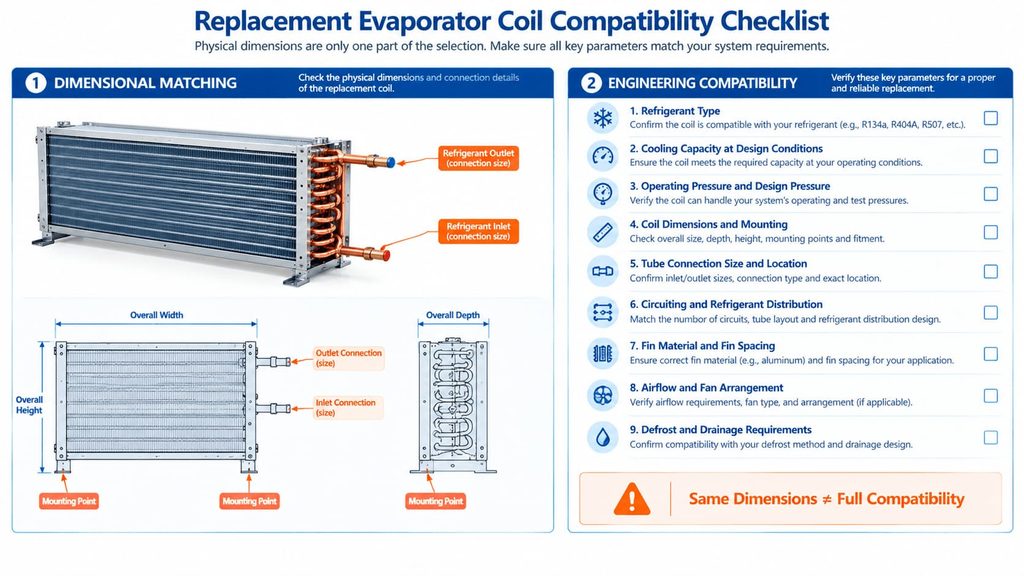
The following process helps buyers prepare a technically complete specification.
Step 1 — Confirm the Application and Operating Conditions
Start by defining what the evaporator needs to cool and how the system operates.
A replacement for a cold-storage room may need to handle recurring frost and defrost cycles. A coil in a food-processing environment may face frequent washdown or corrosive cleaning agents. An evaporator used in a liquid chiller has different flow and heat-transfer requirements from a fan-assisted air cooler.
Refrigerated Rooms, Freezers, Food Processing and Other Applications
Record the application, installation environment, and expected operating pattern.
| Anwendung | Important considerations |
|---|---|
| Medium-temperature cold room | Room temperature, product load, air circulation and humidity |
| Low-temperature freezer | Frost accumulation, fin spacing, defrost method and drainage |
| Food-processing area | Cleaning practices, corrosion exposure and temperature uniformity |
| Beverage or liquid cooling | Fluid type, inlet and outlet temperatures, flow rate and pressure drop |
| Kältetechnik für industrielle Prozesse | Continuous-duty requirements, process variability, material compatibility and service access |
| OEM-Kühlanlagen | Available envelope, mounting interfaces, repeatability and production requirements |
These are screening considerations, not final design specifications. The selected coil must be rated for the actual operating conditions.
Room Temperature, Product Load and Operating Schedule
Room temperature alone does not define evaporator capacity. A cold room’s cooling load may include heat entering through walls and doors, warm products entering storage, lighting, motors, people, infiltration, and other internal sources.
For product cooling, a basic sensible-heat estimate is:
[
Q = \frac{m c_p \Delta T}{t}
]
Wo:
- (Q) = average sensible cooling rate
- (m) = product mass
- (c_p) = product specific heat capacity
- (\Delta T) = required product temperature reduction
- (t) = available cooling time
This simplified equation does not include latent heat from freezing, respiration heat, packaging, infiltration, equipment loads, or other relevant factors. Those must be added when applicable.
Illustrative example: Suppose a process must cool 1,000 kg of a product with an assumed specific heat capacity of 3.5 kJ/(kg·K) from 20°C to 5°C in 5 hours.
[
Q = \frac{1{,}000 \times 3.5 \times 15}{5 \times 3{,}600}
\approx 2.92\text{ kW}
]
This is only the product’s average sensible cooling load under the stated assumptions. It is not a recommendation to select a 2.92 kW evaporator. The final equipment capacity must also account for other loads, operating conditions, pull-down requirements, and the design margin established by the responsible engineer.
When requesting a replacement, provide the original design conditions if they are known. If the application has changed, state the new target temperature, load, operating schedule, and environmental conditions so the replacement can be evaluated for the current duty rather than blindly copied from the old design.
A replacement evaporator coil must operate as part of a complete refrigeration system rather than as an isolated component. Review our guide to the vollständiger Kühlkreislauf to understand how the major components work together.
Step 2 — Match the Required Cooling Capacity
Capacity matching is one of the most important parts of replacement selection.
A catalogue capacity is meaningful only when its rating conditions are understood. Two coils advertised at the same nominal capacity may perform differently when tested at different evaporating temperatures, air-inlet temperatures, airflow rates, refrigerants, or frost conditions.
Why Nominal Capacity Alone Is Not Enough
Before comparing capacity figures, ask the supplier to identify the conditions behind the rating.
| Rating parameter | Why it matters |
|---|---|
| Kältemittel | Refrigerant properties affect heat transfer and system operation |
| Verdampfungstemperatur | Changes the refrigerant-to-air or refrigerant-to-fluid temperature difference |
| Air-inlet or fluid-inlet temperature | Defines the incoming medium condition |
| Airflow or liquid flow rate | Influences the heat-transfer coefficient and temperature distribution |
| Relative humidity, where relevant | Affects moisture removal and frost or condensate formation |
| Superheat and refrigerant-feed assumptions | Affect the operating state and rated performance |
| Frost and defrost assumptions | Matter in low-temperature applications |
| Rating method | Helps determine whether quoted capacities are comparable |
For air coolers, the difference between the entering-air temperature and the refrigerant evaporating temperature is often described as the temperature difference or TD. However, suppliers may use different rating definitions, so the exact method should be confirmed before comparing quotations.
A coil rated under warmer entering-air conditions may show a higher capacity than the same coil under colder entering-air conditions. That does not mean the higher-rated coil will deliver that output in the buyer’s installation.
Capacity at the Required Evaporating and Air-Inlet Conditions
Request capacity data at, or appropriately corrected to, the intended operating conditions.
For an air-cooling replacement, the specification should ideally state:
- Required cooling capacity and unit
- Design room or entering-air temperature
- Refrigerant and evaporating temperature
- Airflow or fan operating point
- Relevant humidity and frost conditions
- Required defrost arrangement
- Any applicable rating standard or test method
If these values are unavailable, supply the original model number, equipment data plate, old performance documents, or a representative operating record. The manufacturer can then determine whether enough information exists to estimate the original duty or whether further engineering review is necessary.
Do not assume that increasing the nominal coil capacity will always improve the system. A different coil can change refrigerant distribution, pressure drop, superheat behavior, and air distribution. Capacity must be considered as part of the whole system.
Because evaporator performance depends on the operating conditions of the entire refrigeration system, buyers should also evaluate condenser capacity and operating conditions. Our Leitfaden zur Auswahl von Kühlkondensatoren explains the key factors involved in condenser sizing and system matching.
Step 3 — Verify Refrigerant and Design Compatibility
A replacement coil must be suitable for the intended refrigerant and operating envelope.
Kältemittelverträglichkeit
Do not select a coil based only on a familiar refrigerant name or the appearance of its connections. Verify that the coil’s materials, internal design, pressure rating, and intended application are suitable for the specified refrigerant and operating conditions.
Changing refrigerants can affect:
- Operating and design pressures
- Kältemittel-Massenstrom
- Wärmeübertragungsleistung
- Required circuit configuration
- Expansion-device selection
- Compressor operating conditions
- Applicable safety and regulatory requirements
A replacement coil should not be assumed to be suitable for a different refrigerant merely because the connection sizes match. Refrigerant conversion should be reviewed as a system-level engineering change, not treated as a simple component substitution.
Design Pressure and Applicable Safety Requirements
The replacement coil must meet the applicable design-pressure and safety requirements for the equipment and jurisdiction.
Confirm the specified design pressure, relevant temperature range, required documentation, and any applicable pressure-equipment or product standards. The exact requirements depend on the equipment type, refrigerant, location, and intended use.
Operating pressure and design pressure are not interchangeable terms. A buyer should not ask a manufacturer to select a pressure rating based only on a single observed suction-pressure reading.
If the original nameplate or documentation is unavailable, the required rating must be established through appropriate engineering review before the replacement is finalized.
Refrigerant Distribution and Circuit Configuration
The number and arrangement of refrigerant circuits affect how refrigerant is distributed through the coil. They can influence pressure drop, refrigerant utilization, capacity, and operating stability.
When replacing an existing coil, document:
- Number of circuits, if known
- Inlet and outlet locations
- Header arrangement
- Distributor configuration, where applicable
- Connection sizes and types
- Any known restrictions on pressure drop
- The expansion device and refrigerant-feed arrangement
An external drawing may show the coil outline without revealing its internal circuit design. If circuiting is critical and no drawing exists, provide the original coil for inspection or ask the manufacturer to identify the information needed to engineer a replacement.
Step 4 — Confirm Coil Dimensions and Connection Details
Physical compatibility should be checked using a drawing or a complete set of measurements.
Overall Length, Width, Height and Installation Clearance
Record the maximum available installation envelope, not just the visible face dimensions. Include space needed for piping, headers, fan guards, electrical access, defrost components, drainage, and routine maintenance.
For a coil removed from its installation, measure the core and overall assembly separately if both are relevant. A replacement may have a similar core size but a different header projection or connection location that prevents installation.
Tube Connections, Header Locations and Connection Sizes
Document each connection’s:
- Outside or nominal diameter, as applicable
- Connection type
- Position relative to a clearly identified reference side
- Direction of entry or exit
- Required projection or clearance
- Material, where relevant
Avoid descriptions such as “left-hand connection” without defining the viewing direction. A drawing should state whether the viewer is looking from the air-inlet side, air-outlet side, piping side, or another agreed reference.
Where connections must align with existing piping, dimensioned drawings are more reliable than photographs alone.
Mounting Points, Airflow Direction and Drainage Space
Check mounting holes, brackets, support rails, orientation, and service access. For a fan-assisted evaporator, confirm airflow direction and the intended arrangement of the coil relative to fans and the cooled space.
Also verify drain-pan geometry, outlet position, drain routing, and any required clearance for defrost water. A coil that fits into the available space but cannot drain correctly may cause operational and maintenance problems.
Step 5 — Select Coil Materials and Fin Configuration
Material selection should reflect the refrigerant, operating conditions, environment, cleaning methods, and required service life.
Rohr- und Lamellenwerkstoffe
Common choices in air-cooling coils include copper tubes with aluminum fins, although other materials and constructions may be appropriate for specific applications. Liquid-side and industrial heat exchangers may require different materials depending on the process fluid and design.
| Material or component | Potential selection considerations |
|---|---|
| Kupferrohre | Thermal performance, joining method, refrigerant compatibility and corrosion environment |
| Aluminiumlamellen | Heat-transfer surface, fin geometry, moisture exposure and cleaning method |
| Stainless steel components | Corrosion requirements, fabrication, strength and application-specific compatibility |
| Protective coatings | Exposure conditions, coating integrity, cleanability and maintenance requirements |
| Frame and supports | Mechanical load, humidity, washdown and corrosion exposure |
No material is universally best. For example, a coating may improve resistance to a particular environment but may also affect heat transfer, cleaning, repairability, or cost. The intended exposure should be described before the material or coating is specified.
Fin Spacing and Frosting Conditions
Fin spacing affects heat-transfer area, airflow resistance, cleanability, and the space available for frost accumulation.
In applications with frequent frost formation, wider fin spacing may be appropriate to help maintain airflow between defrost cycles. In applications with less frost exposure, a different fin configuration may provide a suitable balance of heat-transfer area and pressure drop.
The correct choice depends on room temperature, humidity, air conditions, defrost frequency, and operating duration. Fin spacing should therefore be matched to the application rather than copied without review from a coil designed for different conditions.
Corrosion Protection for Demanding Environments
Describe the actual environmental exposure instead of requesting “anti-corrosion” treatment without further detail.
Useful information includes:
- Whether the coil is installed near the coast
- Whether salt, cleaning chemicals, or process vapors are present
- Whether routine washdown occurs
- Which cleaning agents are used
- Whether the coil is exposed to persistent moisture
- Any known corrosion pattern on the existing unit
This allows the manufacturer to evaluate whether different base materials, coatings, drainage arrangements, or maintenance practices are appropriate.
Step 6 — Check Fans, Defrost and Drainage Requirements
These checks are especially important when the coil is being installed into an existing air-cooling assembly.
Fan Diameter, Airflow and Motor Requirements
If existing fans will be reused, verify that the replacement coil’s air resistance and geometry are compatible with the fan arrangement. Confirm fan diameter, quantity, airflow direction, motor specifications, mounting, electrical supply, and control requirements where relevant.
The fact that an old fan can be physically mounted does not establish that it will deliver the required airflow through the replacement coil. A change in coil geometry or resistance can affect the fan’s operating point.
If the replacement includes new fans, define the required airflow and installation constraints and ask the supplier to state the offered configuration.
Electric, Hot-Gas or Other Applicable Defrost Arrangements
Defrost requirements depend on the application and system design. Electric defrost, hot-gas defrost, off-cycle defrost, and other arrangements are not universally interchangeable.
Confirm which method the system uses, what components are included, and whether the replacement must preserve existing heater locations, piping connections, controls, or safety interlocks.
In freezer applications, the replacement should be evaluated together with the defrost strategy. A coil with unsuitable geometry or a mismatched defrost arrangement can contribute to persistent ice accumulation even if its nominal capacity appears adequate.
Drain Pan, Drain Outlet and Condensate Handling
For air-cooling units, confirm whether the existing drain pan will be retained or replaced. Check the outlet location, drainage route, insulation where relevant, and arrangements for handling defrost water.
For low-temperature equipment, the drain system may also need protection against freezing. The correct solution depends on the unit design and installation environment.
Step 7 — Confirm Installation and Serviceability
Before approving the design, review how the replacement will be installed, connected, inspected, and maintained.
Bedenken Sie Folgendes:
- Access for removing and reinstalling the coil
- Space for brazing or other specified joining work
- Pipe support and vibration control
- Drainage and defrost access
- Fan and electrical maintenance
- Cleaning access
- Availability of replacement fans or other service parts
- Packaging and transport constraints
For OEM customers ordering repeated quantities, request an approved drawing and specification that can be reused for subsequent orders. This reduces ambiguity between the first sample and future production batches.
For one-off replacement projects, confirm the final dimensions, connection orientation, supply scope, inspection requirements, and acceptance criteria in writing before manufacturing begins.
5. Are Replacement Evaporator Coils Interchangeable or Universal?
Some replacement coils can be used as direct substitutes for specified original models. However, refrigeration evaporator coils should not be assumed to be universal components.
Two coils may share similar dimensions but differ in capacity, refrigerant distribution, internal volume, pressure drop, materials, or connection layout. These differences can affect system performance and reliability.
Why Similar Dimensions Do Not Guarantee Compatibility
External dimensions describe only part of a heat exchanger’s design.
A coil’s performance also depends on:
- Tube diameter, length, and arrangement
- Number of rows and circuits
- Fin geometry and spacing
- Kältemittelverteilung
- Airflow and air-side resistance
- Operating temperatures and refrigerant
- Design-pressure requirements
- Connection arrangement
For this reason, dimensional matching should be treated as one stage of replacement selection—not proof of equivalence.
A responsible supplier should clarify which properties are confirmed, which are estimated, and which require additional operating data or testing.
OEM Replacement vs. Custom-Designed Replacement Coils
An OEM replacement follows the original equipment specification or an approved equivalent. A custom-designed replacement is engineered to meet defined performance and installation requirements when a direct replacement is unavailable or unsuitable.
| Approach | Best suited to | Information typically required |
|---|---|---|
| OEM-specification replacement | Original model and reliable specifications are available | Model number, drawing, approved specification and operating conditions |
| Equivalent replacement | A substitute is needed and technical equivalence can be assessed | Original data, required performance, interface details and acceptance criteria |
| Custom replacement | Original product is obsolete, undocumented or no longer suitable | Measurements or sample, operating conditions, application details and required performance |
| Redesigned replacement assembly | The system or installation requirements have changed | Current design requirements, layout constraints, equipment data and engineering review |
The term “equivalent” should be supported by an agreed technical basis. Buyers should ask which parameters are being matched and which changes, if any, are proposed.

What If the Original Model or Drawing Is No Longer Available?
A missing drawing does not necessarily prevent a replacement project, but it increases the importance of collecting reliable evidence.
Useful materials include:
- Photographs of the complete unit and individual connections
- Nameplate details and equipment model information
- Overall dimensions and mounting-point measurements
- Tube, fin, header, and connection details where accessible
- Refrigerant and known operating conditions
- Existing capacity or equipment performance records
- Information about fans, defrost, drainage, and retained components
- A physical sample, if available and practical to ship
A manufacturer may be able to reconstruct the specification from these materials, but some performance characteristics cannot be established from photographs or external dimensions alone. The supplier should identify missing information before committing to a final design.
Where a sample is used, agree on what will be measured, what must be reproduced, and whether the replacement must meet the original performance or a newly defined duty.
6. What Affects Replacement Evaporator Coil Cost?
The price of a replacement refrigeration evaporator coil depends on its size, performance requirements, materials, construction, operating conditions, order quantity, and required documentation.
A useful quotation should be evaluated against a clearly defined technical scope. Comparing prices without checking whether the coils have equivalent capacity, materials, connections, and included accessories can lead to a misleading purchasing decision.
Coil Size, Cooling Capacity and Heat-Transfer Surface
Larger coils may require more tube, fin material, fabrication, and packaging. However, physical size alone does not determine price or performance.
A compact coil with complex circuiting, demanding operating conditions, or special connections may require more engineering and manufacturing effort than a larger standard design.
Capacity should be assessed at the specified rating conditions. A quotation for a nominal capacity without the relevant operating assumptions may not be sufficient for a reliable comparison.
Materials, Fin Configuration and Corrosion Protection
The choice of tube and fin materials, protective treatment, frame construction, and fin spacing can affect both the initial price and expected maintenance requirements.
A more corrosion-resistant specification may be justified where replacement access is difficult or downtime is costly. In less demanding environments, a simpler specification may be adequate.
The decision should reflect the actual environment and the consequences of failure, rather than assuming that the most expensive material is always the best choice.
Refrigerant Circuit Design and Connection Requirements
Special circuit configurations, unusual connection positions, multiple circuits, custom headers, or specific pressure requirements may increase engineering and manufacturing complexity.
This is particularly relevant when an obsolete coil must be reproduced from a sample or adapted to an installation where piping cannot easily be changed.
Provide drawings and connection requirements early so the supplier can quote the intended configuration rather than a provisional alternative.
Customization, Testing, Packaging and Order Quantity
The quoted price may also depend on:
- Whether the design is standard or custom
- Engineering and drawing work
- Prototype or sample requirements
- Pressure or leak testing specified for the product
- Performance testing, where required and available
- Inspection records and documentation
- Packaging for international shipment
- Order quantity and repeat-order consistency
Not every item is included in every quotation. Ask the supplier to identify the included tests, documents, accessories, packaging, and any additional charges.
For OEM buyers, repeat orders may benefit from an approved drawing and stable specification. For one-off replacement projects, the engineering work needed to establish the design may represent a larger share of the total cost.
Product Cost vs. Total Replacement Cost
The lowest component price is not necessarily the lowest project cost.
A more complete purchasing comparison considers:
[
C_{\text{total}} =
C_{\text{component}} +
C_{\text{engineering}} +
C_{\text{installation}} +
C_{\text{downtime}} +
C_{\text{logistics}}
]
This is a simplified cost framework; the actual cost categories depend on the project.
For example, an inexpensive coil that requires extensive piping modifications, repeated fit-up work, or unplanned downtime may be more costly overall than a correctly specified replacement with a higher purchase price.
Buyers can improve cost control by confirming compatibility before production, supplying accurate drawings, agreeing on acceptance requirements, and clarifying the scope of supply before comparing quotations.
7. What Information Should You Provide When Requesting a Replacement Evaporator Coil Quote?
A complete request for quotation (RFQ) helps the manufacturer assess compatibility, identify missing specifications, and recommend an appropriate replacement. It also reduces the risk of receiving a quotation for a coil that fits physically but does not meet the required operating conditions.
The ideal RFQ includes four groups of information: existing equipment details, technical operating conditions, physical interfaces, and commercial requirements.
Existing Equipment Information
Start with whatever information is available about the original evaporator.
Bitte geben Sie Folgendes an:
- Original manufacturer and model number, if known
- Equipment model and application
- Existing coil part number
- Nameplate photographs
- Original technical drawing or specification
- Photographs of the coil, headers, connections, and mounting points
- Previous replacement or repair history, if relevant
A model number or drawing may allow the supplier to identify the original specification more quickly. However, the original design should still be checked against the current application if the refrigerant, operating conditions, or equipment configuration has changed.
Technical Operating Conditions
The operating data determines whether the replacement can provide the required heat-transfer performance.
| Parameter | Information to provide | Why it matters |
|---|---|---|
| Anwendung | Cold room, freezer, process cooling, OEM equipment, etc. | Establishes the duty and design priorities |
| Kältemittel | Refrigerant designation currently used | Supports compatibility review |
| Erforderliche Kühlleistung | kW or another clearly identified unit | Defines the target thermal duty |
| Verdampfungstemperatur | Design value and unit | Affects refrigerant conditions and coil performance |
| Entering-air or fluid temperature | Design inlet condition | Establishes the heat-transfer conditions |
| Airflow or liquid flow | Required value, if known | Influences heat transfer and pressure drop |
| Design pressure | Required design value and unit | Supports mechanical design verification |
| Auftaumethode | Electric, hot gas, off-cycle, or other arrangement | Affects coil and assembly configuration |
| Environment | Humidity, salt, chemicals, washdown or other exposure | Informs material and corrosion-protection choices |
| Operating schedule | Hours, duty cycle, pull-down or continuous operation | Helps clarify the intended application |
If some parameters are unknown, mark them as unknown rather than guessing. Supply the original equipment information and ask the manufacturer which additional data is necessary to complete the selection.
A quotation based on assumptions should identify those assumptions clearly. This gives the buyer an opportunity to confirm or correct them before manufacturing.
Physical and Connection Requirements
For a replacement coil, interface information can be just as important as capacity.
Include:
- Overall length, width, and height
- Core dimensions, where different from overall dimensions
- Tube and fin construction, if known
- Number of rows and circuits, if known
- Header and connection locations
- Connection diameters and types
- Mounting-hole positions and bracket details
- Airflow direction
- Fan configuration, if applicable
- Drain-pan and drain-outlet requirements
- Available installation and service clearances
A dimensioned drawing is preferable. If no drawing exists, supply photographs with a scale reference and a measurement sheet that identifies the viewing direction for each connection.
Where the existing piping must remain unchanged, explicitly state which connection positions and dimensions are critical. The manufacturer should confirm these interfaces on the approval drawing before production begins.
Commercial and Delivery Requirements
Commercial details should also be stated clearly:
- Required quantity
- Prototype or sample requirements
- Target delivery schedule
- Shipping destination and packaging requirements
- Required inspection records or test reports
- Applicable standards or customer specifications
- Warranty expectations
- Whether repeat orders are expected
Lead time depends on the design, material availability, production schedule, testing scope, and shipping arrangements. Ask for a confirmed lead time after the technical scope has been reviewed rather than relying on a generic estimate.
RFQ Checklist for Buyers
Use the following checklist before submitting a replacement evaporator coil inquiry.
- Application and installation environment identified
- Original equipment model or available nameplate data supplied
- Required cooling capacity and rating conditions specified, if known
- Refrigerant and operating temperatures provided
- Design-pressure requirement identified or flagged for engineering review
- Overall dimensions and mounting details supplied
- Connection sizes, types, and positions documented
- Airflow, fan, defrost, and drainage requirements identified where applicable
- Material and corrosion-resistance requirements stated
- Required quantity and delivery destination provided
- Inspection, testing, and documentation requirements listed
- Drawings or samples attached where available
The checklist does not require every buyer to know every engineering parameter. Its purpose is to separate confirmed information from missing data so that the supplier can identify what must be verified.
8. Why Work with a Refrigeration Evaporator Coil Manufacturer?
Replacement projects often involve incomplete drawings, obsolete models, restricted installation space, or operating conditions that differ from the original specification. A manufacturer with appropriate engineering and production capabilities can help turn this information into a defined replacement specification.
The value of working directly with a qualified manufacturer is not simply obtaining a product. It is establishing what the replacement must do, how it will fit, and how conformity will be checked.
Engineering Review and Drawing Confirmation
Before production, the supplier should review the available equipment data, dimensions, operating conditions, refrigerant, and connection requirements.
For custom replacements, an approval drawing can establish:
- Overall dimensions
- Header and connection locations
- Mounting interfaces
- Coil construction and circuit arrangement, where specified
- Materialbedarf
- Included accessories and supply scope
- Critical tolerances or acceptance criteria
The buyer should review the drawing against the actual installation and confirm the required interfaces before authorizing production.
An approved drawing also provides a useful reference for future replacement orders, reducing the risk of specification drift.
Material, Pressure and Performance Requirements
The manufacturer should be able to explain how the proposed coil addresses the specified refrigerant, operating conditions, design pressure, materials, and performance requirements.
Where relevant, ask for documentation that demonstrates conformity with the agreed specification. Depending on the project, this may include material information, pressure or leak-test records, dimensional inspection results, and performance data.
Do not assume that every manufacturer performs the same tests or provides the same documentation as standard. Define the required evidence in the RFQ and confirm what is included in the quotation.
OEM and Customization Capabilities
For OEM customers and equipment integrators, repeatability is important. The first approved sample should establish a clear baseline for subsequent production.
Discuss whether the supplier can support:
- Custom dimensions and connection layouts
- Application-specific materials
- Required circuit configuration
- Specified fans or other accessories, if included in scope
- Drawing revisions and engineering changes
- Agreed inspection and acceptance criteria
- Repeat orders against an approved specification
Customization should begin with defined operating and installation requirements. A custom coil is not automatically suitable simply because it is made to order; it must still be engineered and verified against the intended application.
Quality Inspection and Documentation
Before placing an order, establish the quality requirements that apply to the coil.
Depending on the product and contract, these may include:
- Maßprüfung
- Material verification
- Pressure or leak testing
- Visual inspection of tubes, fins, headers, and connections
- Required test reports or certificates
- Packaging and identification requirements
Ask the supplier to state the applicable test method and acceptance criteria. Avoid assuming that a generic statement such as “quality tested” establishes compliance with a specific engineering requirement.
For international B2B purchasing, clear documentation also supports incoming inspection, installation planning, traceability, and future replacement orders.
9. Frequently Asked Questions About Replacement Evaporator Coils
How Do I Choose the Right Replacement Evaporator Coil?
Start by confirming the application, refrigerant, required cooling capacity, operating temperatures, design-pressure requirements, and available installation space. Then verify the connection layout, circuit configuration, materials, airflow, defrost, and drainage requirements as applicable.
The original model number, drawing, nameplate information, or physical sample can help establish the specification. If the application has changed, the replacement should be assessed against the new operating requirements rather than selected solely by copying the original dimensions.
Are Replacement Evaporator Coils Universal?
No. Similar dimensions do not guarantee equivalent capacity, refrigerant distribution, pressure drop, materials, or mechanical compatibility. Some coils can serve as specified direct replacements, but equivalence should be confirmed against the actual equipment and operating conditions.
Can I Replace Only the Evaporator Coil?
Yes, when the coil is the defective component and the retained parts remain suitable for reuse. The frame, fans, drain pan, defrost equipment, controls, mounting interfaces, and other components should be inspected before making that decision.
If several components are damaged or obsolete, compare the cost and risk of coil-only replacement with those of a complete evaporator assembly.
Can a Replacement Coil Use a Different Refrigerant?
Not without verifying compatibility and assessing the system implications. A refrigerant change can affect operating pressure, mass flow, capacity, circuiting, expansion-device selection, compressor operation, and applicable safety requirements.
The proposed replacement must be reviewed for the intended refrigerant and design conditions. Refrigerant conversion may require broader system modifications and should not be treated as a simple coil substitution.
What Dimensions Do I Need to Measure?
At a minimum, record overall length, width, and height, as well as the core dimensions if relevant. Also document mounting points, header positions, connection sizes and types, connection orientation, and the available space for piping and maintenance.
For complete evaporator units, include fan arrangement, airflow direction, drain-pan dimensions, and drain-outlet location where applicable. A dimensioned drawing with a clearly defined viewing direction is preferable to unlabelled measurements.
Can a Replacement Coil Be Manufactured from an Existing Sample?
In many cases, a physical sample can help a manufacturer examine the construction and reconstruct dimensions or interfaces. However, an external inspection alone may not reveal the original rated capacity, internal circuit details, design pressure, or operating assumptions.
Provide any available refrigerant information, performance records, nameplate data, and installation details along with the sample. Agree on the required performance and acceptance criteria before manufacturing begins.
How Long Does It Take to Manufacture a Replacement Coil?
There is no universal lead time. Timing depends on design complexity, engineering review, material availability, tooling or setup requirements, production capacity, inspection, packaging, and shipment.
For an accurate schedule, provide the technical information early and ask the manufacturer to confirm the lead time after the specification and scope of supply are agreed.
What Information Is Needed for a Quote?
The most useful starting information is the application, existing equipment model, refrigerant, required capacity, operating temperatures, dimensions, connection details, quantity, and delivery destination.
If some data is unavailable, provide photographs, nameplate details, an existing drawing, or a sample where practical. Clearly identify unknown parameters so the manufacturer can determine what needs further investigation.
How Can I Reduce the Risk of Ordering the Wrong Replacement Coil?
Use a documented approval process. Confirm the operating requirements, verify dimensions and connections, agree on the supply scope, and review the final drawing before production.
For critical applications, specify the required inspection and test documentation in advance. These steps help prevent misunderstandings that can lead to fit-up problems, delays, and unexpected additional costs.
10. Conclusion: Specify the Right Replacement Evaporator Coil Before You Order
Replacing a refrigeration evaporator coil is an engineering and purchasing decision, not simply a dimensional substitution.
A suitable replacement must fit the installation, meet the required cooling duty, work with the specified refrigerant and operating conditions, satisfy the applicable pressure requirements, and provide the interfaces needed for reliable installation and maintenance.
Before placing an order, confirm five essentials:
- Application and operating conditions: Understand what the coil must cool and under which conditions.
- Cooling capacity: Compare capacity only when the rating conditions are understood.
- Compatibility: Verify refrigerant, pressure requirements, circuit design, materials, and system interfaces.
- Physical fit: Confirm dimensions, connections, mounting, airflow, defrost, and drainage as applicable.
- Manufacturing and inspection scope: Approve the drawing and agree on the required tests and documentation.
When the original model or drawing is unavailable, photographs, measurements, equipment details, and a physical sample can help a manufacturer assess the replacement. Missing operating data should be identified early rather than replaced with assumptions.
A well-specified replacement helps buyers reduce compatibility risks, avoid unnecessary installation work, and make a more reliable comparison between suppliers.
Need a Replacement Refrigeration Evaporator Coil for Your Equipment?
Send us your existing coil drawing, equipment model, dimensions, photographs, operating conditions, or available sample details for a technical review.
Our team can review the available information, identify missing specifications, and assess the requirements for a replacement refrigeration evaporator coil or custom coil solution.
Contact us to discuss your replacement requirements and request a quotation.