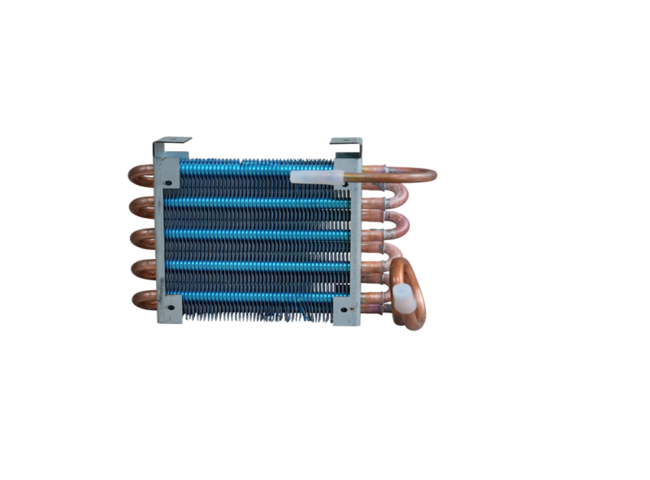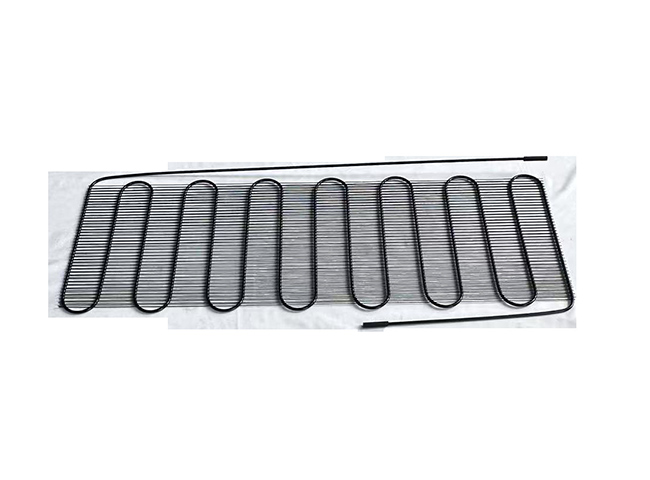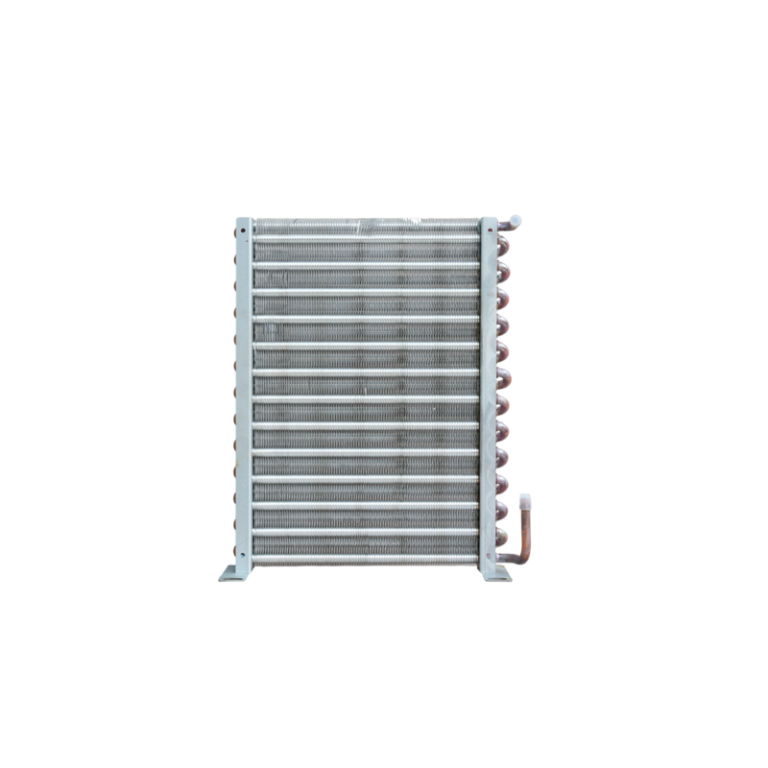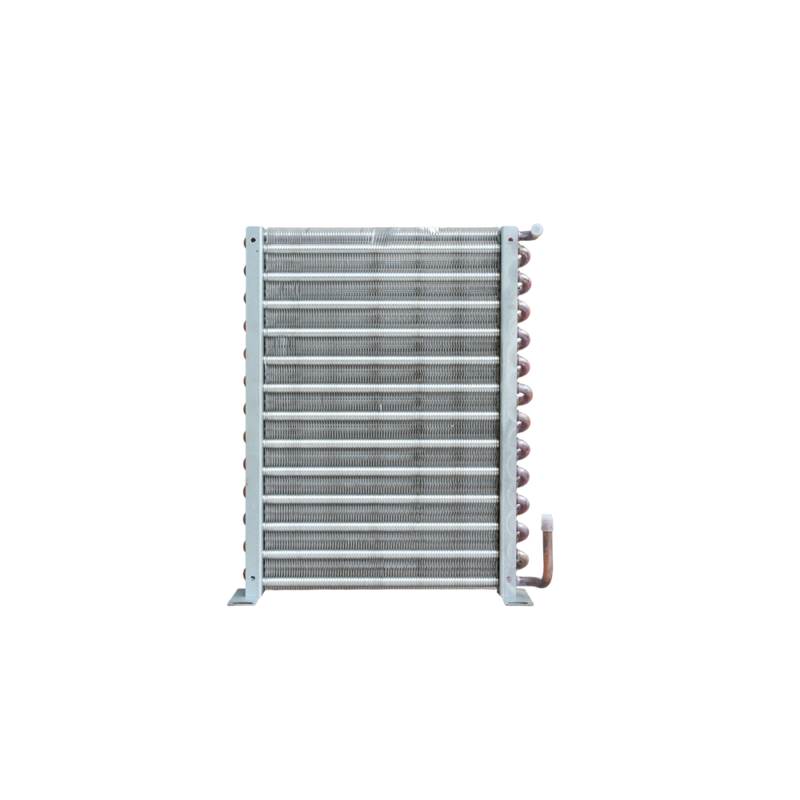
Introduction: Why the Evaporator Matters in a Refrigeration System
In every refrigeration system, the evaporator is the component responsible for the actual cooling process. While the compressor circulates refrigerant and the condenser rejects heat to the surrounding environment, the evaporator performs the critical task of absorbing heat from the refrigerated space, product, air, or process fluid.
For refrigeration equipment manufacturers, system designers, and industrial buyers, selecting the correct evaporator is not simply a matter of choosing a coil with suitable dimensions. Evaporator performance directly influences:
- Cooling capacity
- Energy consumption
- Temperature stability
- Product preservation quality
- Compressor operating conditions
- Overall system reliability
A properly designed refrigeration evaporator allows the refrigerant to absorb heat efficiently while maintaining stable evaporation temperature, proper superheat control, and sufficient airflow or liquid circulation.
However, an incorrectly selected evaporator can create common operational problems:
- Insufficient cooling capacity
- Excessive compressor running time
- Frost accumulation
- Poor temperature uniformity
- High energy consumption
- Reduced equipment lifespan
From an engineering perspective, the evaporator is not an independent heat exchanger. It is one part of a complete refrigeration cycle that must be matched with the compressor, condenser, expansion device, refrigerant type, and operating conditions.
This guide explains the function of an evaporator in a refrigeration system, how it works step by step, what happens to refrigerant inside the evaporator, key performance factors, and how to select the right evaporator for commercial and industrial refrigeration applications.

What Is the Function of an Evaporator in a Refrigeration System?
What Is the Main Function of an Evaporator?
The primary function of an evaporator in a refrigeration system is:
To absorb heat from the refrigerated space or cooling medium by evaporating low-pressure refrigerant inside the heat exchanger.
During operation, the evaporator receives low-pressure refrigerant from the expansion device. Because the refrigerant pressure has been reduced, its saturation temperature becomes lower than the temperature of the surrounding environment.
Heat naturally flows from the warmer area to the colder refrigerant.
For example:
| Application | Surrounding temperature | Typical evaporating temperature |
|---|---|---|
| Cold storage room | +5°C to +10°C | -5°C to 0°C |
| Frozen storage | -18°C to -25°C | -30°C to -35°C |
| Food processing | +2°C to +8°C | -5°C to 0°C |
| Industrial process cooling | Depends on process | Customized |
The evaporator absorbs this heat energy and uses it as latent heat to change the refrigerant from a liquid-vapor mixture into vapor.
This phase change process allows refrigeration systems to remove large amounts of heat efficiently.
What Does an Evaporator Do in the Refrigeration Cycle?
The evaporator is the final heat absorption component in the refrigeration cycle.
A basic vapor compression refrigeration cycle consists of four major components:
- Compressor
- Condenser
- Expansion device
- Evaporator
The complete process is:
Compressor → Condenser → Expansion Device → Evaporator → Compressor
The evaporator is one of the four main components in a vapor-compression refrigeration system. To understand how it interacts with the compressor, condenser, and expansion device, see our guide to [how the refrigeration cycle works].
The evaporator performs the fourth stage:
Expansion valve outlet:
- Low-pressure refrigerant
- Low temperature
- Liquid-vapor mixture
↓
Inside evaporator:
- Absorbs heat from the cooled environment
- Refrigerant boils
- Liquid refrigerant changes into vapor
↓
Evaporator outlet:
- Low-pressure vapor
- Slightly superheated refrigerant
↓
Compressor inlet:
- Vapor returns for compression
Without the evaporator, the refrigeration system cannot remove heat from the cooling space.
After absorbing heat in the evaporator, the refrigerant circulates through the rest of the system. The condenser performs the complementary heat-rejection process, which is explained in our article on [how a condenser rejects heat in a refrigeration system].
Does an Evaporator Reject Heat or Absorb Heat?
Unlike a condenser, which rejects heat, an evaporator absorbs heat.
This is the fundamental difference between the two major refrigeration heat exchangers.
| Component | Main Function | Heat Transfer Direction | Refrigerant Change |
|---|---|---|---|
| Condenser | Reject heat | Refrigerant → Environment | Vapor → Liquid |
| Evaporator | Absorb heat | Cooling Space → Refrigerant | Liquid/Vapor → Vapor |
The evaporator does not create cold.
Instead, it removes heat from the target area.
This distinction is important because many buyers initially think refrigeration equipment “produces cold air”. From an engineering perspective, refrigeration is actually a controlled heat transfer process.
The evaporator removes thermal energy from the product, air, or liquid being cooled and transfers that energy into the refrigerant.
The evaporator absorbs heat from the cooled medium, while the condenser rejects heat to the surroundings. For a more detailed comparison of their roles and operating principles, read our guide to the [difference between a condenser and an evaporator].
Why Is the Evaporator Important to Overall System Performance?
The evaporator has a direct impact on refrigeration system efficiency, capacity, and reliability.
1. Determines Actual Cooling Capacity
The cooling capacity of a refrigeration system depends heavily on how effectively the evaporator transfers heat.
The basic heat transfer relationship is:\[ Q = U \times A \times \Delta T \]
Where:
- Q = Heat transfer capacity (W)
- U = Overall heat transfer coefficient
- A = Heat transfer surface area (m²)
- ΔT = Temperature difference between cooling medium and refrigerant
A larger heat transfer area generally allows greater cooling capacity, but excessive surface area may increase cost, size, and refrigerant charge.
Therefore, evaporator design requires balancing:
- Coil size
- Fin spacing
- Refrigerant distribution
- Airflow
- Pressure drop
2. Maintains Stable Cooling Temperature
In applications such as:
- Food storage
- Pharmaceutical refrigeration
- Beverage cooling
- Industrial processing
Temperature stability is critical.
A properly selected evaporator helps maintain:
- Uniform air temperature
- Stable product temperature
- Reduced temperature fluctuations
For example:
A cold storage evaporator with insufficient airflow distribution may create:
- Warm zones
- Uneven freezing
- Product quality issues
3. Influences Compressor Efficiency
Although the evaporator is located on the low-pressure side, its performance directly affects compressor operation.
Poor evaporator design can cause:
- Low refrigerant evaporation efficiency
- Excessive superheat
- Reduced refrigerant return
- Lower cooling capacity
The compressor then needs to operate longer to achieve the required temperature.
This increases:
- Electricity consumption
- Operating cost
- Mechanical wear
4. Affects Refrigeration System Reliability
A correctly designed evaporator helps maintain proper refrigerant conditions entering the compressor.
Important parameters include:
Superheat
Superheat ensures that liquid refrigerant does not return to the compressor.
Excessive superheat:
- Reduces cooling capacity
- Increases compressor discharge temperature
Insufficient superheat:
- Risk of liquid refrigerant entering the compressor
- Possible compressor damage
Therefore, evaporator design and refrigerant control must work together.
How Does a Refrigeration Evaporator Work?
The working principle of a refrigeration evaporator is based on heat absorption during refrigerant evaporation.
The process occurs through several stages.

Step 1 — Low-Pressure Refrigerant Enters the Evaporator
After leaving the expansion valve, the refrigerant enters the evaporator as a low-pressure, low-temperature mixture.
Typical condition:
| Parameter | Condition |
|---|---|
| Pressure | Low side pressure |
| Temperature | Below cooled space temperature |
| Refrigerant state | Liquid + vapor mixture |
The expansion device reduces refrigerant pressure.
According to thermodynamic principles:
Lower pressure → Lower saturation temperature
This allows the refrigerant to absorb heat from the surrounding environment.
Step 2 — Heat Transfers from the Cooled Medium to the Refrigerant
Heat moves from the warmer medium toward the colder refrigerant.
Depending on application, the heat source may be:
- Air inside a cold room
- Food products
- Water
- Glycol solution
- Industrial process fluid
Air-Cooled Evaporators
In air-cooled evaporators:
- Fans move air across the coil
- Air transfers heat through fins and tubes
- Refrigerant absorbs this energy
Common applications:
- Cold rooms
- Freezers
- Display refrigeration
- HVAC systems
Liquid-Cooled or Liquid-Chilling Applications
For liquid cooling:
- Water or glycol flows through the heat exchanger
- Refrigerant absorbs heat from the liquid
Applications include:
- Industrial chillers
- Process cooling
- Beverage production
Step 3 — Refrigerant Boils and Absorbs Latent Heat
Inside the evaporator, the most important heat transfer process is refrigerant evaporation.
The refrigerant entering the evaporator is usually a low-pressure liquid-vapor mixture. As heat is transferred from the cooled space into the refrigerant, the liquid portion gradually changes into vapor.
This phase-change process is highly efficient because the refrigerant absorbs a large amount of energy without a significant increase in temperature.
This absorbed energy is called latent heat of vaporization.
For example:
| Refrigerant condition | Heat transfer process |
|---|---|
| Liquid refrigerant entering evaporator | Absorbs sensible heat |
| Saturated liquid-vapor mixture | Absorbs latent heat during boiling |
| Saturated vapor | Completes evaporation |
| Superheated vapor | Receives additional sensible heat |
During normal operation:
Heat from refrigerated space → Evaporator coil → Refrigerant → Compressor
The evaporator coil itself does not generate cooling. It provides the heat-transfer surface where the refrigerant can absorb thermal energy.
What Happens During Refrigerant Boiling Inside the Evaporator?
When refrigerant reaches its boiling point at low pressure, it begins changing phase.
The process can be simplified as:

Unlike water boiling at atmospheric pressure, refrigeration evaporation occurs at much lower temperatures because the refrigerant pressure is controlled.
For example:
| Application | Approximate evaporating temperature |
|---|---|
| Air conditioning | +2°C to +10°C |
| Medium temperature refrigeration | -5°C to 0°C |
| Frozen food storage | -30°C to -20°C |
| Industrial low-temperature systems | Below -30°C |
The correct evaporating temperature depends on:
- Required cooling temperature
- Refrigerant selection
- Compressor operating range
- Heat exchanger design
Step 4 — Refrigerant Vapor Leaves the Evaporator
After absorbing sufficient heat, the refrigerant leaves the evaporator as vapor.
The outlet condition is usually:
- Low-pressure vapor
- Slightly superheated
- Ready to return to the compressor
The reason for maintaining superheat is to protect the compressor.
A properly designed evaporator ensures:
- Complete evaporation before outlet
- Stable refrigerant flow
- Controlled superheat
- No liquid refrigerant entering the compressor
Liquid refrigerant returning to the compressor is called liquid floodback, which may cause:
- Compressor lubrication problems
- Mechanical damage
- Reduced service life
Therefore, evaporator design is closely related to compressor reliability.
What Happens to Refrigerant Inside an Evaporator?
Understanding refrigerant behavior inside an evaporator is essential for selecting the correct evaporator coil.
The refrigerant experiences several stages:
| Location | Refrigerant State | Main Process |
|---|---|---|
| Evaporator inlet | Low-pressure liquid-vapor mixture | Refrigerant receives heat |
| Middle evaporator section | Two-phase mixture | Liquid boils into vapor |
| Evaporator outlet | Low-pressure vapor | Superheating occurs |
What State Is the Refrigerant When It Enters the Evaporator?
When refrigerant enters the evaporator, it is typically:
A low-pressure, low-temperature liquid-vapor mixture.
This condition occurs after the expansion valve.
The expansion device reduces pressure but does not remove heat directly.
The pressure reduction causes part of the refrigerant to flash into vapor.
Therefore, the evaporator inlet contains:
- Liquid refrigerant
- Vapor refrigerant
- Low enthalpy refrigerant mixture
The exact quality of the mixture depends on:
- Refrigerant type
- Expansion device design
- Operating conditions
What State Is the Refrigerant When It Leaves the Evaporator?
At the evaporator outlet, refrigerant should normally be:
Low-pressure superheated vapor.
The purpose of superheating is to ensure:
- No liquid reaches the compressor
- Stable compressor operation
- Reliable refrigeration cycle
Typical evaporator superheat values vary depending on system design, but many refrigeration systems operate with several degrees of superheat at the evaporator outlet.
The required superheat depends on:
- Expansion valve type
- Compressor requirements
- Refrigerant characteristics
- System control strategy
What Is the Difference Between Evaporation and Superheating?
Although they occur in the same evaporator, evaporation and superheating are different processes.
Evaporation
During evaporation:
- Refrigerant changes from liquid to vapor
- Temperature remains approximately constant at saturation conditions
- Large amounts of latent heat are absorbed
Superheating
After all liquid refrigerant has evaporated:
- Vapor temperature increases above saturation temperature
- Additional sensible heat is absorbed
Comparison:
| Process | Refrigerant state change | Heat type |
|---|---|---|
| Evaporation | Liquid → Vapor | Latent heat |
| Superheating | Saturated vapor → Superheated vapor | Sensible heat |
A well-designed evaporator balances both processes.
Too little evaporation capacity:
- Incomplete refrigerant evaporation
- Risk of liquid return
Too much superheating:
- Lower heat transfer efficiency
- Reduced cooling capacity
Where Does Refrigerant Go After the Evaporator?
After leaving the evaporator, refrigerant returns to the compressor.
The complete cycle continues:

This continuous circulation allows the refrigeration system to repeatedly remove heat from the target area.
What Is the Function of an Evaporator Coil and Fan?
In practical refrigeration equipment, the evaporator is usually not just a coil.
A complete evaporator assembly may include:
- Heat exchanger coil
- Aluminum fins
- Fan motor
- Drain pan
- Defrost system
- Frame structure
- Refrigerant distributor
Each component affects heat transfer performance.
What Is the Function of an Evaporator Coil?
The evaporator coil is the primary heat-transfer component.
Its function is:
To provide sufficient surface area for heat exchange between the cooled medium and refrigerant.
A typical evaporator coil consists of:
- Copper or aluminum tubes
- Aluminum fins
- Refrigerant circuits
- Headers
- Connection pipes
The coil design determines:
- Heat transfer efficiency
- Refrigerant distribution
- Pressure drop
- Frost formation behavior
How Does an Evaporator Coil Transfer Heat?
Heat transfer occurs through three steps:
Step 1 — Heat Transfer From Air or Liquid to Coil Surface
Example:
Cold room air contacts the evaporator fins.
↓
Heat moves from air into metal fins.
Step 2 — Heat Transfer Through Tube Wall
Heat travels through:
- Aluminum fin
- Copper/aluminum tube wall
↓
Step 3 — Refrigerant Absorbs Heat
Refrigerant inside the tube absorbs energy and evaporates.
The efficiency depends on:
- Thermal conductivity
- Fin design
- Tube arrangement
- Refrigerant flow distribution
What Is the Function of an Evaporator Fan Motor?
In air-cooled evaporators, the fan plays a critical role.
The evaporator fan:
- Moves air across the coil
- Improves heat transfer
- Distributes cooled air evenly
- Maintains required airflow
Without sufficient airflow:
- Heat transfer decreases
- Evaporation temperature drops
- Ice formation increases
- Cooling capacity decreases
How Do the Coil and Fan Work Together?
The evaporator coil and fan operate as a combined heat-transfer system.
The performance depends on matching:
- Coil surface area
- Fan airflow
- Refrigerant flow rate
Where Is the Evaporator Located in a Refrigeration System?
The evaporator is always located on the low-pressure side of the refrigeration system.
It is installed where heat needs to be removed.
Where Is the Evaporator in a Refrigerator or Freezer?
In household refrigerators:
The evaporator is usually located:
- Inside the freezer compartment
- Behind internal panels
- Around the cooling compartment
Its purpose is to absorb heat from:
- Food storage area
- Freezer compartment air
Where Is the Evaporator in Commercial and Industrial Refrigeration?
The evaporator location depends on the application.
Cold Storage
Usually installed:
- Inside the cold room
- Mounted near the ceiling or wall
Functions:
- Cooling circulating air
- Maintaining storage temperature
Food Processing
Possible configurations:
- Air cooling evaporators
- Blast freezing evaporators
- Liquid chilling evaporators
Industrial Refrigeration
Common applications:
- Ammonia refrigeration systems
- Process cooling
- Large cold storage facilities
Evaporator design may require:
- Higher corrosion resistance
- Special materials
- Custom airflow design
Why Does Evaporator Location Matter?
Evaporator placement affects:
- Air distribution
- Temperature uniformity
- Defrost performance
- Maintenance accessibility
Poor installation location can cause:
- Uneven cooling
- Increased frost
- Reduced efficiency
For example:
A cold room evaporator installed too close to the door may experience:
- Frequent warm air infiltration
- Increased frost formation
- Higher operating cost
What Factors Affect Evaporator Performance and Cooling Efficiency?
Evaporator performance depends on several engineering factors.
Evaporating Temperature and Operating Conditions
The evaporation temperature determines:
- Refrigeration capacity
- Compressor efficiency
- System pressure ratio
Lower evaporating temperatures usually require more compressor energy.
Example:
| Application | Evaporating Temperature Range |
|---|---|
| Comfort cooling | +2°C to +10°C |
| Chilled food storage | -5°C to 0°C |
| Frozen storage | -35°C to -25°C |
Selecting the wrong evaporating condition can significantly reduce system efficiency.
Heat Transfer Area and Coil Design
The heat-transfer area determines how much heat the evaporator can absorb.
Important design parameters:
- Tube diameter
- Tube length
- Fin spacing
- Number of circuits
- Surface treatment
For low-temperature applications, wider fin spacing is often required because frost accumulation reduces airflow.
Airflow, Liquid Flow and Pressure Drop
Air-cooled evaporators require sufficient airflow.
Key factors:
- Fan capacity
- Air velocity
- Air distribution
Liquid evaporators require:
- Proper flow velocity
- Pressure drop control
- Pump selection
Refrigerant Distribution and Superheat Control
Poor refrigerant distribution can cause:
- Some coil areas dry
- Reduced heat transfer
- Uneven temperature
Proper design requires:
- Correct distributor selection
- Balanced circuits
- Superheat adjustment
Frost, Dirt and Surface Fouling
The evaporator surface must remain clean.
Common problems:
| Problem | Effect |
|---|---|
| Frost buildup | Blocks airflow |
| Dust accumulation | Reduces heat transfer |
| Oil contamination | Reduces efficiency |
| Corrosion | Causes leakage |
Regular maintenance is essential for stable performance.
What Are the Signs of Poor Evaporator Performance?
A refrigeration evaporator is a precision heat exchanger. When the evaporator cannot absorb heat efficiently, the entire refrigeration system performance will decline.
Common symptoms include:
- Insufficient cooling capacity
- Long compressor running time
- Uneven temperature distribution
- Excessive frost formation
- High energy consumption
- Compressor operating problems
For equipment manufacturers and refrigeration system integrators, identifying evaporator-related problems early can prevent unnecessary replacement costs and system downtime.
Insufficient Cooling Capacity
One of the most common signs of evaporator performance problems is that the refrigeration system cannot reach the required temperature.
Typical symptoms:
- Cold room temperature remains above the set point
- Freezer cannot achieve required freezing temperature
- Product cooling time becomes longer
- Compressor operates continuously
Possible causes include:
| Cause | Impact on Evaporator Performance |
|---|---|
| Undersized evaporator coil | Insufficient heat-transfer area |
| Poor refrigerant distribution | Uneven coil utilization |
| Low airflow | Reduced heat transfer |
| Frost blockage | Reduced air circulation |
| Incorrect evaporating temperature | Lower refrigeration capacity |
From an engineering perspective, an evaporator should be selected based on the actual cooling load, not simply physical dimensions.
A larger-looking coil does not always provide better performance if:
- Refrigerant flow is incorrect
- Circuit design is unsuitable
- Air distribution is poor
Uneven Temperature Distribution
A properly designed evaporator should provide relatively uniform cooling.
Poor evaporator performance may cause:
- Hot spots inside cold rooms
- Uneven product temperatures
- Different temperatures between shelves or storage areas
Common reasons include:
Improper airflow distribution
Air does not pass evenly through the coil.
Incorrect evaporator placement
The cold air pattern does not cover the entire cooling space.
Poor refrigerant distribution
Some coil circuits receive too much refrigerant while others receive too little.
For commercial refrigeration applications, airflow simulation and coil circuit optimization are often necessary to achieve uniform temperature control.
Frost or Ice Buildup on the Evaporator
Frost formation is normal in low-temperature refrigeration applications.
However, excessive frost indicates a potential problem.
A thick frost layer reduces:
- Heat transfer efficiency
- Airflow
- Refrigeration capacity
The relationship is:
More frost → Higher thermal resistance → Lower cooling performance
Common causes:
| Cause | Explanation |
|---|---|
| High humidity air entering system | Moisture freezes on coil surface |
| Insufficient defrost | Ice accumulates over time |
| Low airflow | Coil surface temperature decreases |
| Incorrect evaporator selection | Fin spacing unsuitable for application |
| Door opening frequency | Increased moisture load |
Evaporator Fan Not Running
For air-cooled evaporators, fan operation is critical.
If the evaporator fan stops:
- Air circulation decreases
- Heat transfer drops significantly
- Refrigerant evaporation becomes unstable
Possible causes:
- Fan motor failure
- Electrical problems
- Ice blocking fan blades
- Control system failure
A fan failure does not necessarily mean the evaporator coil itself is defective.
The complete evaporator assembly should be inspected before replacement.
How to Evaluate an Evaporator Problem Before Replacement
Before replacing an evaporator, engineers normally check:
1. Refrigerant Conditions
Check:
- Suction pressure
- Superheat
- Refrigerant charge
- Expansion device operation
2. Airflow Conditions
Inspect:
- Fan operation
- Coil blockage
- Filter condition
- Air distribution
3. Coil Condition
Evaluate:
- Corrosion
- Leakage
- Fin damage
- Frost pattern
4. System Matching
Confirm:
- Compressor capacity
- Condenser capacity
- Expansion valve size
- Refrigerant compatibility
An evaporator failure is sometimes caused by incorrect system matching rather than the evaporator itself.
How to Choose the Right Evaporator for Your Refrigeration Application
Selecting a refrigeration evaporator requires engineering evaluation.
The correct evaporator should match:
- Cooling load
- Refrigerant
- Temperature range
- Airflow requirements
- Installation conditions
- Maintenance requirements
Step 1 — Define the Cooling Load and Application
The first step is determining how much heat must be removed.
Cooling load depends on:
- Room size
- Product temperature
- Product quantity
- Heat infiltration
- Door opening frequency
- Lighting and equipment heat
- Ambient conditions
Basic refrigeration load:\[ Q = m \times C_p \times \Delta T \]
Where:
- Q = Cooling load
- m = Product mass
- Cp = Specific heat capacity
- ΔT = Temperature difference
For industrial applications, additional loads must be considered.
Step 2 — Match the Evaporator to Refrigerant and Operating Conditions
Different refrigerants have different:
- Pressure characteristics
- Heat-transfer performance
- Operating temperature ranges
Important selection parameters:
| Parameter | Why It Matters |
|---|---|
| Refrigerant type | Determines pressure and compatibility |
| Evaporating temperature | Affects cooling capacity |
| Suction temperature | Influences compressor operation |
| Superheat requirement | Protects compressor |
A properly matched evaporator improves:
- System efficiency
- Reliability
- Operating stability
Step 3 — Select the Appropriate Evaporator Type
Different applications require different evaporator designs.
Air-Cooled Evaporator
Used for:
- Cold rooms
- Freezers
- Display refrigeration
Characteristics:
- Fan-assisted airflow
- Compact installation
- Easy maintenance
Plate Evaporator
Used for:
- Compact refrigeration equipment
- Food processing
- Liquid cooling
Advantages:
- High heat-transfer efficiency
- Compact structure
Shell-and-Tube Evaporator
Used for:
- Industrial chillers
- Process cooling systems
Advantages:
- Suitable for large cooling capacities
- Good liquid-side heat transfer
Finned-Tube Evaporator
Common in:
- Commercial refrigeration
- HVAC systems
Advantages:
- Large heat-transfer area
- Good air-side performance
The right evaporator depends on the application, cooling load, operating conditions, heat-transfer requirements, and installation constraints. For a more detailed engineering discussion, see our guide to [refrigeration evaporator types, design, and sizing].
Step 4 — Evaluate Heat Transfer, Pressure Drop and Installation Constraints
A high-performance evaporator requires a balance between heat transfer and pressure loss.
Important engineering factors:
Heat Transfer Area
Larger area:
Advantages:
- Higher capacity
- Lower temperature difference requirement
Disadvantages:
- Larger size
- Higher cost
Pressure Drop
Excessive pressure drop causes:
- Lower evaporation pressure
- Reduced capacity
- Higher compressor workload
Installation Space
Consider:
- Available dimensions
- Airflow direction
- Maintenance access
- Piping arrangement
Step 5 — Consider Material and Corrosion Resistance
Material selection depends on operating environment.
Common materials:
| Component | Common Materials |
|---|---|
| Tubes | Copper, aluminum, stainless steel |
| Fins | Aluminum |
| Frame | Galvanized steel, stainless steel |
| Headers | Copper, aluminum, steel |
For harsh environments:
- Seafood processing
- Chemical plants
- High humidity areas
Corrosion resistance becomes a key purchasing factor.
When Should You Request an Engineering Review?
An engineering review is recommended when:
- Replacing an existing evaporator
- Developing OEM equipment
- Designing custom refrigeration systems
- Changing refrigerants
- Operating under extreme temperatures
A professional manufacturer can evaluate:
- Heat-transfer requirements
- Coil design
- Refrigerant circuit
- Material selection
- Installation limitations
If your project requires a component matched to specific operating conditions, explore our [refrigeration evaporator] products to review available configurations and application options.
What Information Is Needed to Specify or Request a Refrigeration Evaporator?
When requesting a quotation from an evaporator manufacturer, providing complete technical information improves accuracy.
Essential Technical Information for an Evaporator RFQ
1. Application Information
Provide:
- Application type
- Cooling purpose
- Installation environment
Examples:
- Cold storage
- Food processing
- Beverage cooling
- Industrial process cooling
2. Cooling Requirements
Important parameters:
| Requirement | Example |
|---|---|
| Cooling capacity | kW |
| Room temperature | °C |
| Product temperature | °C |
| Operating time | hours/day |
3. Refrigeration System Parameters
Required information:
- Refrigerant type
- Evaporating temperature
- Condensing temperature
- Compressor capacity
- Expansion device type
4. Physical Requirements
Provide:
- Available installation space
- Coil dimensions
- Pipe connection position
- Airflow direction
5. Environmental Conditions
Consider:
- Ambient temperature
- Humidity
- Corrosion risk
- Cleaning requirements
What If You Do Not Know All the Technical Parameters?
Many buyers do not have complete refrigeration design data.
This is common, especially for:
- Equipment distributors
- New project developers
- OEM customers
In this situation, provide available information:
- Application
- Required temperature
- Existing equipment model
- Refrigerant type
- Photos or drawings
- Dimensions
An experienced evaporator manufacturer can help determine suitable specifications.
Why Engineering Review Matters Before Finalizing an Evaporator
Choosing an evaporator only by:
- Size
- Price
- Appearance
can create long-term problems.
A professional selection process considers:
- Refrigeration capacity
- Heat-transfer performance
- Refrigerant compatibility
- Airflow
- Pressure drop
- Maintenance requirements
The cheapest evaporator is not always the lowest-cost solution.
A properly designed evaporator can reduce:
- Energy consumption
- Maintenance frequency
- Equipment downtime
and improve:
- System reliability
- Product quality
- Operating efficiency
Frequently Asked Questions About Evaporator Function in a Refrigeration System
What Is the Main Function of an Evaporator in a Refrigeration System?
The main function of an evaporator is to absorb heat from the cooled space or process fluid by allowing low-pressure refrigerant to evaporate inside the heat exchanger.
How Does a Refrigeration Evaporator Work?
A refrigeration evaporator works by receiving low-pressure refrigerant from the expansion valve.
The refrigerant absorbs heat, evaporates from liquid to vapor, and returns to the compressor as low-pressure vapor.
Does an Evaporator Absorb or Reject Heat?
An evaporator absorbs heat.
The condenser rejects heat.
The evaporator removes thermal energy from the refrigerated space and transfers it into the refrigerant.
What Happens to Refrigerant Inside an Evaporator?
Inside the evaporator:
- Low-pressure refrigerant enters.
- Heat is absorbed from the surroundings.
- Refrigerant boils and evaporates.
- Vapor leaves toward the compressor.
What State Is the Refrigerant When It Leaves the Evaporator?
The refrigerant leaves the evaporator as low-pressure vapor, normally with controlled superheat.
What Is the Function of an Evaporator Coil and Fan Motor?
The evaporator coil provides a heat-transfer surface.
The fan moves air across the coil to improve heat exchange.
Together, they determine cooling performance.
What Factors Affect Evaporator Cooling Performance?
Major factors include:
- Heat-transfer area
- Refrigerant distribution
- Airflow
- Evaporating temperature
- Frost accumulation
- Material selection
- Pressure drop
How Do You Select the Right Refrigeration Evaporator?
The correct evaporator should be selected according to:
- Cooling capacity
- Application
- Refrigerant
- Operating temperature
- Installation requirements
- Environmental conditions
Conclusion: The Evaporator Is Essential to Refrigeration System Performance
The evaporator is the component where refrigeration actually happens.
Its primary function is to absorb heat from the refrigerated space, product, or process fluid by evaporating low-pressure refrigerant.
A properly designed refrigeration evaporator ensures:
- Efficient heat absorption
- Stable cooling performance
- Lower energy consumption
- Reliable compressor operation
- Longer system lifespan
However, evaporator selection should never be based only on dimensions or price.
The correct solution requires matching:
- Cooling capacity
- Refrigerant conditions
- Heat-transfer design
- Airflow requirements
- Installation environment
For refrigeration equipment manufacturers, distributors, and industrial buyers, working with an experienced evaporator supplier helps ensure the heat exchanger is correctly matched with the complete refrigeration system.
Need a Refrigeration Evaporator Matched to Your System?
Our engineering team can help evaluate your refrigeration evaporator requirements based on:
- Application type
- Cooling capacity
- Refrigerant
- Evaporating temperature
- Condensing temperature
- Installation dimensions
- Airflow requirements
- Material and corrosion requirements
Contact us for a customized refrigeration evaporator solution designed for your specific operating conditions.